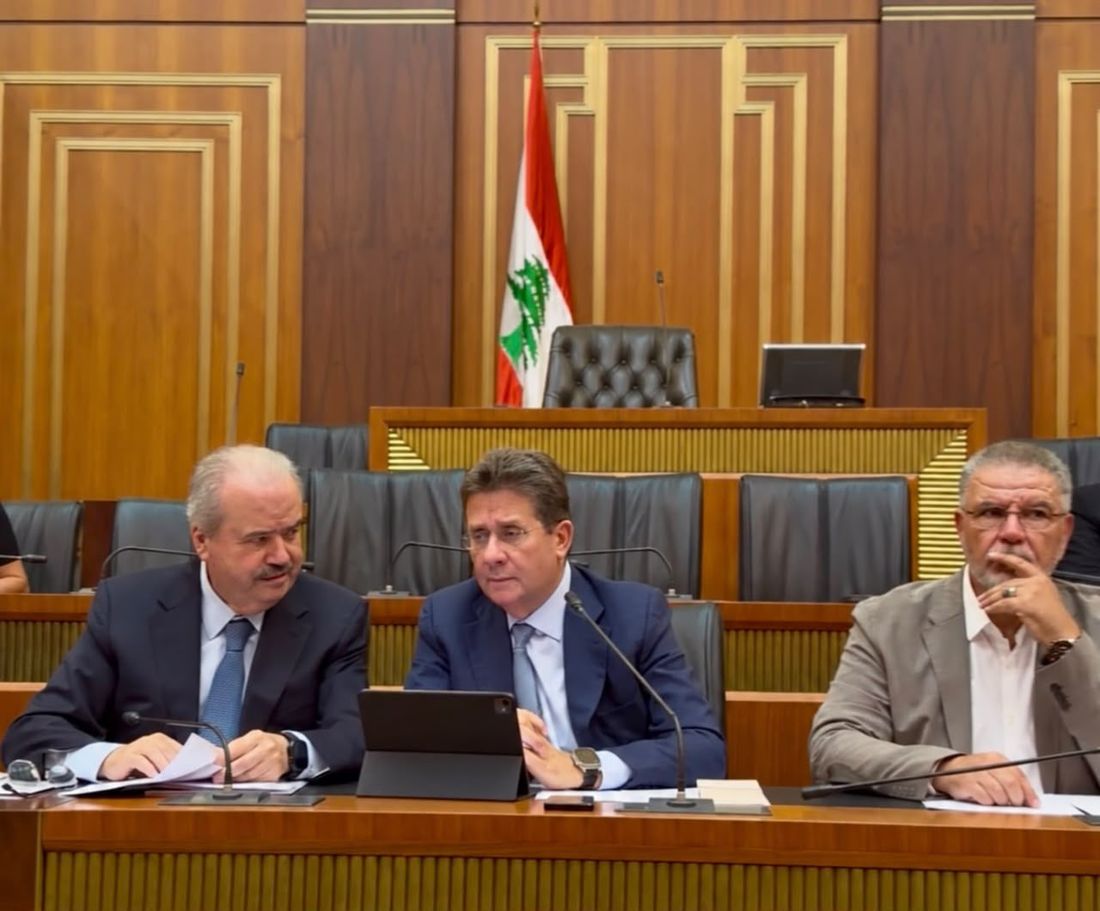
The Parliamentary Finance and Budget Committee held a session on Monday, during which it heard from Finance Minister Yassine Jaber about the 2027 draft budget, its objectives, and its revenue, expenditure, and deficit projections.
According to Al-Liwaa, a parliamentary source said that Minister Jaber informed committee members that the presidential challenge to the Banking Restructuring Law had not affected the ongoing negotiations with the International Monetary Fund (IMF). He also addressed the provisions of financial and administrative reforms concerning public financial management.
Following the session, Finance and Budget Committee Chairman Ibrahim Kanaan said that the government deserved credit for submitting the draft budget within the constitutional deadline. However, he stressed his opposition to imposing new fees and taxes amid the economic contraction and the continued withholding of bank deposits. He also called for the completion of financial accounts, the restructuring of the public sector, and reaching a final version of the financial gap law that safeguards depositors’ rights.
Kanaan noted that the draft budget reflects the government’s commitment to balancing revenues and expenditures. However, he argued that this balance remains theoretical and accounting-based rather than a genuine, practical balance.
He explained: “This balance is not entirely practical or real because it does not account for the public debt and how it should be restructured, nor does it include other liabilities owed by the government. These are issues that should have been addressed had we entered a phase of genuine financial and economic recovery, including investment spending and measures to stimulate growth. The government’s approach cannot be limited to imposing fees.”
He continued: “Most revenues come from fees and taxes, accounting for 89% of the total, while operating expenditures represent approximately the same proportion of overall spending. Based on the available figures, the government has managed to achieve this type of balance.
“Of course, these calculations do not account for unforeseen developments that may occur. If a war breaks out and revenues decline, given that the cost of the most recent war reached $12 billion, the government cannot be held responsible for that. However, everything cannot be blamed on the war either.
“Therefore, we are dealing with an accounting balance, not an actual and genuine one.”