
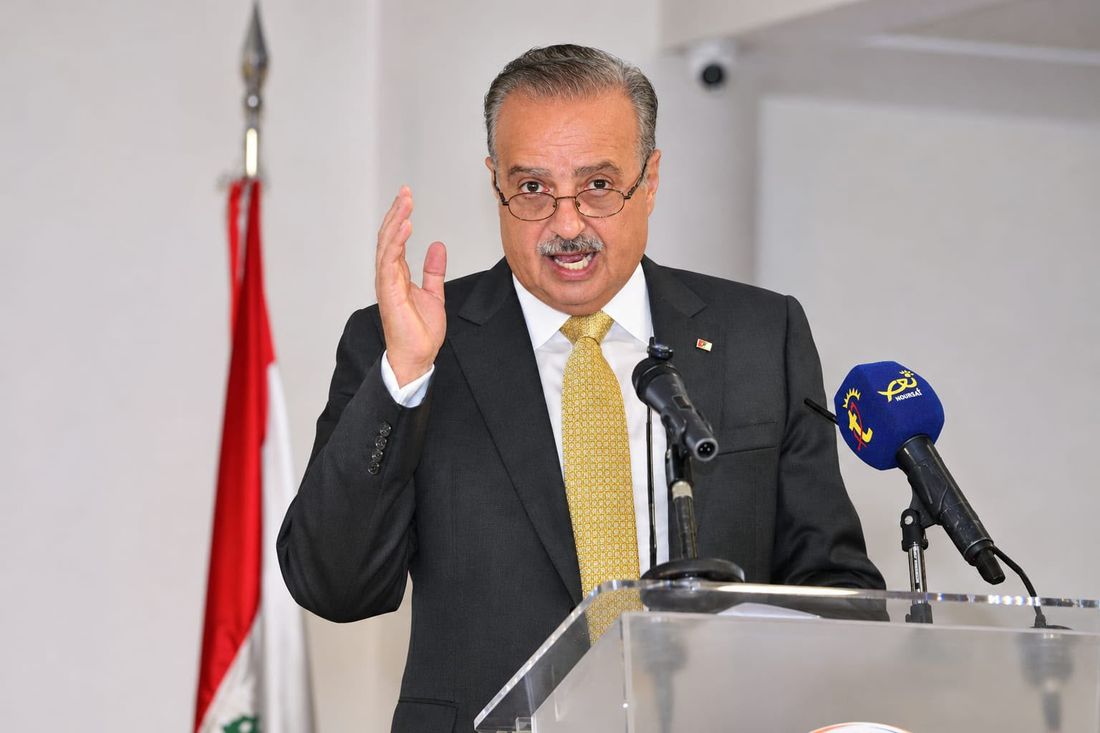
The head of the Lebanese Democratic Party, Talal Arslan, stressed that “targeting relations among the Lebanese threatens all of Lebanon and undermines its ability to confront dangers.” He affirmed that protecting the country requires dialogue, joint action, and prioritizing Lebanon’s interests, and that political differences must remain within limits that protect civil peace and preserve people’s dignity.
Arslan made his remarks during an honorary ceremony organized by the Midtown and Beirut Heritage Lions Clubs in tribute to Prince Majid Arslan, a hero of Lebanon’s independence, at the Al-Jdeideh–Bouchrieh–Sed Municipality Theater, in the presence of official, social, and public figures.
Arslan rejected “attempts to fragment the Druze community and distance it from its Arab identity and its national and historical path, as well as exploiting its sacrifices and the blood of its martyrs to serve personal ambitions and foreign projects.” He stressed that the Druze “will remain committed to their Arab identity and partners in protecting national unity and coexistence, and will not be drawn into calls for extremism and division.”
He also rejected “stirring fears among Christians and turning them against their partners in the homeland,” stressing his commitment to their national role and to a full partnership with them based on mutual respect and equality in rights and duties. He called on political and religious leaders to “assume their responsibilities in calming tensions and preventing strife.”
Arslan said that “the expansion of foreign interventions and the decline in respect for state sovereignty increase the need for solidarity and for protecting national decision-making and constitutional institutions,” stressing the Lebanese people’s right to determine their future and to have their institutions, laws, and national interests respected.
He reaffirmed his commitment to “a state of justice and fairness that protects the rights of its citizens and holds the corrupt accountable,” rejecting “the logic of fiefdoms, favoritism, and the seizure of institutions.” He called for accountability to be based on actions and results, and for political life to regain its meaning through serving the people and addressing their problems.
Arslan renewed his confidence in the Lebanese Army, stressing “the need to support it with the necessary resources and care so that it can carry out its duties,” and calling for a national stance that preserves its unity and recognizes the sacrifices of its officers, non-commissioned officers, and soldiers.
He also affirmed that “reconciliation and the return of displaced people to the villages of Mount Lebanon are a national responsibility that must be protected and strengthened through trust, rights, and participation.”
Arslan recalled the legacy of Prince Majid Arslan in the struggle for independence and the building of the state and military institution, stressing that “loyalty to the heroes of independence is demonstrated by preserving one unified homeland, safeguarded sovereignty, and a just state that serves all its citizens, away from corruption and the exploitation of sectarianism.”


