
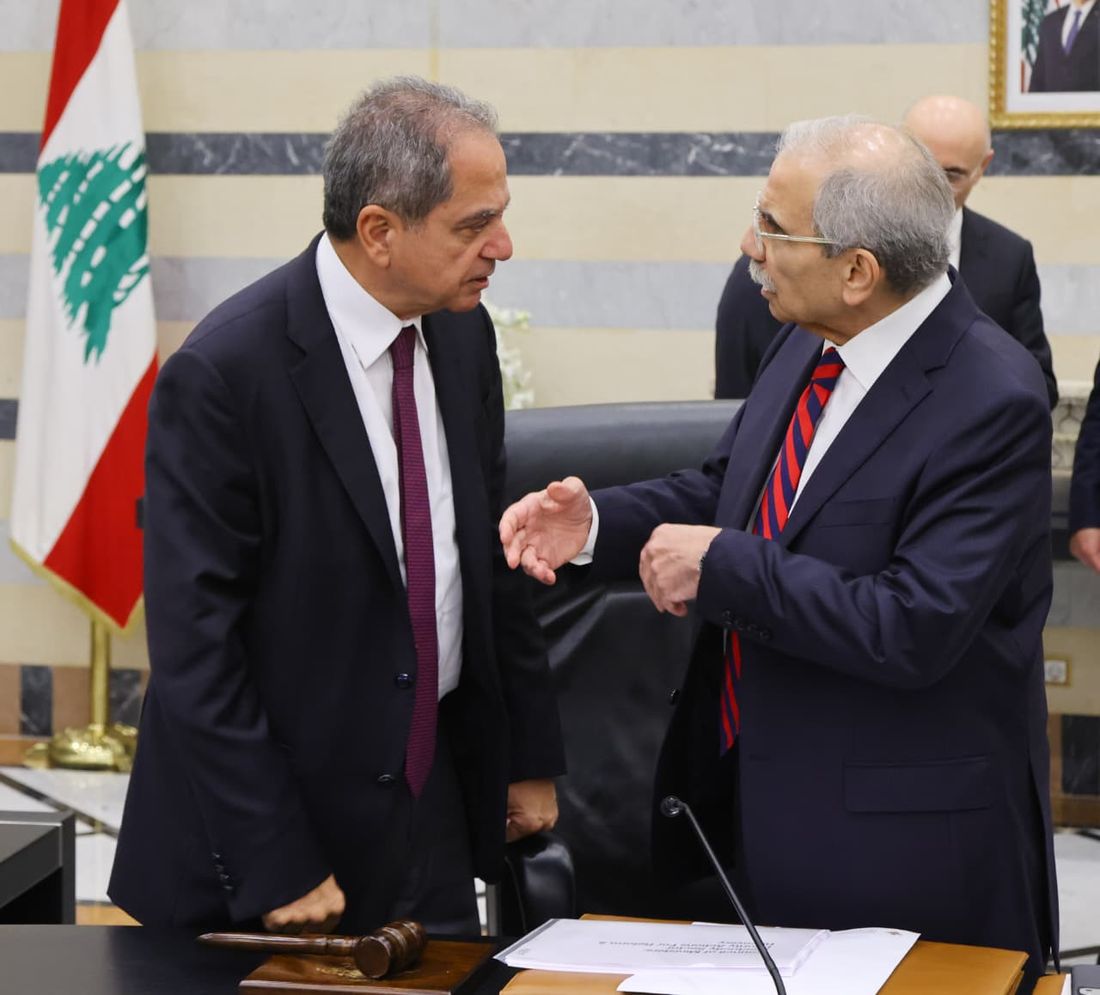
The Cabinet convened yesterday at the Grand Serail, chaired by Prime Minister Nawaf Salam, to resume discussions on the electricity file. The session took place in the absence of the Lebanese Forces ministers, with the exception of Energy Minister Joe Saddi, after the electricity file was listed as the sole item on the agenda. However, this does not signify an end to the Lebanese Forces ministers' boycott of Cabinet sessions until a decision is made regarding the referral of the Dahr el-Baidar explosives case to the Judicial Council. A lengthy and thorough discussion on the energy file reportedly took place during the session.
It was also reported that Justice Minister Adel Nassar attempted to bring up the Judicial Council file during the session, but the Prime Minister affirmed that the meeting was dedicated exclusively to the electricity file and that no other item could be discussed, after which the debate on electricity began.
The Cabinet took note of Minister Saddi’s presentation regarding the projects and capacities proposed by the Qatari side. These include power generation plants, infrastructure for importing liquefied natural gas (LNG) and regasification, renewable energy, and battery energy storage systems. The Cabinet decided to approve the plan and requested that the Minister continue negotiations.
Regarding the payment of electricity dues in the camps, Saddi announced a proposed solution for the camps within two months, in agreement with the head of the Lebanese-Palestinian Dialogue Committee and UNRWA. He also noted that the flexible tariff will be placed on the agenda next week and will require three months to take effect.
Following the conclusion of the Cabinet session, the Minister of Information stressed the need for a comprehensive electricity plan covering natural gas supply, generation, transmission, distribution, and bill collection. He stated: "In the short term, the plan begins with importing natural gas via the Arab Gas Pipeline to the Deir Ammar plant and converting its operation from gas oil to natural gas, which will lead to a tangible reduction in production costs."
He added: "In the short term, the main pillar of the plan relies on importing liquefied natural gas (LNG) to cover and supply power plants at the existing Deir Ammar facility, as well as the Zahrani and Zouk plants. In the coming years, generation capacity must increase to at least 3,000 to 3,500 megawatts, with the largest share of this capacity coming from renewable energy sources."
He continued: "There is a need to redevelop and invest in the transmission network so that it can accommodate the energy generated from the new plants and renewable energy projects, and safely transfer it to consumption centers." He also noted that "work is underway to involve the private sector in distribution and collection through distribution system operators, in accordance with the framework adopted by the Electricity Regulatory Authority," pointing out that negotiations will continue with the Qatari side to explore the possibility of accelerating the implementation of the plants in Deir Ammar.


