
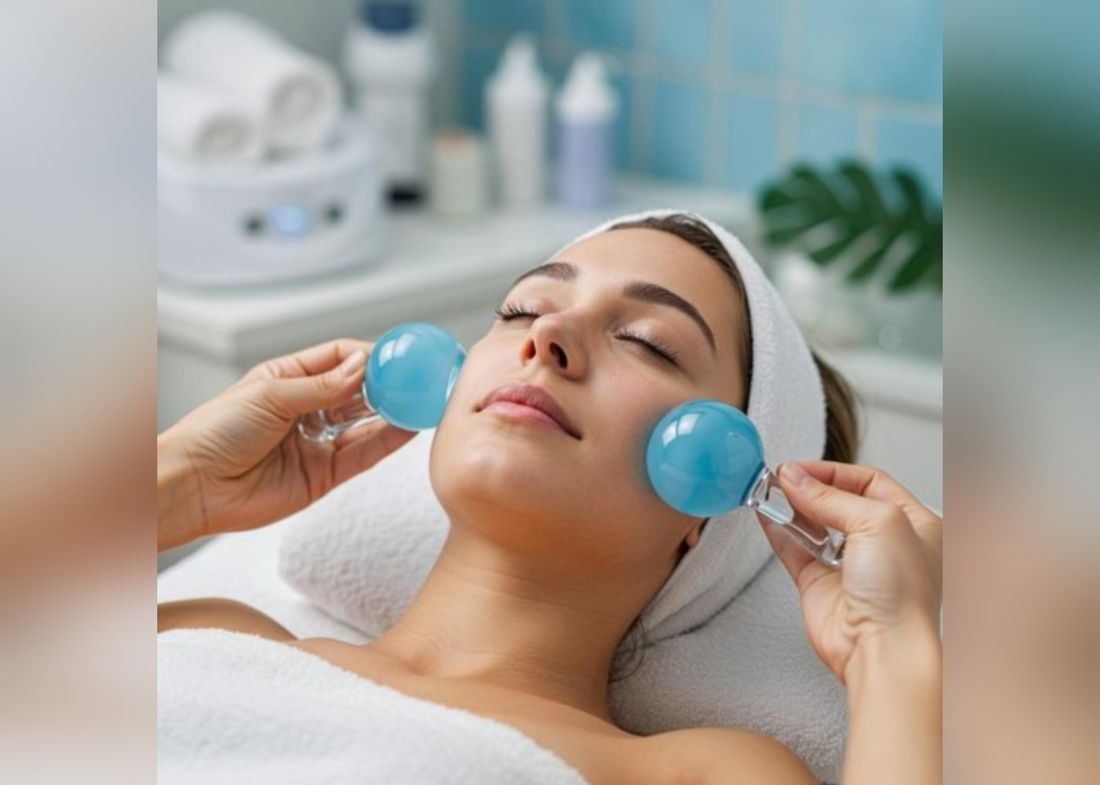
Cryotherapy has become a popular addition to skincare routines, promising a fresher complexion, reduced puffiness, and a more refreshed appearance without the need for expensive treatments or complicated steps. From chilled facial rollers to ice globes and cooling masks, these tools offer a simple way to revitalize the skin, especially after a restless night or a long day. But how effective is cryotherapy really?
𝗛𝗼𝘄 𝗗𝗼𝗲𝘀 𝗖𝗿𝘆𝗼𝘁𝗵𝗲𝗿𝗮𝗽𝘆 𝗛𝗲𝗹𝗽 𝗥𝗲𝗱𝘂𝗰𝗲 𝗣𝘂𝗳𝗳𝗶𝗻𝗲𝘀𝘀?
Facial puffiness can occur for many reasons, including fluid retention, lack of sleep, allergies, hormonal changes, and excessive salt intake. Applying something cold to the face temporarily constricts blood vessels, helping reduce swelling and making the skin appear less puffy.
The sensation of cold can also soothe the skin and provide a refreshing feeling, particularly around the eyes, where swelling tends to be more noticeable. Using a chilled facial roller or an ice globe with gentle movements can make the experience more pleasant, although the results are temporary rather than a permanent solution.
𝗧𝗵𝗲 𝗕𝗲𝘀𝘁 𝗪𝗮𝘆𝘀 𝘁𝗼 𝗧𝗿𝘆 𝗖𝗿𝘆𝗼𝘁𝗵𝗲𝗿𝗮𝗽𝘆
Ice globes, chilled facial rollers, and cooling masks are among the most popular options. Facial rollers can be used in gentle, outward circular motions, while cooling masks offer an easy way to refresh the skin without using your hands. Both can be incorporated effortlessly into a morning skincare routine.
However, extremely low temperatures may irritate the skin, particularly in people with rosacea, sensitive skin, or broken capillaries. Avoid applying ice directly to your face, and do not hold a cold tool against one area for an extended period. A comfortably cool temperature is sufficient to achieve a refreshing effect.
𝗪𝗵𝗮𝘁 𝗖𝗿𝘆𝗼𝘁𝗵𝗲𝗿𝗮𝗽𝘆 𝗖𝗮𝗻𝗻𝗼𝘁 𝗗𝗼
Despite its popularity, cryotherapy does not address the underlying causes of persistent puffiness, treat dark circles caused by pigmentation, or permanently tighten sagging skin. Its effects are primarily cosmetic and temporary, meaning the improvement fades once the skin returns to its normal temperature.
For recurring puffiness, paying attention to sleep habits, allergies, hydration, and dietary factors that contribute to swelling may make a greater difference. Persistent or sudden swelling, particularly around one eye, or swelling accompanied by pain, redness, or changes in vision, warrants medical evaluation.
Cold therapy can be a useful addition to a skincare routine, but it works best as a quick way to refresh the skin rather than as a substitute for targeted treatments.
𝗦𝗼𝘂𝗿𝗰𝗲: 𝗲𝗹𝗹𝗲 𝗮𝗿𝗮𝗯𝗶𝗮


