
Following former Progressive Socialist Party leader Walid Jumblatt’s post on his X account, in which he wrote, “The message has been received—the message from the security agencies and their agents,” questions arose over which security agencies he was referring to and the reasons behind his attack.
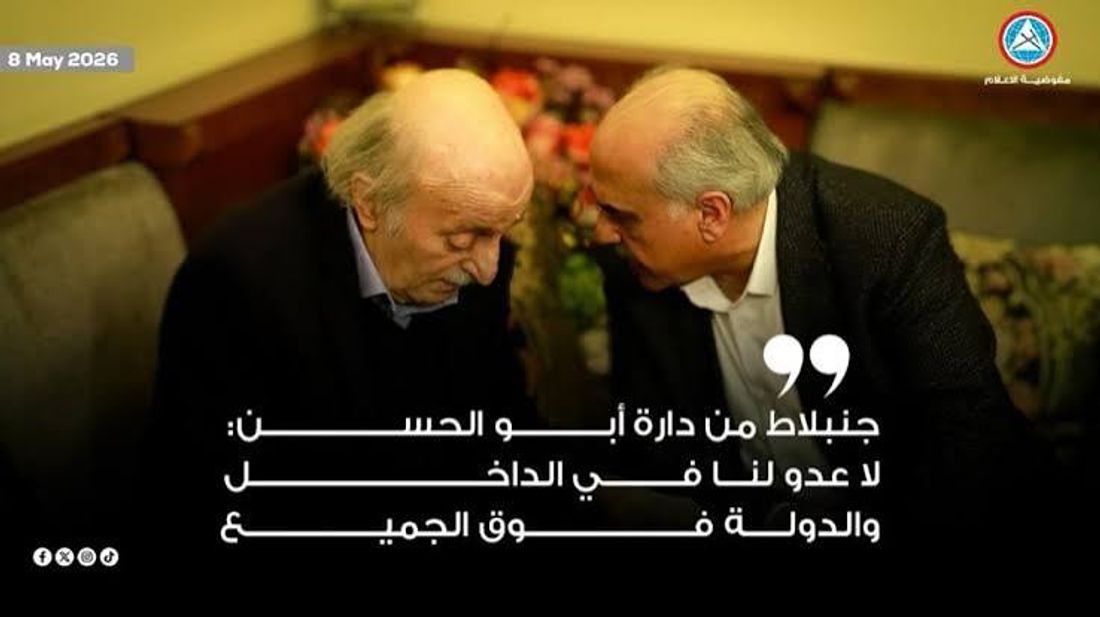
Notably, Jumblatt’s position was followed by a statement from MP Hadi Aboul Hassan, Secretary of the Democratic Gathering parliamentary bloc. He said:
“I wish certain members of the judiciary had remained above the interference of a party that has never respected the judiciary, but has instead directed insults and accusations at it. Meanwhile, we worked to pass the Judicial Independence Law, acted accordingly, and placed our trust in the judiciary, pledging not to interfere or even file complaints, believing that our trust was well placed.
“We moved forward quietly, without holding grudges or believing in revenge, even when we had the ability to seek it, because we believe that rising above such matters is noble, forgiveness is courage, true strength lies in self-restraint, and justice cannot be achieved through revenge.”
In a statement, Aboul Hassan reaffirmed his rejection of interference in the judiciary and his commitment to its independence and respect for its rulings. However, he said that certain outsiders had chosen to exploit a weak, fragile, and unprotected flank to ignite the flames of discord.
He added that this was the same discord they had sought to contain in May and continued to work to prevent, stressing that they would not allow it to pass or be revived, regardless of the sacrifices required, the injustice they endured, or attempts to distort the truth and reverse the facts.
He further remarked: “That disgraceful post exposed everything; the ice melted, and the truth became clear.”
The case Aboul Hassan was referring to concerns an attempted assassination targeting him last May, when a man identified as Maher Tarbiyeh allegedly attempted to assault the MP. As Aboul Hassan defended himself, Tarbiyeh threw a grenade he was carrying after removing its safety pin. The incident occurred while Aboul Hassan and his accompanying delegation were attending a condolence gathering in the town of Qbayaa.
Developments in the Judicial Case
In the latest development, the Military Court issued a ruling acquitting Tarbiyeh of the charge of attempted intentional murder, convicting him only of weapons possession, according to sources cited by *An-Nahar*.
The sources revealed further details to *An-Nahar*, noting that the Military Court had been expected to issue its ruling in the case next month, December. However, the decision was issued on Monday, after Maher Tarbiyeh had spent six months in detention, in what the sources described as suspicious circumstances.
Discussing the court hearing, the sources said the decision to acquit Maher Tarbiyeh of attempting to assassinate Aboul Hassan and limit the charge to weapons possession was issued during a suspicious session.
They pointed out that the three witnesses named in the investigation were not summoned, nor was the principal party involved, namely Aboul Hassan, asked to testify.
They also said that the investigator, the court clerk, and the officer whom Maher Tarbiyeh had accused of pressuring him during questioning to mention the name of Ghanem Tarbiyeh were not summoned. Tarbiyeh had subsequently withdrawn that allegation, but the officials were not called to testify or respond to the accusation that he had been pressured to provide the information.
The sources added to *An-Nahar*:
“Maher Tarbiyeh has a criminal record. He killed a friend 38 years ago, opened fire on former Qbayaa mayor Akram Al-Aawar seven years ago, assaulted members of the Qbayaa municipal council, then threw a grenade at Aboul Hassan and his accompanying delegation before opening fire while fleeing. So how can an acquittal be issued?”
The sources then raised further questions about the judicial ruling, describing it as suspicious:
“Why were the witnesses not summoned? Why was the principal party involved, Aboul Hassan, not called? Why did the court disregard the indictment, which was based on witness testimonies, the Information Branch investigation, and the fact that the assailant had reaffirmed his earlier testimony?
“Why did it disregard the position of the Government Commissioner and overturn the decision of the Lebanese Army's Engineering Regiment? Why did it refuse to hear any other party and issue this suspicious ruling?”
Accordingly, the sources linked the Military Court's ruling to the “message” Jumblatt said had been received, as well as to the message conveyed by Aboul Hassan in his statement, hinting at possible judicial interference.


