
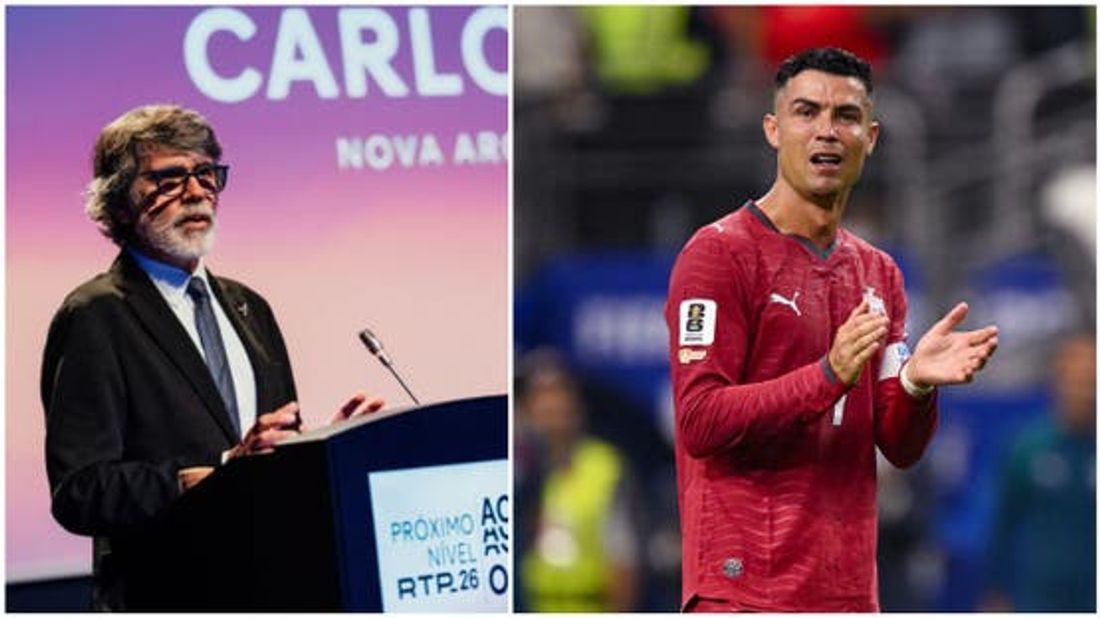
Carlos Coelho, a Portuguese brand expert, has warned of what he described as an “economic earthquake” caused by Cristiano Ronaldo’s retirement from international football, stressing that Portugal’s national team has lost one of its most important marketing assets. He said the departure of the Al-Nassr captain would have repercussions for the team’s commercial value and global popularity.
Coelho is one of Portugal’s leading branding experts, with more than four decades of professional experience in brand development, including major Portuguese brands. He has also previously studied Cristiano Ronaldo’s personal brand.
In exclusive comments to Al Arabiya.net, Coelho said: “When I spoke about an economic earthquake, I did not mean that the Portuguese national team would stop competing. I was referring to a decline in the value of a brand. Ronaldo was not merely a player; he was an international platform and a media outlet in his own right. Hundreds of millions of people around the world saw Ronaldo before they saw Portugal.”
Coelho revealed that the Portuguese national team’s Instagram account lost around 2.2 million followers—nearly 9 percent of its total following—in the days after Ronaldo left the national team’s camp last October. Meanwhile, the player’s own account gained approximately 666,000 new followers during the same period.
He explained that these figures do not necessarily mean everyone who unfollowed the national team did so because of the controversy surrounding Ronaldo. However, they demonstrate the extent of the player’s influence, noting that a significant portion of the team’s international audience followed it because of its historic star.
𝗖𝗼𝗺𝗺𝗲𝗿𝗰𝗶𝗮𝗹 𝗮𝗻𝗱 𝗣𝗼𝗽𝘂𝗹𝗮𝗿𝗶𝘁𝘆 𝗟𝗼𝘀𝘀𝗲𝘀
Regarding the impact of Ronaldo’s retirement on sponsorship deals, Coelho said the Portuguese Football Federation may not face an immediate collapse in its existing contracts, but it could see their value decline when they come up for renewal. This could also lead to lower sales of jerseys and official merchandise, as well as reduced negotiating power with commercial partners.
“The Portuguese Football Federation does not manage players alone; it manages symbols, reputation, fans, sponsors, markets, and the country’s international image. When it loses a figure with such unique global reach, the commercial foundations on which its contracts were built change significantly,” he added.
The Portuguese expert declined to put a financial figure on the expected losses, explaining that there is no publicly available model that allows the economic value contributed by a single player to the federation’s accounts to be isolated. Any specific figure presented at this stage, he said, would be mere speculation.
He pointed out that a study by the Portuguese Institute of Administration and Marketing estimated Ronaldo’s brand value at approximately €850 million, representing a 325 percent increase since 2020. However, he stressed that this figure does not represent money flowing directly into the Portuguese Football Federation’s treasury, but rather reflects the player’s commercial strength and global reach.
Coelho also cited figures from the 2026 World Cup, which showed that the estimated economic value of the exposure generated by 29 of Ronaldo’s social media posts reached €85.2 million, compared with €68.1 million generated by 565 posts published by the Portuguese Football Federation during the same period.
He said the national team gave Ronaldo the opportunity to represent his country for 23 years, while the player gave Portugal an extraordinary global presence. He warned that the federation would face considerable difficulty in regaining the level of exposure and commercial value it achieved with him.
𝗥𝗼𝗻𝗮𝗹𝗱𝗼 𝗜𝘀 𝗡𝗼𝘁 𝗮 𝗖𝗼𝘂𝗻𝘁𝗿𝘆, 𝗕𝘂𝘁 𝗮 𝗖𝗼𝗻𝘁𝗶𝗻𝗲𝗻𝘁
Asked whether current national team stars, particularly Bruno Fernandes, Vitinha, and João Neves, could compensate for Ronaldo’s departure, Coelho said: “We have world-class players, but none of them has a brand on Ronaldo’s scale. It would be unfair to compare any of them with his global influence.”
He added: “Ronaldo is not a country; he is a continent. His influence extends across the entire world, and searching for a new Ronaldo would be a strategic mistake because he cannot be replaced.”
Coelho explained that the Portuguese Football Federation could build a new marketing identity centered on the team rather than an individual, while capitalizing on the country’s ability to produce footballing talent. However, he emphasized that this would not fully compensate for the commercial and popular influence of the former national team captain.
He urged the Portuguese federation to preserve Ronaldo’s connection with the national team and transform his role from an on-field star into a permanent part of the country’s national legacy. This would allow Portugal to continue benefiting from his popularity in international markets, particularly the Arab world.
He concluded: “The worst strategy would be to pretend that nothing has changed or to try to erase Ronaldo’s legacy from Portugal’s identity. There is no post-Ronaldo era; Ronaldo will remain forever.”


