
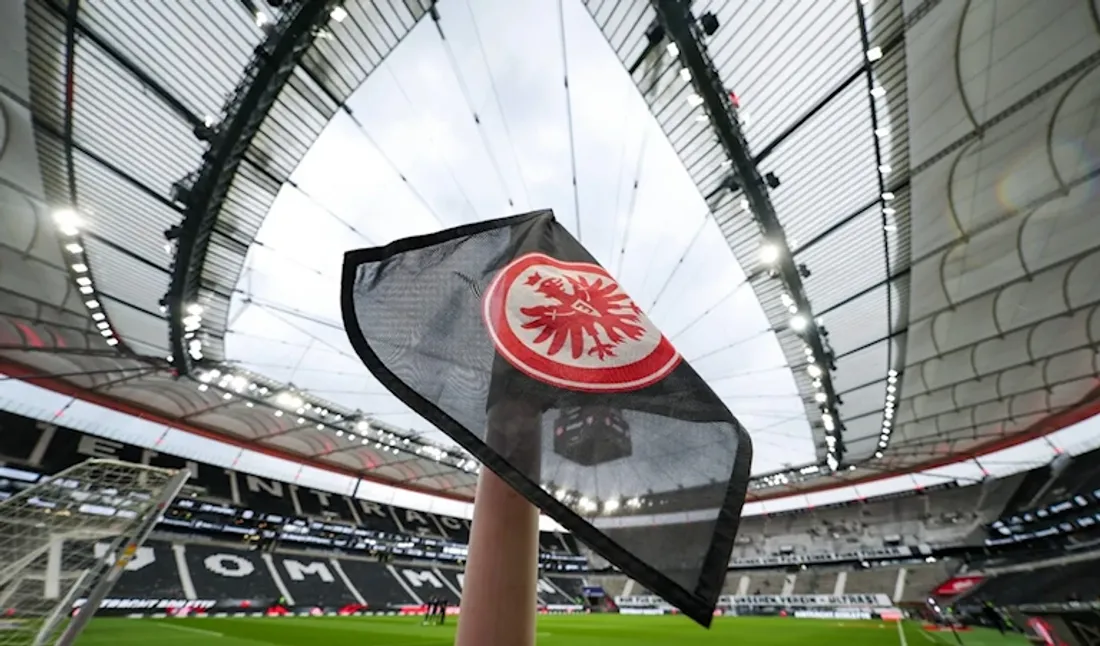
Officials at German club Eintracht Frankfurt embarked on an eight-year journey to build their own technology project focused on digital services, based on the principle that "digitalisation should not be limited to one department alone". This comes at a time when football is becoming increasingly reliant on data management and understanding fan behaviour.
Over time, the project evolved from a tool designed to improve the German club's services and strengthen its relationship with supporters into a commercial product sold to other clubs and sports organisations, generating new financial returns and contributing to the club's overall revenue.
The project is built around an integrated digital application that allows Eintracht Frankfurt to manage ticket sales, expand the reach of its social media content, and promote its online store, according to German website Eintracht Frankfurt News (eintrachtfrankfurtnews).
𝗛𝗼𝘄 𝘁𝗵𝗲 𝗣𝗿𝗼𝗷𝗲𝗰𝘁 𝗕𝗲𝗴𝗮𝗻
Eintracht Frankfurt began developing its digital infrastructure in 2017, at a time when the team was close to relegation to the second division and facing financial difficulties.
With Germany's club ownership regulations restricting clubs from relying on external investors, receiving private funding from billionaires, or securing financial support from foreign investment funds, the club needed to find alternative sources of revenue.
"We had to become more innovative when it came to generating revenue," said Tim Jäger, Chairman of Eintracht Frankfurt's Digital Advisory Board, during his participation in the World Football Summit, held in Madrid last September to discuss developments in the football industry and sports business.
Jäger emphasised the importance of sports organisations maintaining control over three key areas of information gathering and gaining a deeper understanding of their audiences: content, ticket sales, and merchandise.
This led to the idea of establishing an in-house technology company responsible for developing the data platform, ticketing system, content management system, online store, and digital interfaces.
Through this integrated system, Eintracht Frankfurt became able to identify which articles its supporters read, which products attracted their interest, and which tickets they purchased, whether for football matches or concerts hosted at the club's home stadium, Deutsche Bank Park.
Explaining the importance of this system, Jäger said: "If you don't know your customers, you are doomed to disappear sooner or later." He stressed that understanding fans' preferences should become an essential part of clubs' commercial operations.
𝗔 𝗖𝗼𝗺𝗺𝗲𝗿𝗰𝗶𝗮𝗹 𝗠𝗮𝗿𝗸𝗲𝘁𝗽𝗹𝗮𝗰𝗲
After completing the application's development and ensuring its technical efficiency, Eintracht Frankfurt opened the door to new commercial partnerships. The application gradually evolved into a marketing platform resembling major online marketplaces such as Amazon, offering products and services from external companies in exchange for agreed commissions.
The services available through the platform included integrating news content from a major German newspaper, marketing subscriptions to certain pay-TV channels, and selling insurance policies. These services provided the club with additional revenue streams beyond traditional football income.
Jäger confirmed that the club does not rely on financial backers expecting to recover their investments, stating: "We don't have investors who want their money back. All returns and revenue generated by the application are directed entirely towards the sporting sector."
To build a reliable database, the application adopted a pre-registration system similar to those used by social media platforms such as Facebook, Instagram, TikTok, and X, as well as entertainment streaming services such as Netflix, according to Italian magazine Rivista Undici.
This system enabled the club to identify users and determine their interests, making it possible to personalise the content displayed to them, target advertisements more accurately, and provide digital experiences tailored to each supporter.
𝗙𝗿𝗼𝗺 𝗙𝗼𝗼𝘁𝗯𝗮𝗹𝗹 𝗖𝗹𝘂𝗯 𝘁𝗼 𝗧𝗲𝗰𝗵𝗻𝗼𝗹𝗼𝗴𝘆 𝗦𝗲𝗿𝘃𝗶𝗰𝗲 𝗣𝗿𝗼𝘃𝗶𝗱𝗲𝗿
In February of this year, Eintracht Frankfurt announced the establishment of Stackwork, a company that made it possible to transfer the club's technological expertise to other sports organisations and turn its internally developed digital infrastructure into an independent commercial product.
Among the company's first clients were Austrian club Rapid Vienna, the German Handball Federation, and several handball and ice hockey clubs.
Last month, Rapid Vienna announced that its own application and data platform were already operating through Stackwork. The platform integrates information from the club's various systems into a unified profile for each supporter, with the online store scheduled to join the system during the 2026–2027 season.
As a result, the project is no longer limited to improving Eintracht Frankfurt's commercial performance. It has become a business dedicated to providing technological services and selling digital solutions to sports organisations.
𝗧𝗵𝗲 𝗡𝗲𝘅𝘁 𝗦𝘁𝗮𝗴𝗲
Eintracht Frankfurt officials recognise that football and sports fans in general are increasingly using artificial intelligence tools such as ChatGPT, Gemini, and Claude to search for information about their favourite teams and players.
In response, the club is working to develop its own AI agents in collaboration with companies such as OpenAI, with the aim of integrating new services directly into its digital application.
At the same time, Jäger advocates following a clear sequence in the digital transformation process, beginning with understanding supporters and their preferences, then using artificial intelligence technologies to analyse data and turn those insights into more valuable services.
"We believe that, most likely, there will no longer be applications in their current form in the future, but rather AI agents or something similar," he said.
Through these early initiatives, the club aims to keep its supporters within its technological ecosystem for as long as possible by offering personalised services that continuously evolve according to their interests and needs.
However, reaching this stage requires significant investment and a change in the way clubs are managed. Jäger acknowledged this challenge, noting that "clubs do not like spending money on areas that are not directly related to football players".
He believes overcoming this obstacle requires a clear data management strategy and a business plan demonstrating technology's ability to generate new revenue or protect existing income streams.
Jäger warned that ignoring technological developments could prove costly for sports organisations, stating: "I am 100% certain that if the sports industry does not change, the money will go elsewhere."
𝗖𝗼𝗺𝗯𝗮𝘁𝗶𝗻𝗴 𝘁𝗵𝗲 𝗕𝗹𝗮𝗰𝗸 𝗠𝗮𝗿𝗸𝗲𝘁
The problem of counterfeit tickets and their resale at inflated prices is one of the most prominent challenges facing sports fans, particularly during major matches that attract large crowds.
To tackle this phenomenon, the application uses digital tokens that allow ticket transfers to be tracked and authenticated. This enables supporters to exchange tickets safely and transparently while allowing the club to maintain control over prices and available quantities.
This mechanism helps reduce ticket fraud and curb black-market activity, while strengthening fans' confidence in ticket purchasing and resale transactions.
𝗠𝗲𝗿𝗰𝗵𝗮𝗻𝗱𝗶𝘀𝗲 𝗮𝗻𝗱 𝗖𝗼𝗹𝗹𝗲𝗰𝘁𝗶𝗯𝗹𝗲𝘀
The sports merchandise market, including shirts, shorts, tracksuits, and memorabilia, enjoys widespread popularity among supporters. However, counterfeit products remain a major challenge, particularly when it comes to limited-edition items and collectibles bearing the signatures of stars and players.
In this area, the application allows supporters to benefit from digital certificates of authenticity, linking each item to its original source. This helps verify authenticity and combat counterfeiting and forgery, according to Eintracht Frankfurt News.
𝗦𝗼𝘂𝗿𝗰𝗲: 𝗔𝗹-𝗔𝗸𝗵𝗯𝗮𝗿


