
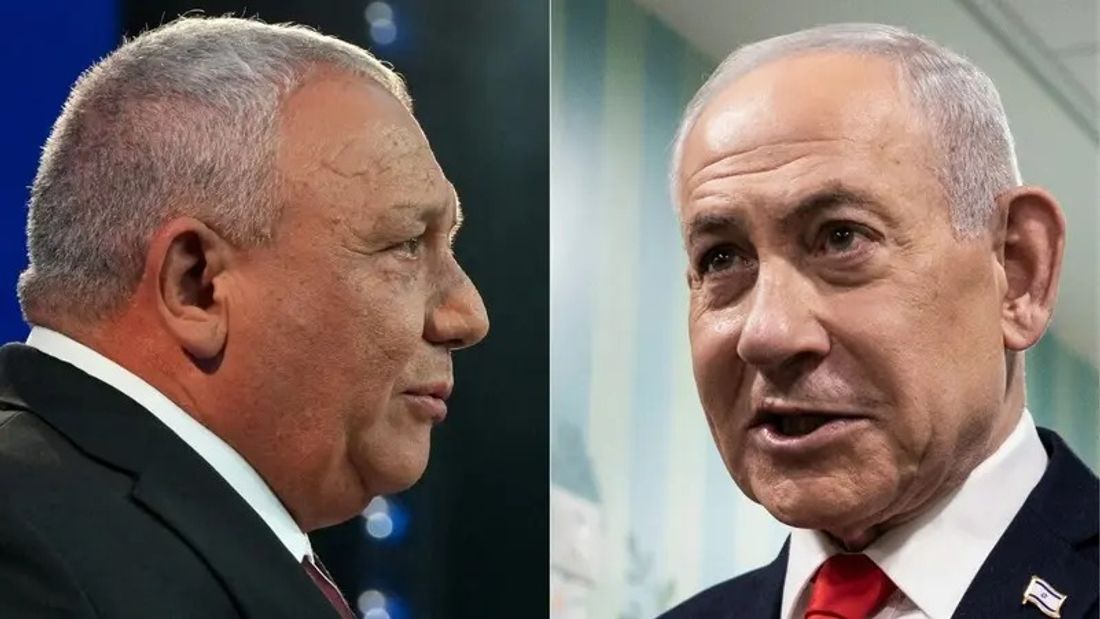
Former Israeli Chief of Staff Gadi Eisenkot, who has been tasked with forming Israel’s government, warned outgoing Prime Minister Benjamin Netanyahu on Wednesday against making major security and military decisions during the transitional period. He called on him to act responsibly and avoid steps that could have catastrophic consequences.
In a letter, excerpts of which he published on his account on the X platform, Eisenkot urged Netanyahu to exercise restraint and refrain from making dangerous decisions that could be postponed until a new government, enjoying the confidence of the Knesset, is formed.
Eisenkot said that Israel is facing a difficult and volatile security reality, pointing to reports he described as “extremely worrying” in recent weeks regarding the involvement of unrelated considerations in decisions concerning Israeli security.
He added that he had sent his letter to Netanyahu regarding his security and national responsibilities during this sensitive period.
Eisenkot called on the outgoing prime minister to act with national responsibility and exercise caution in taking steps that could carry significant risks and could be postponed until a new government is sworn in.
In his letter, he said: “Exercise restraint and caution regarding dangerous steps that can wait until a new government that has won the confidence of the Knesset takes the oath of office.”
He stressed the need to avoid undermining citizens’ trust in governing institutions and decision-making mechanisms. He also warned against using security forces in the absence of a direct and immediate threat that cannot be postponed, considering that such a move could lead to devastating consequences for Israeli democracy and public trust in state institutions.
In another warning, Eisenkot urged Netanyahu not to place the heads of security agencies in a complex constitutional conflict or leave them uncertain about their duties and the decisions they are required to make.
He added that it is necessary to enable the leaders of the security agencies to carry out their assigned duties without doubt or ambiguity.
Eisenkot’s letter highlights concerns over sensitive security decisions being made during the transitional period, as consultations continue over the formation of the next government. He did not specify particular military operations he fears could be carried out, nor did he provide details about the reports he cited regarding the involvement of non-security considerations in the decision-making process.
In a related development, Eisenkot asked the Israeli government’s legal adviser to brief him on intelligence assessments amid growing controversy over potential security decisions during the transitional period.
Initial information did not provide details about the nature of the assessments Eisenkot requested to review or whether the legal adviser had responded to his request.
Netanyahu’s Office Responds
In its first response to Eisenkot’s warnings, Netanyahu’s office described the letter he sent as an “irresponsible step and the politicization of national security.”
The response from Netanyahu’s office reflects the growing public dispute over the management of security matters during the transitional period, between Eisenkot’s warnings about the potential consequences of military decisions and the prime minister’s office accusing him of politicizing national security issues.


