
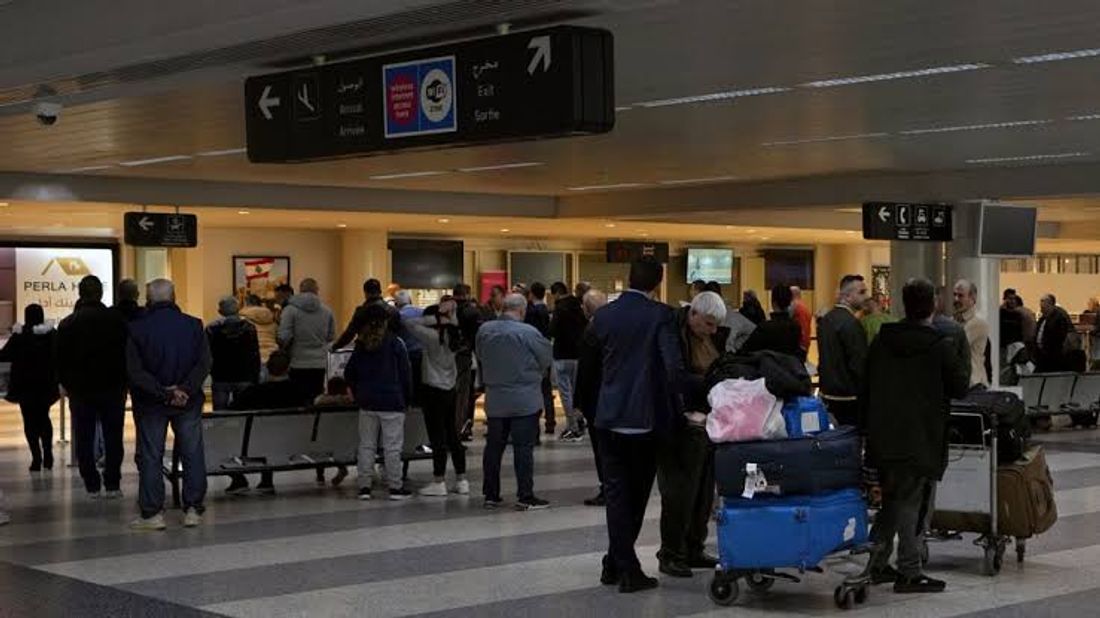
The Media Office of the Ministry of Energy and Water issued a statement regarding the electricity cut to Beirut Airport and the statement released by the Air Transport Union, saying:
The Ministry of Energy and Water expresses its deep regret over the inaccuracies, accusations, and allegations contained in the statement issued by the Air Transport Union in Lebanon (UTA) against the Ministry, in an attempt to justify Rafic Hariri International Airport – Beirut’s failure to pay its outstanding bills owed to Electricité du Liban (EDL).
The decision to cut off electricity to entities that fail to pay their bills is neither an emotional reaction nor a punitive or arbitrary measure, as the statement attempts to portray it. Rather, it is a measure of necessity that falls within the principle of “the last resort,” and was taken only after weeks and months of repeated appeals by Minister of Energy and Water Joe Saddi and the Board of Directors of Electricité du Liban to all concerned parties, urging them to assume their responsibilities and settle their outstanding financial obligations.
More seriously, the Air Transport Union’s statement distorts the facts and attempts to evade the financial responsibilities incumbent upon the airport administration. The airport, like any other public institution or facility, consumes electricity as a paid service, just as it pays salaries and purchases fuel, cleaning supplies, and other operational necessities. Therefore, it is responsible for paying the cost of that electricity.
Accordingly, the payment of taxes and fees cannot be used as a pretext to evade this obligation, since tax obligations do not cancel out outstanding financial dues incurred through electricity consumption.
If a financial deficit prevents the airport from meeting these obligations, responsibility for securing the necessary funding to address it lies with the consuming entity and the supervising ministry, through the Ministry of Finance, and not with Electricité du Liban or the Ministry of Energy.
Based on the above, the Ministry of Energy and Water emphasizes that the issue is not with Rafic Hariri International Airport, which serves as Lebanon’s gateway to the world and a vital facility for the national economy, but rather with the principle of evading financial responsibilities and obligations.
Therefore, demanding that responsibilities be assumed and outstanding bills be paid is neither a threat, nor an act of targeting, nor a malicious measure. It is a legal and financial obligation and a fundamental condition for ensuring the continuity of public facilities and the regular provision of their services.
The equation remains clear and simple: paying for consumed electricity is what enables Electricité du Liban to secure the funds needed to purchase fuel and ensure the continuity of electricity supply to the airport, as well as to other facilities, institutions, and citizens throughout Lebanon.
There can be no continuity of electricity services without regular payment of outstanding bills, and the burden of any entity’s failure to meet its obligations must not be transferred to the Corporation and, consequently, to all Lebanese citizens.


