
Today’s edition of Al-Akhbar newspaper reported:
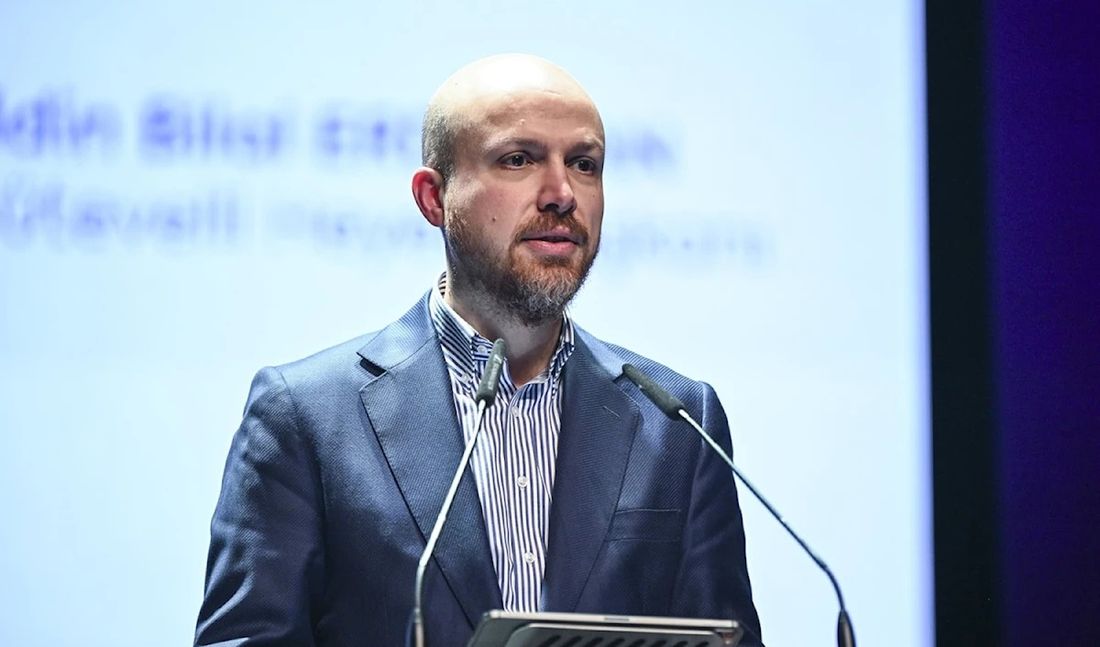
The visit to Lebanon by Bilal Erdoğan, son of Turkish President Recep Tayyip Erdoğan, is no longer merely speculation that has circulated over the past several months. According to information obtained by Al-Akhbar, the visit has been scheduled for the middle of next month. The program will largely focus on humanitarian and social activities, but it also carries implications that extend beyond charitable work. The visit comes amid growing Turkish efforts to expand Ankara’s presence in Lebanon at a time when regional spheres of influence are being redrawn.
While official meetings will be limited to Lebanon’s three presidents and several religious authorities, Tripoli will occupy a prominent place on the visit’s agenda. According to informed sources, Erdoğan intends to organize a public gathering during which he will emphasize the importance of the city to Turkey. His team has also begun preparing for a public tour of the city’s old neighborhoods, alongside the announcement of projects to restore several historic buildings dating back to the Ottoman era, as well as a package of scholarships at private universities that would exceed the scholarship programs Ankara offers annually in Lebanon.
The program will also include meetings with religious figures in the city, as well as officials from the Port of Tripoli, the Tripoli Special Economic Zone, and the Rashid Karami International Fair. The discussions will explore opportunities for cooperation and the launch of joint projects between these institutions and their Turkish counterparts. To this end, Erdoğan’s accompanying delegation will include businesspeople and officials from Turkey’s service sectors.
Over the past several years, Turkey has expanded the scope of its aid and projects in Lebanon through the Turkish Cooperation and Coordination Agency (TİKA), leveraging humanitarian, cultural, and development initiatives to gradually establish a presence in several regions.
From Turkey’s perspective, Tripoli appears to be the most receptive environment for expanding this presence, not only because of its historical and social ties with Turkey, but also because of its position within Lebanon’s Sunni political landscape.
In this context, Ankara is seeking to break Riyadh’s traditional monopoly over the Sunni political file in Lebanon, capitalizing on the absence of a clear Saudi political project for managing this arena.
Saudi Arabia, which contributed to Saad Hariri’s withdrawal from political life, has not worked to produce an alternative leader in the years since his departure. Instead, it has pursued a policy that has limited opportunities for political and development initiatives and reduced forms of support for Lebanon’s Sunni community, leaving it in a political and leadership vacuum for which Riyadh itself was one of the principal contributing factors.
However, Turkey’s growing push faces a different set of calculations among Lebanon’s highest authorities in Beirut.
Since taking office as president, Joseph Aoun has taken steps aimed at positioning Lebanon within a different network of regional relations involving the United Arab Emirates, Greece, Cyprus, and India, a network whose interests intersect with those of Israel in the eastern Mediterranean.
Among the most notable steps was Aoun’s insistence on signing an agreement with Cyprus to demarcate the exclusive economic zones of the two countries without coordinating with Turkey. Ankara expressed strong displeasure over the Lebanese move. This was followed by Aoun’s visit to Athens and his remarks about a strategic alliance with Greece, coinciding with Greece signing its largest-ever defense agreement with Israel.
Another development was the inclusion of the ports of Beirut and Tripoli in the network of ports associated with the India–Middle East–Europe Economic Corridor (IMEC) last Saturday. Aoun celebrated the move, which was undertaken at his direction, suggesting that Lebanon is opening up to regional projects that compete with Turkey’s ambitions in the eastern Mediterranean.
This raises questions about how the Lebanese authorities will respond to Turkish proposals and whether they will treat them as opportunities for economic and military cooperation or leave them on hold to accommodate other regional considerations.


