
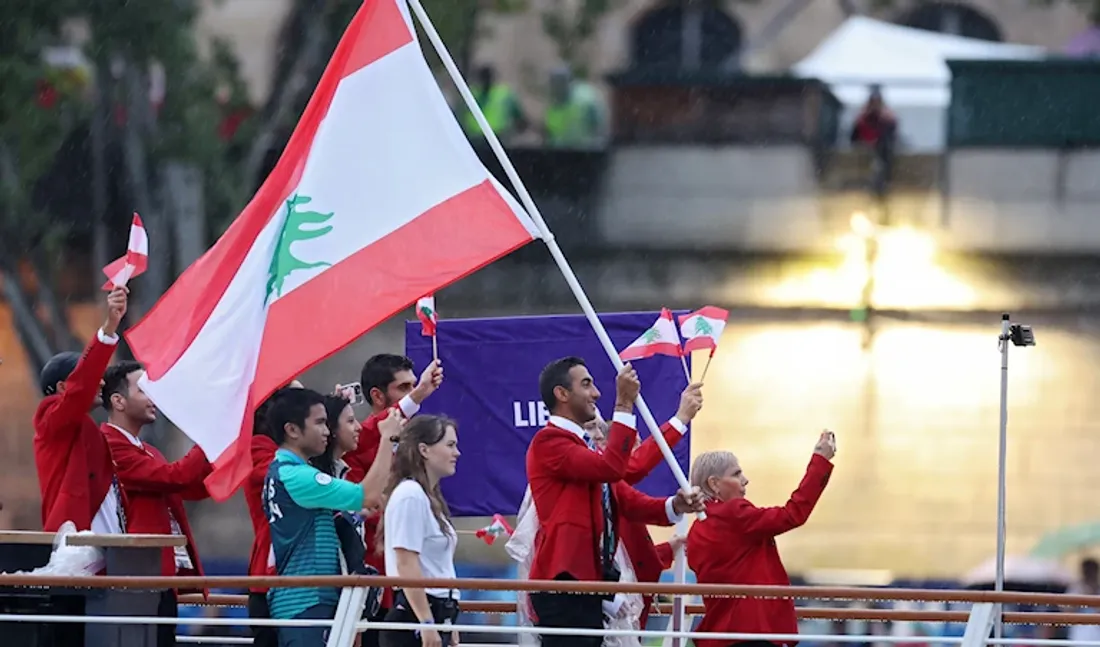
Since 2021, Lebanese sports have been caught up in what has become known as the “Olympic Committee crisis.” The dispute continued into last year, when Youth and Sports Minister Nora Bayrakdarian granted an administrative certificate from the ministry to the committee elected on May 14, 2025, headed by Jihad Salameh. The committee elected on May 16, headed by Boutros Al-Jalkh, considered the decision illegal, arguing that the Olympic Committee led by Al-Jalkh is the one internationally recognized under a ruling by the Court of Arbitration for Sport (CAS).
Since then, Lebanon's sports sector has been sharply divided. One committee holds an administrative certificate from the Lebanese Ministry of Youth and Sports, while another is internationally recognized and is responsible for Lebanon's participation in the Olympic Games and international competitions, representing the country in international delegations, and overseeing the Olympic movement.
The Olympic Committee headed by Al-Jalkh maintained that the Youth and Sports Minister had taken sides in the dispute, despite the fact that the Olympic Committee's work must remain independent and should not be subject to direct ministerial interference, in accordance with the Olympic Charter.
As the crisis continued, a high-level Qatari delegation visited Lebanon around two months ago and held a series of meetings with Lebanese officials, including President Joseph Aoun, Prime Minister Nawaf Salam, and Minister Bayrakdarian. Reports also indicated that the delegation held several meetings away from the media spotlight with a number of other figures.
The delegation, sent by the Olympic Council of Asia, included Faisal Ahmed bin Ali Al Thani, Director of the International Relations Office of Sheikh Joaan bin Hamad Al Thani, President of the Olympic Council of Asia. The delegation explicitly warned Lebanese officials that if the situation continued unchanged, Lebanese sports could be suspended from international competitions, with the resulting financial and moral damage to Lebanese sports and athletes.
The International Olympic Committee and the Olympic Council of Asia have set November 15 as the deadline for a response.
The visit at such a high level and the explicit warning of suspension did not prompt a domestic resolution to the crisis. Instead, just days ago, the International Olympic Committee and the Olympic Council of Asia sent a clear letter to Lebanese Youth and Sports Minister Nora Bayrakdarian, warning that Lebanon's Olympic and sports movement could face sanctions, or what are known as “protective measures,” if the minister failed to take all necessary steps through her ministry and the relevant government authorities to support, cooperate with, and work exclusively and closely alongside the leadership of the Lebanese Olympic Committee recognized by the International Olympic Committee and duly elected on May 16, 2025, in implementation of the Court of Arbitration for Sport ruling issued on March 20, 2026.
The letter set November 15 of this month as the deadline for a response and compliance, in order to avoid exposing Lebanon's Olympic and sports movement to preventive measures and sanctions under Article 27.9 of the Olympic Charter.
Based on all of this, it is clear that the Olympic Council of Asia and the International Olympic Committee recognize the committee with which they are currently working, headed by Boutros Al-Jalkh, along with all members of its executive board. Its term is set to continue until the conclusion of the Los Angeles 2028 Olympic Games.
It is worth noting that CAS also upheld the right of three sports federations—the Lebanese Modern Pentathlon Federation, the Lebanese Skate Federation, and the Lebanese Surfing Federation—as well as the interim committee appointed by World Aquatics to manage the Swimming Federation, to participate in the General Assembly held on May 16, 2025.
The International Olympic Committee and the Olympic Council of Asia also addressed this matter in their letter, stating: “We emphasize the need to deal with all duly affiliated national sports federations recognized by their respective international federations, in full compliance with the Olympic Charter.”
Lebanese sports have therefore entered an extremely sensitive and critical phase. If the crisis remains unresolved, numerous Lebanese sports could be barred from participating in international competitions. This could affect some of the country's major sports, resulting in financial losses through terminated contracts, suspended participation, and canceled sponsorship agreements, in addition to harming those who benefit from and work within the sports sector.
The coming days will be decisive. Taking a decision that protects Lebanese sports and athletes could spare the country significant losses.
Source: Al-Akhbar


