
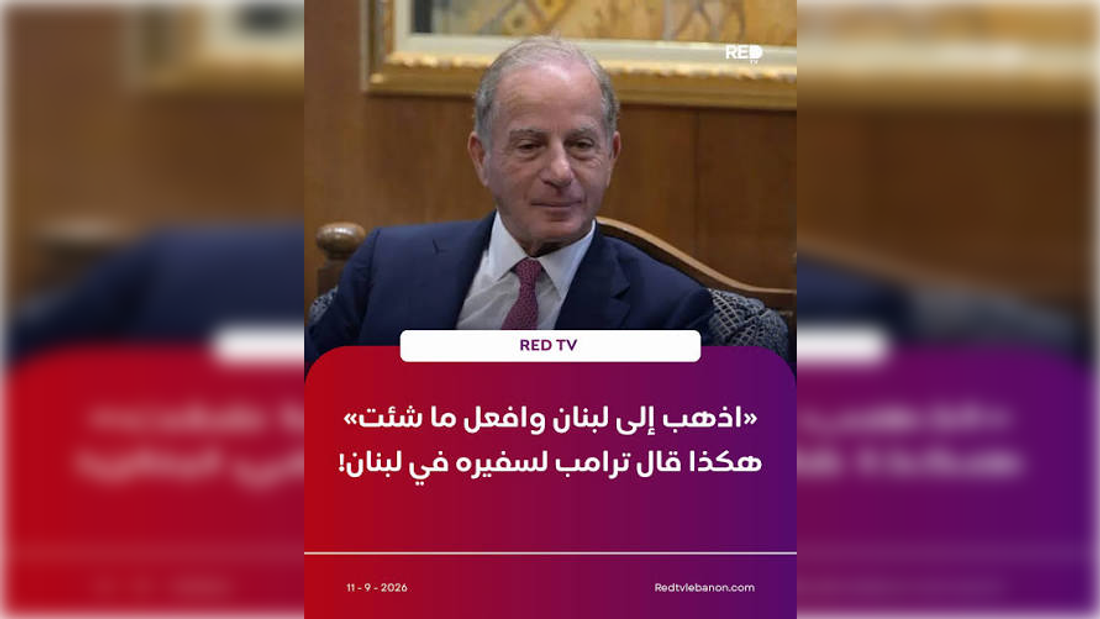
The scope of U.S. pressure on Lebanon is expanding beyond political institutions to include diplomatic representation and security agencies, in what appears to be an effort to reshape the balance of influence within state institutions and push them toward involvement in the U.S. project proposed for Lebanon.
According to information obtained by Al-Akhbar, the campaign has now moved into Lebanon's security institutions through efforts led by Lebanese networks active in Washington that are described as pro-Israel and seeking to influence U.S. policy toward Lebanon. The sources said the most active network in this area is led by Lebanese Ambassador Nada Moawad, in coordination with U.S. Ambassador Michel Issa.
According to the same sources, Issa no longer hides his dissatisfaction with a number of Lebanese figures and officials and has begun mentioning their names publicly as part of his اعتراض to what he sees as their failure to respond to U.S. demands.
The information indicates that these tensions have also extended to President Joseph Aoun over what the sources describe as an inability to carry out the tasks expected of him under the U.S. vision.
In this context, the sources said the Moawad-Issa network is working to push for U.S. sanctions against officers in Lebanese security agencies. According to the report, anyone who does not appear to be aligned with the U.S. project aimed at gaining control over key security institutions is viewed as someone who should be held accountable.
Among the names being discussed is a senior army officer, in addition to the Deputy Director General of State Security, Brig. Gen. Murshid Suleiman. U.S. criticism of Suleiman reportedly intensified after he participated in a ceremony marking the anniversary of the assassination of Sayyed Hassan Nasrallah. The report said his participation was viewed as reflecting a political alignment inconsistent with the direction Washington seeks to impose on Lebanon's security institutions.
If these efforts develop into actual sanctions, the sources said they would constitute a third message to Parliament Speaker Nabih Berri. There has also been discussion of the possibility of placing leaders of the Amal Movement on sanctions lists, as happened previously with MP Ali Hassan Khalil and Berri's adviser Ahmad Baalbaki.
Al-Akhbar also highlighted the actions of the U.S. ambassador in Beirut. While it may be difficult for Lebanese officials to expect Issa to be boycotted or questioned within Lebanon, the issue could move to the United States, where Democrats who won in the recent elections are reportedly preparing to open the matter.
The issue appears to be serious in light of discussions held with several newly elected Democratic lawmakers, who worked during their election campaigns with Americans of Lebanese descent who had previously provided information about Ambassador Issa's conduct in Lebanon and what they considered departures from diplomatic norms.
One newly elected U.S. lawmaker reportedly asked a former diplomat who had served in Beirut about Issa's conduct. She shared what she knew and said that he would destroy a significant legacy of U.S. diplomacy in Lebanon.
The report added that senior officials at the U.S. State Department had been urging that Issa be held accountable, but Secretary of State Marco Rubio would reportedly remind them that Issa is a personal friend of President Donald Trump.


