
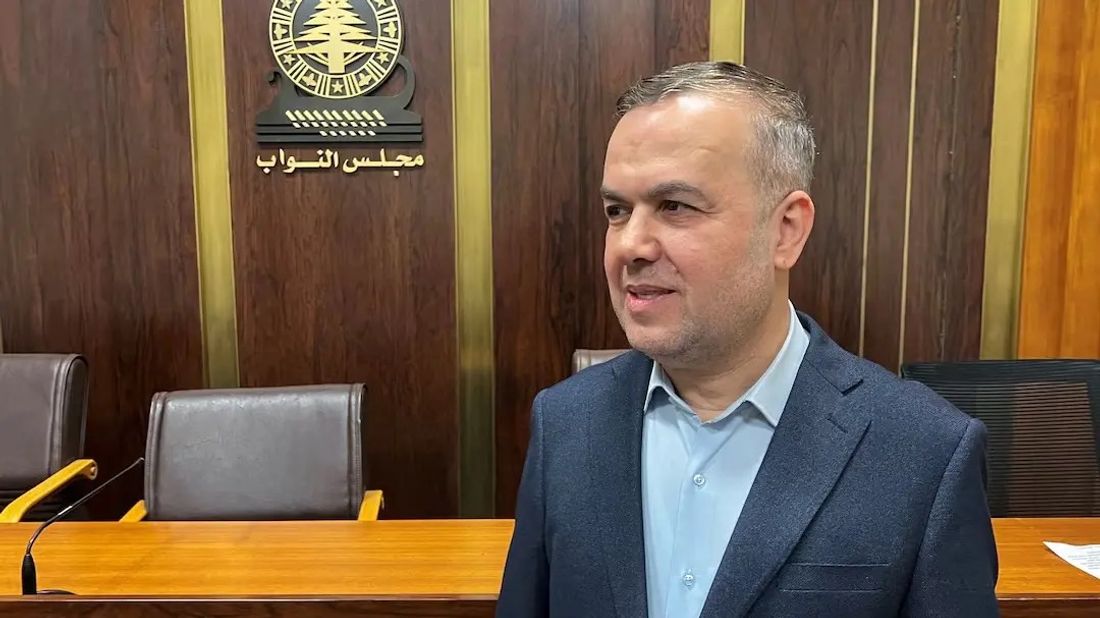
Hassan Fadlallah, a member of the Loyalty to the Resistance parliamentary bloc, said in a statement from Parliament that the government’s financial policy risks plunging Lebanon into another financial crisis.
“Far from media sensationalism and attempts to distract the Lebanese with various reports and suspicious leaks, diverting their attention from the livelihood and daily-life issues they are facing at this stage, we would like to shed light on the financial situation in light of today’s parliamentary session,” Fadlallah said.
He noted that the session’s agenda includes draft laws and loans totaling around half a billion dollars, including exceptional appropriations worth $150 million, of which $100 million is allocated to electricity.
“These appropriations are being submitted to Parliament while the budget is under discussion. As we raised during the session, it is unclear why the government is resorting to exceptional spending when there is already a budget. Is this intended to cover the deficit? Is it meant to finance spending outside the framework of budgetary oversight? The similar financial policies pursued in the past are what brought us to collapse,” he said.
Fadlallah warned that “the financial policy being repeated today is even worse than what came before.” He stressed that while some are dragging the country into political disputes and distractions, fundamental and urgent financial issues directly affecting citizens’ lives are being overlooked.
“For example, what will $100 million allocated to electricity actually achieve? Will it provide electricity, or is it merely intended to resolve a problem involving the minister and his attendance at Cabinet sessions? The state wants to pay $100 million under the pretext of settling dues owed by institutions that had not been paying. But why were they not paying? We have allocated funds for these institutions in every budget. Where were those funds spent? Who failed to claim the dues, and who failed to pay them? We raised many questions, but so far there have been no convincing answers,” he added.
“There is spending that leads to financial chaos, as happened in the past, and unfortunately, the same pattern is being repeated,” he said.
He also questioned the government’s approach to loans, noting that some proposed loans are sometimes cancelled following calls for their cancellation, while others are approved.
“The question is: Who determines the priorities, and according to what criteria are these loans proposed? When they are presented, we are effectively told to either accept them as they are or reject them,” he said.
Fadlallah pointed out that he had seen no practical implementation of the reform pledges made by the government.
“Electricity has not improved, and some of these loans have brought no tangible benefit to the country or its infrastructure. In Parliament, we are exercising our role and voting for what we believe in and against what we do not. Ultimately, it is the parliamentary majority and the government majority that make the decisions,” he said.
“We are now raising our voices before all Lebanese so that they are fully aware of what is happening. If we continue with this approach to public spending, which involves considerable randomness and political calculations, we could once again find ourselves facing a financial crisis even more dangerous than the one we experienced before,” he warned.
Fadlallah stressed that the government must present a clear plan and ensure that spending is incorporated into the budget. Any exceptional expenditure, he added, must comply with the applicable laws, particularly the Public Accounting Law, which he said is being circumvented.
“We are talking today about half a billion dollars, while $650 million was approved during the previous session. We asked them then: Is it reasonable for approximately 15% of the budget to consist of exceptional spending while we are in the process of discussing the budget? Why was this spending not included in the budget?” he said.
Fadlallah concluded by raising concerns over a loan for a 2.7-kilometer road project, stressing that his objection was not to the project’s location or the need to repair the road, but to its cost.
“Is it reasonable, given Lebanon’s current financial situation, for the state to borrow $13.5 million, with an additional $2.5 million in government financing, to carry out works on a road stretching just 2.7 kilometers? We support repairing the road, but not through such exorbitant financing, which involves considerable waste, as do other projects,” he said.
He said his statement from Parliament was intended as a warning to the government and the Lebanese people that the financial policy currently being pursued would lead to another financial crisis.
“We must stop resorting to patchwork solutions and move toward genuine reform. Unfortunately, that reform ha
s yet to materialize,” he concluded.


