
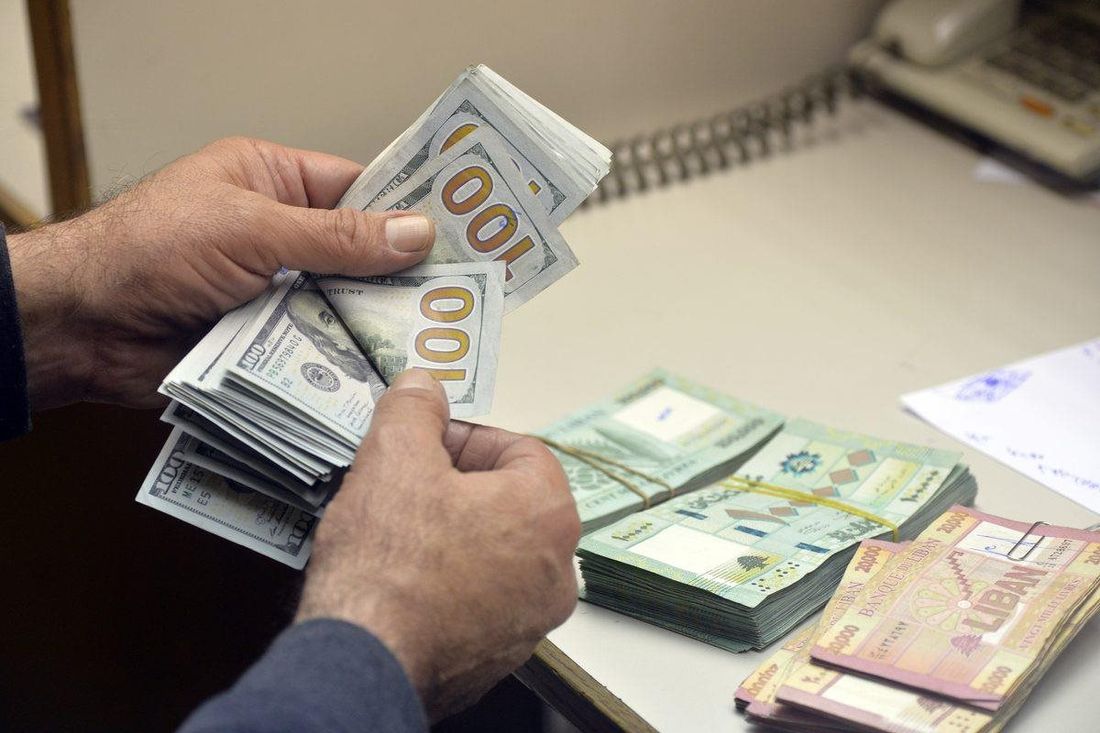
In recent times, the phenomenon of multiple U.S. dollar exchange rates has emerged in Lebanon, despite the prevailing exchange rate remaining stable at 89,500 Lebanese pounds. This has raised questions about why different rates are being adopted across commercial and consumer sectors, who determines them, and the extent to which they are subject to official oversight.
In this context, it has been found that the dollar exchange rate used to calculate fuel prices, particularly gasoline, stands at 89,700 Lebanese pounds. This is the rate on which the price schedules issued by the Ministry of Energy and Water are based.
Meanwhile, some stores and commercial establishments use different exchange rates. Some calculate the dollar at 89,000 Lebanese pounds, while others use a rate of 89,300 pounds. At other commercial establishments, the rate reaches 90,000 Lebanese pounds.
This disparity reflects the absence of a unified exchange rate for commercial transactions, raising questions about the criteria used by institutions to determine their exchange rates, particularly since these differences, although seemingly limited, may affect the final prices of goods and products paid for by consumers in Lebanese pounds.
The multiple rates also raise questions about the role of the relevant regulatory authorities in monitoring pricing mechanisms, verifying the extent to which businesses comply with applicable rules, and preventing any exploitation of exchange-rate differences at the expense of consumers.
Notably, these multiple rates do not necessarily indicate an actual change in the dollar's market value, but rather reveal differences in the methods used to calculate it across sectors and commercial establishments.


