
Al-Liwaa newspaper reported that, as the countdown begins to a change in the status of the United Nations Interim Force in Lebanon (UNIFIL), whose mandate ends at the end of this year, UN Secretary-General António Guterres is set to provide a briefing on Resolution 1701, which alone guarantees Lebanon’s international borders under international law, according to what Speaker Nabih Berri has stated.
Lebanese contacts with countries friendly to Lebanon, particularly European countries, have intensified in support of the Lebanese position calling for a postponement of UNIFIL’s withdrawal, or for the formation of an international or European force to replace it should the Security Council not reconsider its decision to end the force’s mandate, contrary to Lebanon’s position.
However, waiting and monitoring international and regional developments continue to dominate the Lebanese situation until their results and repercussions on all countries in the region become clear, whether through war or an agreement. This comes following the U.S. midterm elections and the Israeli parliamentary elections, and ahead of Israeli President Isaac Herzog’s expected move on Sunday to task Yashar Party leader and his allies, Gadi Eisenkot, with forming a government after securing a majority.
No positive developments are expected regarding the situation on the ground in southern Lebanon, as Eisenkot’s military and security doctrine continues to guide his approach. Eisenkot spoke of “significant progress in consultations to form the new Israeli government,” welcoming the participation of any party or Knesset member who agrees with his four basic principles, including recognizing Israel as a Jewish state and considering Hamas a terrorist organization. He said: “I discussed with partners the formation of an emergency government to bring down Netanyahu’s government.”
In the United States, information indicates that the new Democratic majority does not currently place Lebanon among its priorities. American interest in Lebanon may decline further for several reasons, including both Democratic and Republican support for Israel, as well as preoccupation with reorganizing the country following the turmoil caused by President Trump domestically and internationally.
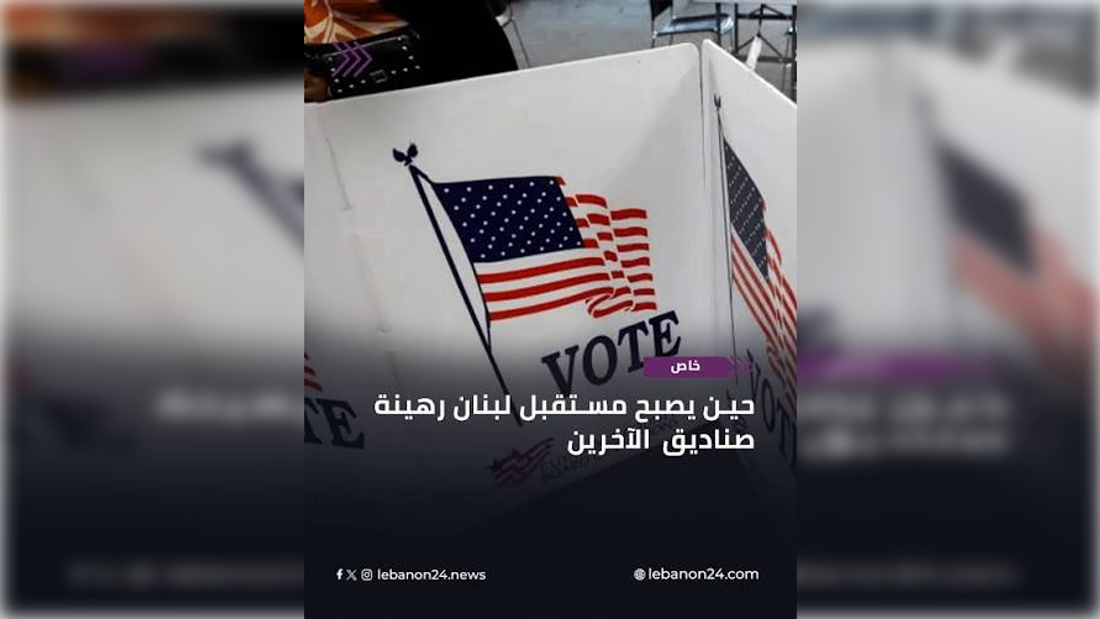
An-Nahar also reported that the general situation in Lebanon, like that of most countries in the region, appears to be held hostage by a forced wait for a clearer picture of the direction the region will take following the U.S. elections and the Israeli elections before them. The coming days are expected, in principle, to determine the decision President Donald Trump will make regarding Iran—whether war or continued mediation and negotiations—as well as the appointment of the Israeli prime minister. These developments could make it possible to anticipate the path the region, including Lebanon, will take. Available indications regarding the U.S. position on Lebanon suggest that policies remain unchanged following the American elections.
A senior official told Al-Joumhouria: “The extent of the uncertainty Lebanon is experiencing is unknown, as are the developments that may emerge later in connection with the changes brought about by the elections in Israel and the United States. Accordingly, I would not venture to confirm any positive expectations, but would maintain a high degree of caution.”
He explained: “We have not received any warning about anything, nor any reassurance from any external level or source regarding the coming period. In many cases, they ask us what might happen, which means that nobody knows what is going to happen.”
The newspaper quoted a senior source as saying: “Washington, as is well known, plays the main role in the Lebanese file, both domestically and in the direct negotiations with Israel and the framework agreement resulting from them. Indications from the United States show that the Democratic Party’s sweeping victory in both the House and Senate has ushered the United States into a new phase that will be difficult for President Donald Trump and his Republican administration, both domestically and regarding foreign issues concerning the United States.”
This means that the elections could lead to a reshuffling of American priorities. Consequently, Washington’s post-midterm priorities may require slowing the role currently led by Trump and his administration toward Lebanon, or reducing its momentum. The natural result could be removing the Lebanese file from the level of priority it held under the Trump administration before its midterm election losses, slowing its handling, or even freezing it for an indefinite period.
Al-Joumhouria pointed to political assessments that rule out Israel escalating the conflict on the Lebanese front, linking this to political developments inside Israel and the worsening crisis resulting from the recent elections. However, Hebrew media in recent days have reflected what appeared to be escalating signals from Israel, raising concerns that they could be followed by hostile actions.
Israeli media have recently renewed their focus on Hezb0llah. The Hebrew newspaper Yedioth Ahronoth published a report claiming that “the party is using this period to rebuild its capabilities, improve the efficiency of its members, and gather information about the Israeli army.” Meanwhile, the Israeli Walla website quoted a senior Israeli security official as saying that Hezb0llah had carried out activities in recent weeks and attempted to increase friction with the Israeli army along the Yellow Line in southern Lebanon.
Ad-Diyar reported that political leaders fear the Lebanese may once again pay the price for the transitional period between the old and new Congress and between Netanyahu and Eisenkot, with the situation deteriorating despite the absence of fundamental differences between Republicans and Democrats regarding Lebanon.
Amid rapid developments in the region and multiple possible scenarios, Lebanon is once again entering a period of stagnation, waiting and uncertainty regarding the resumption of negotiations between Lebanon and Israel.


