
The Lebanese newspaper Al-Akhbar wrote today:
Removing Lebanon from the Islamabad Memorandum was not merely a disagreement over the format of negotiations or which party should represent the state. It was the first political attempt to overturn the regional process, aimed at separating the Lebanese front from the US-Iranian understanding.
The memorandum's first clause stipulated an end to the war on Lebanon, including a cessation of military operations and an Israeli withdrawal. This effectively deprived Iran of a key bargaining card and placed Lebanon back on a separate track, under the heading of direct negotiations with Israel, after the Lebanese authorities were pushed to declare that they did not want anyone negotiating on their behalf.
A second, more dangerous attempt to overturn this process is now advancing. It does not merely seek to separate the negotiating tracks, but also to legally and internationally entrench that separation, turning it into a reality from which Lebanon would find it difficult to retreat.
This time, the objective appears to go beyond simply continuing direct negotiations. It is to establish an alternative UN framework that would make the Framework Agreement between Lebanon and Israel the primary reference governing southern Lebanon, while removing the Lebanese issue from any future US-Iranian settlement.
For the American camp led by Marco Rubio, which is known for opposing Lebanon's inclusion in the regional settlement, the problem is that Iran continues to insist on linking an end to the war on Lebanon to a broader agreement.
This means Washington has not yet succeeded in definitively closing the Lebanese file. Hence the need to establish a parallel track.
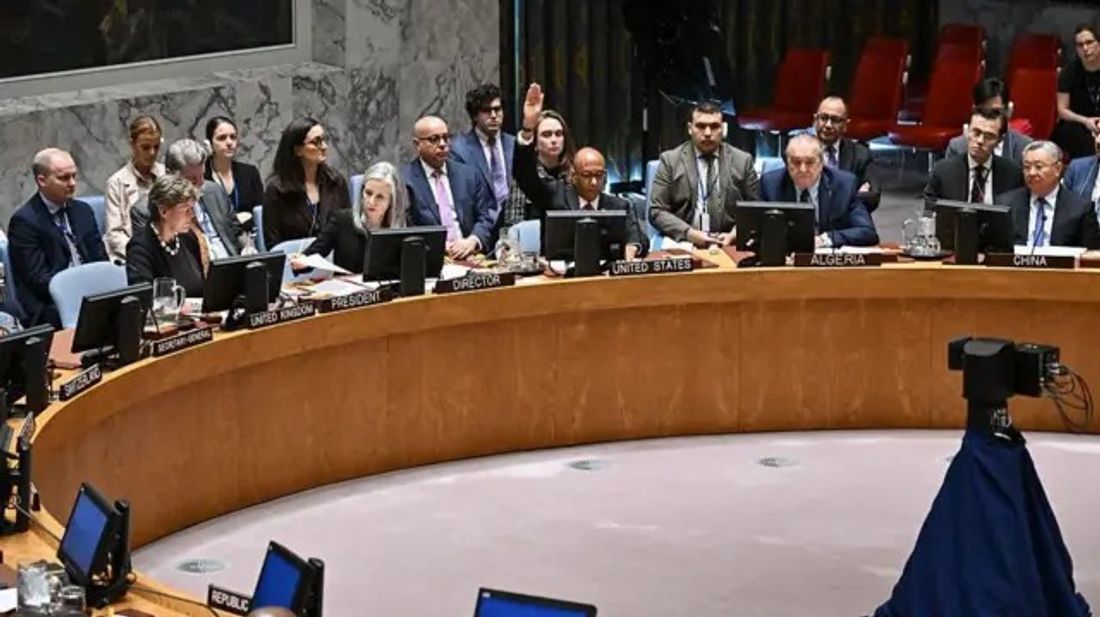
Moving the Issue to the UN Security Council
Against this backdrop, the option of transferring the issue to the UN Security Council is emerging, either through a new resolution adopted by the Council or through a UN formula that incorporates the proposed arrangements into the security structure that will replace UNIFIL.
In this context, France's diplomatic moves cannot be separated from American calculations.
Paris, whose role in managing the Lebanese file has been curtailed by American and Israeli objections, sees the new American proposals as an opportunity to regain its position. France is prepared to participate in shaping the new security structure, whether through involvement in the monitoring mechanism or by playing a role in any future UN framework.
An Official Lebanese Request to the Security Council?
The danger of reports suggesting that Washington intends to push the Lebanese authorities into submitting an official request to the Security Council to incorporate the Framework Agreement into a new international resolution is becoming increasingly apparent.
According to the information available, the objective is not simply to secure Lebanon's approval of a monitoring mechanism. Rather, Washington wants the request to come directly from the Lebanese state itself, allowing the United States to present the move as a Lebanese choice.
Lebanese approval would place Russia and China in a different political position and provide the proposal with political cover that would make it difficult to veto, particularly if it were presented as a response to an official request from Beirut.
This possibility takes on additional significance ahead of the anticipated visit by US Ambassador to the United Nations Michael Waltz to Beirut on November 16 and 17.
According to information obtained by *Al-Akhbar*, Waltz will discuss with Lebanese officials the future of security arrangements after UNIFIL. Leaks also point to an American inclination towards establishing a verification committee or an alternative security body, as well as discussing a new UN resolution with the Lebanese authorities.
A Constitutional and Political Dilemma for Lebanon
This is where the domestic political dilemma begins.
Can Presidents Joseph Aoun and Nawaf Salam submit such a request without discussing its substance within the Cabinet or with the Speaker of Parliament?
And can such a move be considered merely a diplomatic step when, in reality, it would involve fundamentally reorganizing Lebanon's security and political commitments towards Israel?
Unequal Obligations and the Risk of Internal Conflict
Sources believe the danger of this development exceeds everything that has preceded it.
If a UN formula is adopted making implementation of the Framework Agreement the new practical reference point, and linking an Israeli withdrawal to progress by the Lebanese Army in disarming Hezbollah and verifying that disarmament, without clear, reciprocal timelines guaranteeing withdrawal and an end to Israeli attacks, Lebanon would face a serious imbalance in the sequence of obligations.
Lebanon would then be required to fulfil its commitments first, while Israel's implementation of its own obligations would remain subject to assessments and verification mechanisms.
This would open the door to maintaining the occupation and Israeli attacks under renewed security justifications, instead of treating them as violations requiring withdrawal and accountability.
Even more dangerously, such an arrangement could place the Lebanese Army in direct confrontation with internal forces if it were held responsible for implementing disarmament arrangements by force while the Israeli occupation continues and no withdrawal takes place.
At that point, the danger would no longer be confined to southern Lebanon. It would extend to domestic stability and relations between the Lebanese Army and the resistance, potentially pushing the country towards internal strife and conflict.


