
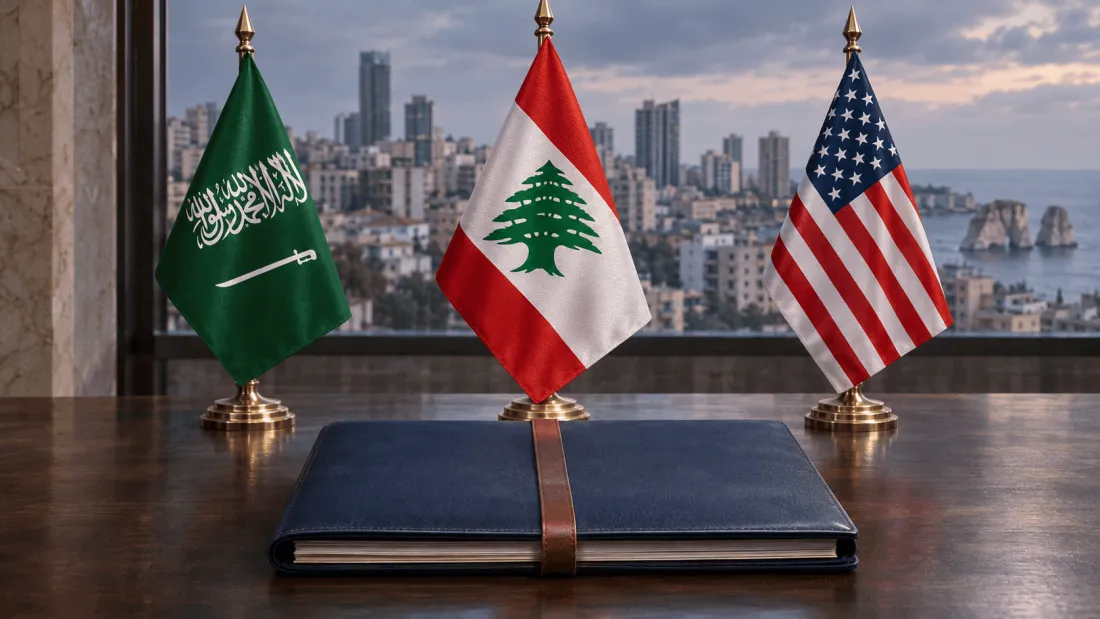
Political observers agree that Lebanon no longer has the luxury of time for its political leadership to translate government decisions into practical implementation before the end of 2026, when the mandate of the United Nations Interim Force in Lebanon (UNIFIL) in the South expires. External messages sent to Lebanon no longer leave much room for interpretation, as it has become clear that Riyadh and Washington converge on a core premise: Lebanon cannot be helped to recover while the decision of war and peace remains outside the authority of the state, and while illegitimate weapons retain the ability to impose their own equations domestically and externally. The messages carried by Saudi envoy Prince Yazid bin Farhan, preceded by the positions of US envoy Mike Waltz, indicate that the phase of diplomatic pleasantries is nearing its end, and that Lebanese officials are required to move from pledges to execution.
During his political tour, which he continued away from the spotlight before departing Beirut, Bin Farhan informed Lebanese officials—according to circulated information regarding his meetings—that the Kingdom of Saudi Arabia is ready to support Lebanon once the state makes up its mind and takes an actual decision to disarm Hezb0llah. He left little room to believe that compromise formulas would be accepted, as containing or freezing the weapons does not, according to what was relayed from him, constitute a solution acceptable to Riyadh. What is required is a clear decision that proves the seriousness of the Lebanese state and restores to it alone the responsibility for security and sovereignty.
Notably, this Saudi message intersects with what Lebanese officials heard from US envoy Mike Waltz, who stressed during his meetings in Beirut the necessity for Hezbollah to hand over its weapons to the Lebanese state, considering that no state can exist with two armies. He affirmed that restoring Lebanese sovereignty passes through legitimate institutions, foremost among them the national army. He also announced his support for President Joseph Aoun's decision to engage in tripartite dialogue in pursuit of peace.
Consequently, the message directed by President Aoun to Hezb0llah regarding the necessity of handing over its weapons cannot be separated from the atmosphere surrounding Waltz's visit, nor from the Saudi stance that reaffirmed that Arab and international support is not open-ended without conditions. The President realizes that the margin for maneuver is narrowing, and that continued stagnation could place Lebanon before political, economic, and security milestones it cannot bear.
Bin Farhan's affirmation of the Kingdom's continued support for the current government, despite its hybrid composition, carries an additional significance. Saudi support for the government stands, yet it does not mean granting it a blank check; rather, it places upon it the responsibility to prove its ability to implement the decisions it has taken, chief among them extending state authority across all its territory.
As for the cancellation of tomorrow's Cabinet session due to a private family circumstance that arose for Prime Minister Salam and required him to leave Lebanon, it remains among the administrative details separate from the broader political trajectory and does not alter the magnitude of the files and milestones awaiting the government.
The American and Saudi messages may appear complementary in substance, even if their tools and methods differ. Washington clearly defines what it wants regarding sovereignty and weapons, while Riyadh ties its support for Lebanon to the extent of the state's seriousness in implementing this choice. Between these two messages, Lebanon stands before a test that cannot be bypassed through verbal stances or buying time.
Either the state makes a decisive choice and reclaims its sovereign decision-making, or Lebanon remains trapped in a cycle of waiting, as opportunities for support diminish and the cost of keeping weapons outside legitimate institutions rises. This time, external actors appear to want practical answers rather than more promises—without overlooking the pressuring effects of the Israeli occupation on the Lebanese leadership, which balances, within its concept of sovereignty, the necessity of a complete and unconditional withdrawal of the Israeli army from the South against the inevitability of restricting arms exclusively to legitimate forces and no other party.


