
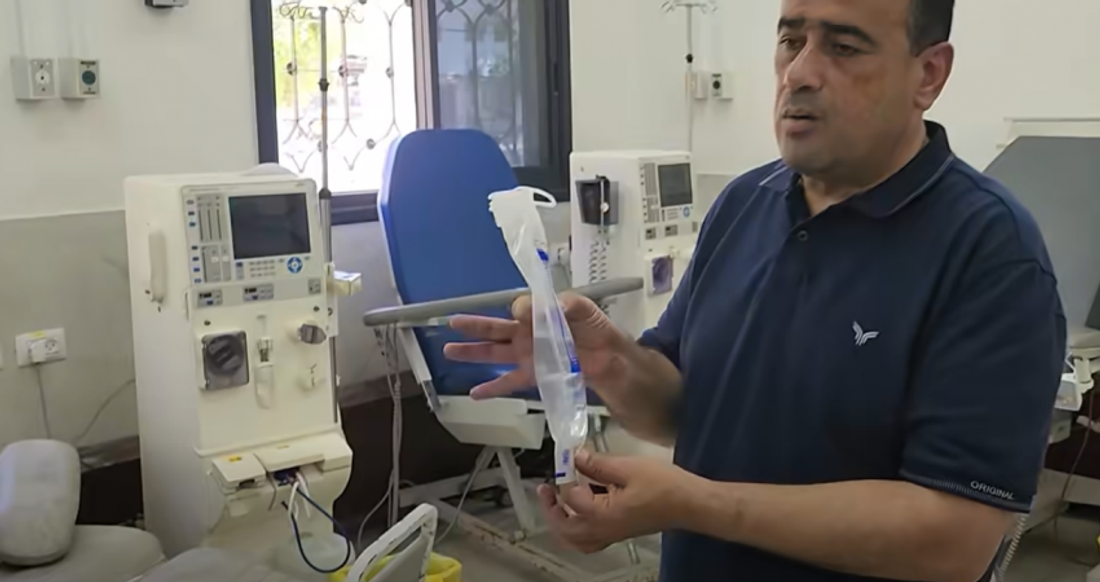
The Gaza Strip is facing a severe and unprecedented shortage of medicines and medical supplies as a result of the ongoing blockade, Israeli military aggression, and restrictions on the entry of medical supplies.
International and human rights organizations have broken their silence, calling for the opening of routes to allow all types of medicines and medical consumables to enter the territory so that medical teams can carry out their work.
Israeli Restrictions
The Palestinian Centre for Human Rights has warned of a worsening crisis involving shortages of medicines, medical consumables, and laboratory supplies in the Gaza Strip.
The center stressed that Israeli restrictions on the entry of medical supplies and the obstruction of efforts to rehabilitate healthcare facilities are threatening the lives of hundreds of thousands of patients and depriving them of access to essential treatment.
In a press statement, the center said the shortage in the stock of essential medicines at the Ministry of Health’s warehouses had reached 42%, with 263 of the 622 approved medication types completely out of stock. The shortage of medical consumables had reached 50%, with 508 of 1,006 items depleted.
It explained that shortages had reached 55% in chemotherapy and hematology services, 56% in maternal and child healthcare, 46% in primary healthcare, and 33% in dialysis services. Shortages had reached 100% in some laboratory services, including public health laboratories, immunology, and tumor marker testing.
Massive Shortages
For his part, Dr. Zakaria Abu Qamar, Director General of Pharmacy at the Gaza Ministry of Health, stressed that the depletion of medicines, medical consumables, and laboratory testing materials directly affects healthcare facilities’ ability to provide treatment and diagnostic services.
Abu Qamar pointed out that the crisis poses a particular threat to cancer patients, people suffering from kidney failure, and those with chronic illnesses.
He noted that more than 350,000 patients with chronic diseases are facing serious difficulties obtaining their medications, including more than 225,000 patients with high blood pressure and approximately 71,000 with diabetes.
He also revealed a 71% shortage in laboratory reagents, with 428 of 605 items out of stock. The shortage of laboratory supplies had reached 76%, hindering essential medical tests and delaying disease diagnoses and patient monitoring.
Abu Qamar considered the continued deprivation of residents of medicines, along with the disruption of medical services and life-saving interventions, to constitute a grave violation of international humanitarian law. He said that, in his assessment, it amounted to subjecting the population to living conditions that threaten their survival and fall within the acts constituting the crime of genocide.
He called on the international community to compel Israel to ensure the immediate and sustained entry of medicines, medical consumables, and diagnostic equipment into the Gaza Strip, and to open the crossings to supplies without restrictions. He also called for priority to be given to cancer treatments, chronic disease medications, and dialysis supplies, as well as ensuring the urgent medical evacuation of patients who cannot be treated inside the territory.
Patients’ Suffering
Only 209 patients and wounded people were able to leave the Gaza Strip for medical treatment abroad during October, amid strict Israeli restrictions on travel through the crossings and irregular medical evacuation procedures. This has worsened the suffering of thousands of patients waiting for an opportunity to receive treatment outside the territory.
The Gaza Ministry of Health said that patients and wounded people were allowed to leave on only seven days out of the 17 days designated for travel during the previous month. The ministry considered these figures disproportionate to the scale of the health catastrophe in the territory and warned that they put the lives of thousands of critical cases at risk.
The ministry warned that irregular opening of the crossings and delays in issuing approvals turn medical evacuation into a race against time, during which patients lose their opportunity to obtain necessary treatment, particularly those in critical condition who require urgent medical intervention or specialized care unavailable in the territory’s hospitals.
These figures come as approximately 21,468 patients and wounded people remain on waiting lists to travel abroad for treatment, including 6,430 cases classified as the highest priority, according to data from the Medical Referrals Committee at the Ministry of Health.
The committee explained that 3,056 patients and wounded people had managed to leave the territory for treatment since February 2026, including 2,614 through the Rafah land crossing and 442 through the Kerem Shalom crossing. This highlights the limited number of people able to leave compared with the scale of accumulated medical needs.


