
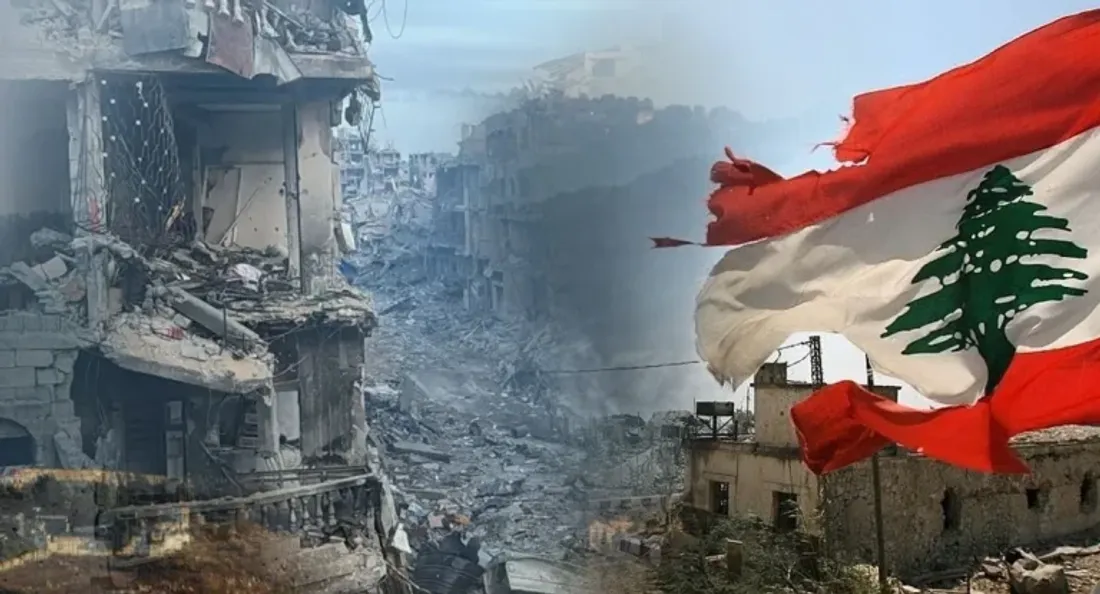
Washington and Riyadh Push to Escalate the Siege... So Who Prevented Al-Zaidi from Visiting Lebanon?
Information revealed over the past three days points to a central push by the United States and Saudi Arabia, involving a request to their allies within the ruling authority, as well as in the political and media spheres, to launch a campaign aimed at tightening the siege on Hezb0llah. The Americans promised to launch a new sanctions program targeting the party's economic and social entities—a move that began with imposing sanctions on the "Wa Ta'awanou" charitable association alongside institutions involved in the gold trade, accompanied by further leaks regarding a list of political, security, and judicial figures whom the Americans claim are working alongside Hezb0llah and rejecting the political authority's management of negotiations with Israel.
Sources revealed that this effort is taking multiple directions, including domestic measures. The Americans stated that while they "understand" the inability to confront Hezb0llah militarily via the army, the authority must do what it can—something possible through media and political measures, and by pursuing party members under the pretext of implementing the government decisions issued on March 2. This has translated into expanding the scope of security agencies' operations across all areas where Hezb0llah is present, pursuing members even when they are holding a social gathering. This was recently reflected in the case of the five young men, noting that some sources indicate the Israeli enemy was the one providing information to the Lebanese agencies via the American side regarding what it calls "suspicious Hezb0llah activity in more than one Lebanese region."
The sources further revealed that the Americans have returned to telling their Lebanese allies that the decision for war against Iran and against the party has already been made, that the matter is merely a question of timing, and that what is required of the Lebanese authority is to be ready to meet the war through direct measures against Hezb0llah. They warned that if the Lebanese Army Command insists on not entering into a direct confrontation with the party to disarm it, the appointment of a new leadership for the military institution must be reconsidered, alongside carrying out changes across all military and security agencies to prevent the presence of any Hezb0llah sympathizer in positions of responsibility.
According to the sources, the visit of Saudi envoy Yazid bin Farhan to Lebanon came within this context and contained no agenda item for discussion outside the necessity of escalating steps against Hezbollah. One person who met him said he was extremely tense, noting that what is transpiring in the confrontation between Saudi Arabia and "Ansar Allah" in Yemen was evident in his behavior and approaches. He considered that the time had come to halt all forms of settlements with the party. President Aoun was the first to comply with the recommendation, making the remarks he gave in an interview with an Iraqi media outlet, alongside telling his guests that dialogue with the party is of no use.
What Does Al-Zaidi's Visit Have to Do With It?
Notably, however, the pressure is no longer confined to local forces, after the real reasons behind the sudden decision issued by Iraqi Prime Minister Ali al-Zaidi not to come to Lebanon came to light. Many had linked the decision to ongoing developments in Iraq and his need to be preoccupied with what is happening in the Jurf al-Sakhar area. Yet it soon became clear that the matter stems from Lebanese and American interventions that did not want Al-Zaidi to visit Lebanon.
Al-Akhbar learned that the relevant security agencies in the Iraqi Prime Minister's Office received reports and intelligence originating from security and Lebanese agencies, alerting Al-Zaidi that his visit to Lebanon was fraught with security risks. According to an informed source, the warnings directly touched upon "the existence of information regarding efforts and preparations to organize protests against him, which would take place in the Southern Suburb (Dahieh)." According to the same source, "the intelligence report indicated that protesters would mobilize against him during his visit to the headquarters of the Supreme Islamic Shiite Council and the Loyalty to the Resistance Bloc, and that the demonstrators would raise slogans objecting to his policy in dealing with the resistance brigades in Iraq."
According to the information, the Iraqi Prime Minister's Office proceeded to contact Hezb0llah's leadership to inquire about the accuracy of this intelligence. The party denied what Lebanese security agencies were circulating, affirming that "the Iraqi Prime Minister is our guest, and we want him to come to Lebanon." It later became apparent that the warnings would disappear if he decided to modify the schedule of his visit to Beirut and shorten it to just a few hours—during which he would meet the three presidents and then depart, without visiting the Southern Suburb, where he had been scheduled to visit the shrine of Sayyed Hassan Nasrallah alongside visits to the headquarters of the Shiite Council and the Loyalty to the Resistance Bloc, noting that the agenda had also included a scheduled meeting in Parliament with a delegation representing the parliamentary blocs of the Amal Movement and Hezb0llah.
When parties within the Iraqi Prime Minister's Office attempted to keep the visit on schedule while altering its agenda by backing away from visiting the Southern Suburb and the official headquarters there, Al-Zaidi received signals that doing so would be viewed as compliance on his part with the program seeking to prevent him from visiting Dahieh or Nasrallah's shrine. Consequently, the decision settled on canceling the visit, especially since Hezb0llah informed Al-Zaidi that any change to the pre-arranged itinerary would turn into an opportunity handed by the Iraqi Prime Minister's Office to the political authority in Lebanon to "exploit the visit against the Shiites in Lebanon."
According to Al-Akhbar's information, the team that worked to cancel the visit was not limited to the American side—which was explicit in rejecting any step by Al-Zaidi that could be considered support for Hezb0llah, or even playing a role that shows Iraq wants to stand "by the Shiites in Lebanon in facing what they are being subjected to." Rather, it emerged that figures inside Lebanon also worked toward this end, particularly the team working with Presidents Joseph Aoun and Nawaf Salam.


