
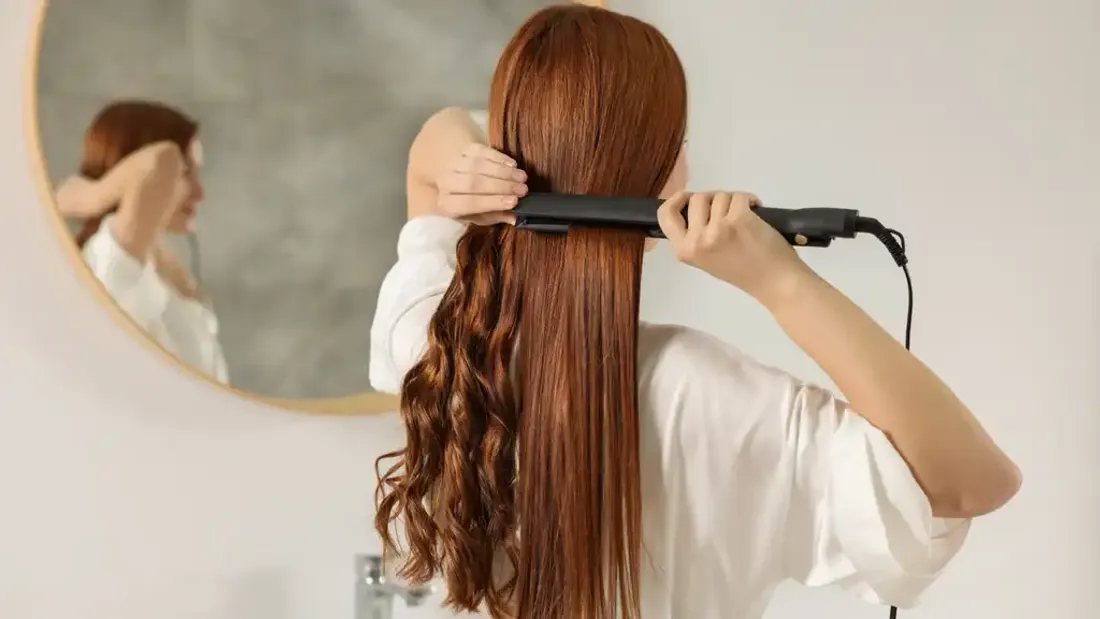
The Silk Press technique has become one of the most popular styling methods for curly hair, giving strands a smooth, sleek, and glossy appearance without the use of chemical straightening products. It relies on heat and modern styling tools to achieve exceptionally straight, soft hair while preserving its natural curly or coiled texture once it is washed.
This technique has evolved significantly from its earlier forms, when it was associated with traditional straightening methods and heavy oils. Advances in hair care products and styling devices now make it possible to achieve smoother, longer-lasting results while reducing the risk of hair damage, provided the preparation, styling, and aftercare steps are followed correctly.
Silk Press has become a preferred method for styling different types of African-textured hair, representing a modern evolution of traditional hair-straightening and curling techniques that became popular during the 1960s and 1970s.
How to Get the Best Results from a Silk Press
Today, the technique relies on hair dryers and electric flat irons, which often feature ceramic plates reinforced with other metals, alongside hair care products such as oils, serums, and smoothing treatments.
The goal is to temporarily straighten the hair using carefully controlled high temperatures, generally ranging from 220 to 250 degrees Celsius, depending on the hair's texture, density, condition, and strength.
Achieving the best results involves more than simply choosing the right straightening tool. The process begins with washing and preparing the hair and extends to how it is cared for after leaving the salon.
Here are the key steps, products, and techniques that can help achieve a silky appearance that lasts.
Preparation: Moisture Is the Foundation of Perfect Results
Washing and preparing the hair is one of the most important steps before applying heat. Curly and coily hair primarily needs moisture rather than excessive use of protein treatments or bond-strengthening products.
Women who want to preserve their natural curls while having the option to switch between their natural texture and a straightened look should make moisturizing a priority. Well-hydrated hair is softer and shinier and requires fewer layers of styling products.
Shampoo selection depends on hair type. Dry hair benefits from a moisturizing shampoo, while hair that tends to become oily may require a clarifying shampoo to remove buildup while maintaining an appropriate level of moisture.
Styling Steps: The Right Heat and Technique
Controlling the temperature and using styling tools correctly are the two main factors behind successful results. The process begins with clean, wet hair. Detangle it thoroughly using a comb, then divide it into four or eight sections, depending on its length, density, and texture.
Next, use a hair dryer to dry and straighten the hair, working on each section separately. Start with lower heat settings, such as levels two or three, to achieve the necessary tension, before increasing the temperature during the final stages to achieve maximum smoothness and straightness.
Once each section is complete, comb the hair and secure it with a clip to keep it organized, minimize tangling, and prevent the strands from reverting to their curly shape while the rest of the hair is being styled.
As for hair care products, it is recommended to use a lightweight heat protectant that will not weigh the hair down, along with a leave-in conditioner to provide moisture and protection before using straightening tools.
Straightening Tools and Precise Styling
After blow-drying, the next stage involves straightening the hair with a suitable flat iron. Randomly lowering the temperature does not necessarily result in healthier or smoother hair. Instead, the heat setting should be selected according to the hair's texture and condition, while carefully controlling how long it is exposed to heat.
Dividing the hair into small sections, approximately one-eighth of an inch wide, also helps distribute heat evenly and provides better control during straightening. This improves the hair's resistance to humidity and reduces the likelihood of the strands quickly returning to their natural curly texture.
At-Home Hair Care: The Secret to Maintaining Smoothness
Hair care does not end once you leave the salon. Maintaining Silk Press results requires an at-home routine focused on preserving moisture and protecting the strands from dryness and split ends.
Experts warn against applying heat to dry hair, as this increases moisture loss and makes the strands more vulnerable to breakage. They therefore recommend using leave-in conditioners, oils, and lightweight serums, along with choosing simple hairstyles between heat-styling sessions. These can include allowing the hair to return to its natural curly texture after washing and styling.
Using conditioners or oils before straightening, or opting for protective hairstyles, helps retain moisture and improve the condition of the strands. This, in turn, enhances the effectiveness of the Silk Press technique and gives the hair a shinier appearance.
Moisture is one of the key factors behind a healthy, glossy look. Keeping the hair hydrated also helps it regain its natural texture and elasticity after the straightening period ends and it is washed again.
By contrast, exposing strands to heat when they are dry or have lost their natural oils, along with excessive use of harsh shampoos and cleansing products, may make it more difficult for the hair to regain its original curl pattern.


