
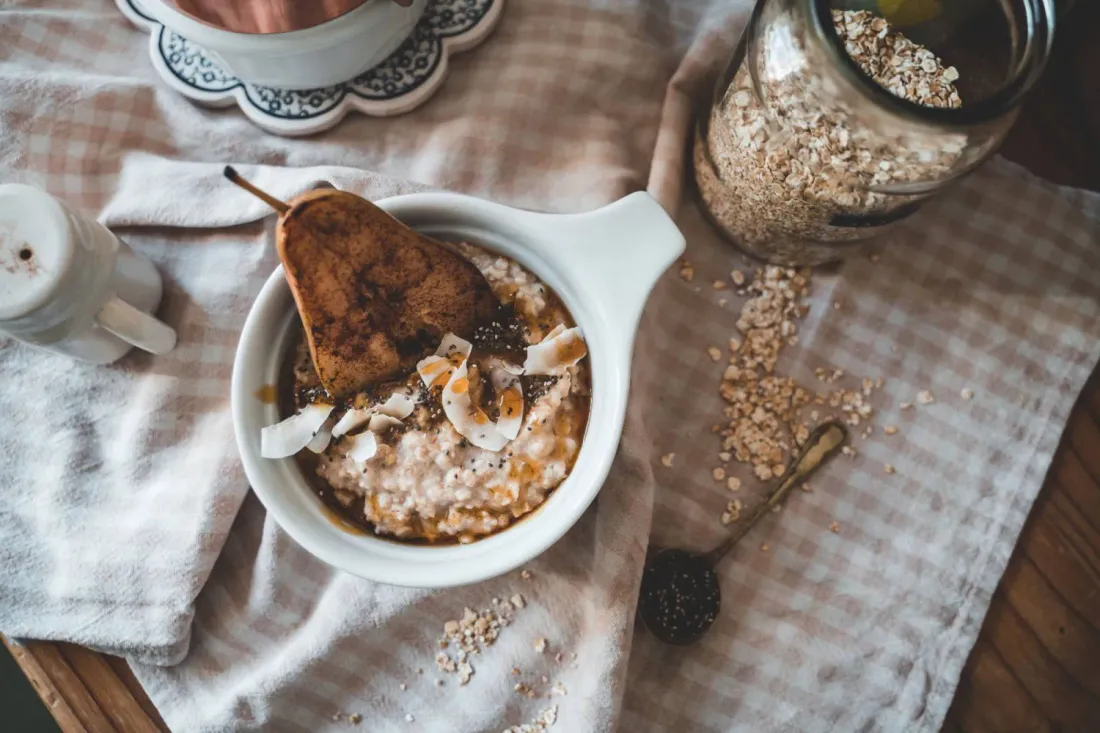
Oats help lower bad cholesterol (LDL) thanks to a type of fiber called beta-glucan. When this fiber mixes with water in the intestines, it becomes viscous and traps some of the bile, a fluid that helps digest fats, allowing it to be eliminated with waste. To replace the lost bile, the liver uses cholesterol from the blood to produce new bile, gradually helping to lower cholesterol levels.
Registered dietitian Morgan Pearson suggests four ways to get the most out of oats in a report published by the health website Verywell Health:
𝗖𝗵𝗼𝗼𝘀𝗲 𝗥𝗼𝗹𝗹𝗲𝗱 𝗢𝗮𝘁𝘀
Regular rolled oats may be a better choice than instant varieties because they undergo fewer processing steps. Additional processing may reduce the ability of oat fiber to form the viscous substance that helps eliminate bile. Nevertheless, instant oats remain a useful source of fiber.
𝗦𝗼𝗮𝗸 𝗢𝗮𝘁𝘀 𝗢𝘃𝗲𝗿𝗻𝗶𝗴𝗵𝘁
Oats can be placed in water or milk and left in the refrigerator until morning. Soaking gives the fiber time to absorb the liquid, making the oats soft and thick in texture.
This process helps the fiber develop the viscosity associated with its benefits, but it does not mean that overnight oats lower cholesterol more effectively than cooked oats.
𝗔𝗱𝗱 𝗢𝗮𝘁 𝗕𝗿𝗮𝗻
Oat bran is the outer layer of the oat grain and contains more beta-glucan fiber than rolled oats. Pearson therefore recommends adding two to three tablespoons of oat bran to a bowl of oatmeal to increase the amount of cholesterol-lowering fiber.
𝗖𝗵𝗼𝗼𝘀𝗲 𝗛𝗲𝗮𝗿𝘁-𝗛𝗲𝗮𝗹𝘁𝗵𝘆 𝗧𝗼𝗽𝗽𝗶𝗻𝗴𝘀
Apples, berries, walnuts, almonds, chia seeds, and ground flaxseeds can all be added to oatmeal. These ingredients provide additional fiber or heart-healthy fats, while limiting toppings that are high in sugar and saturated fats.
According to the report, consuming three grams of beta-glucan fiber from oats daily may help lower bad cholesterol (LDL). Obtaining this amount may require more than one small serving, depending on the product. The benefits generally become noticeable after several weeks of consistent consumption.
𝗦𝗼𝘂𝗿𝗰𝗲: 𝗮𝗮𝘄𝘀𝗮𝘁


