
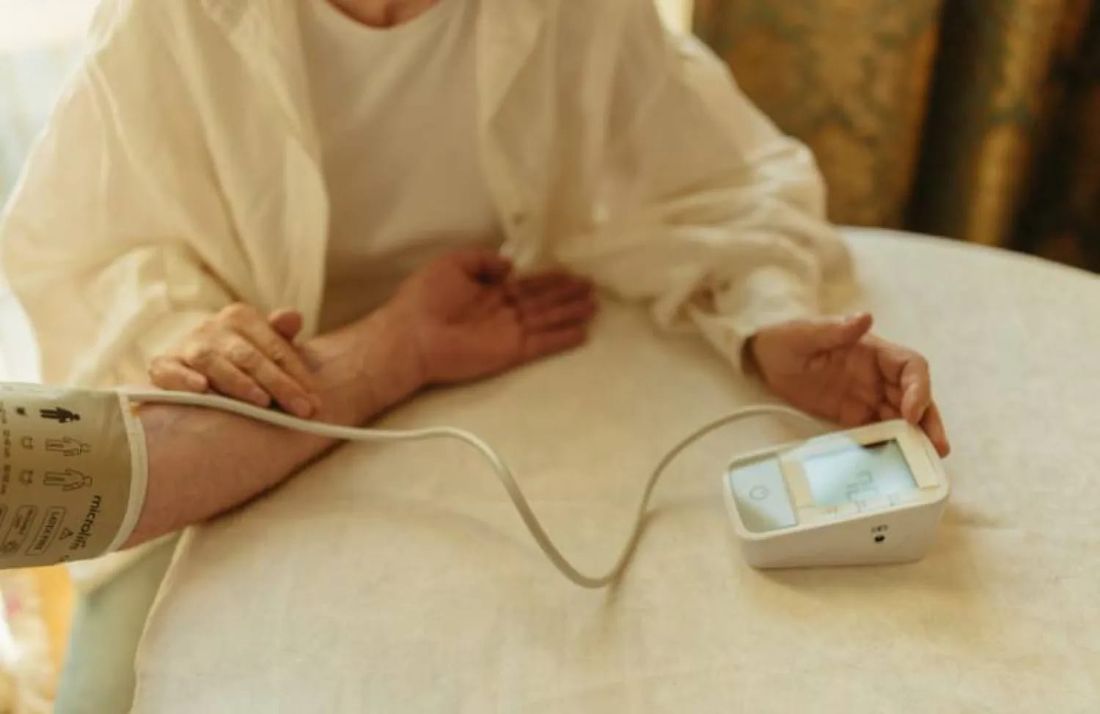
High blood pressure is known as the “silent killer” because it often causes no symptoms.
According to a report published by The Telegraph, blood pressure is measured in millimeters of mercury (mmHg). The upper number is known as systolic pressure, which measures the pressure in the arteries when the heart beats. The lower number is called diastolic pressure, which measures the pressure in the arteries when the heart rests between beats.
Both numbers are important, but for people over the age of 50, the upper number is more significant. High systolic blood pressure in this age group indicates a greater risk of stroke and heart disease compared with elevated diastolic pressure.
Dr. Kalpa De Silva, a consultant interventional cardiologist at London Bridge Hospital, says: “Ideally, everyone's blood pressure should be below 140/90 mmHg.”
He adds: “As we age, our arteries become stiffer, causing blood pressure to gradually rise over time to compensate.”
With every 20 mmHg increase in systolic blood pressure, or every 10 mmHg increase in diastolic pressure, the risk of death from heart attacks and strokes doubles.
However, it is possible to lower blood pressure within a month through relatively simple lifestyle changes. Here are eight methods that have been shown to be effective:
1- Practice Handgrip Exercises Every Day
Most of us know that we should exercise regularly, but we probably assume that aerobic activities, such as running and cycling, are the most beneficial for blood pressure.
In fact, isometric exercises, which involve holding certain positions that require moderate effort for a few minutes at a time, have been found to lower blood pressure by around 80 percent more than aerobic exercise.
A recent study analyzing data from more than 200 trials involving 15,000 people found that aerobic exercise reduced blood pressure by an average of 4.49/2.53 mmHg.
By contrast, isometric exercises reduced systolic pressure by 8.24 mmHg, making them 83 percent more effective than aerobic exercise, while diastolic pressure fell by 4 mmHg, representing 58 percent greater effectiveness.
Perhaps the easiest of these exercises is the handgrip exercise, which involves squeezing a grip-strength device, available for less than £10, for two minutes at a time at an effort level of 30 percent.
This exercise can be performed daily, twice with each hand, to achieve noticeable results quickly.
Another way to lower blood pressure is to perform four wall-sit exercises, holding each position for two minutes, three times a week.
2- Eat Small Amounts of Dark Chocolate
Dark chocolate has long been promoted as a healthier alternative to milk chocolate, and one of its many benefits is its potential to lower blood pressure.
A new study from the University of Surrey found that regular consumption of natural compounds known as flavan-3-ols, found in cocoa, led to a reduction in blood pressure, particularly among people with elevated readings.
These compounds were also found to improve the function of the endothelium, the inner lining of blood vessels, which is essential for overall cardiovascular health.
Eating one or two small squares of dark chocolate containing at least 70 percent cocoa daily for two to four weeks may be enough to notice an effect.
3- Eat Fermented Foods
Fermented foods, including kimchi, kefir, sauerkraut and miso, are known for their gut-health benefits. They have also been found to produce significant reductions in both systolic and diastolic blood pressure.
Scientific interest in the relationship between the gut microbiome and blood pressure is growing.
A recent study involving more than 20,000 Americans found that people who consumed larger amounts of gut-friendly foods were 13 percent less likely to develop high blood pressure.
Other studies have shown that people with hypertension tend to have less diverse gut bacteria and lower levels of beneficial bacteria.
Including fermented and fiber-rich foods in the diet, such as plenty of fruits, vegetables and whole grains, while maintaining as varied a diet as possible, is likely to provide benefits for blood pressure readings and overall health.
4- Check Food Labels
We all need around 4 grams of salt a day and should consume no more than 6 grams, equivalent to one level teaspoon.
However, most of us consume excessive amounts of salt, with 75 percent coming from processed foods.
Dr. De Silva says: “Almost everything we eat nowadays contains added salt.”
He adds: “Taking a closer look at your diet, understanding where the extra salt comes from and reducing those sources will go a long way toward changing your blood pressure within days and weeks.”
The main foods responsible for increasing salt consumption include ready meals, processed meats and fast food.
However, De Silva points out that “even bread and breakfast cereals can contain high levels of salt.”
It is important to read food labels carefully, as similar products made by different brands can contain widely varying amounts of salt.
The FoodSwitch app allows users to scan product barcodes to determine whether they contain high, medium or low levels of salt. It also suggests healthier alternatives.
5- Consume More Potassium and Magnesium
Potassium helps the body eliminate sodium and reduces pressure on blood vessels, making it beneficial to include potassium-rich foods in the diet.
Foods rich in this mineral include leafy greens, sweet potatoes, unsalted nuts, seeds, tomatoes, avocados, apricots and mushrooms.
Recent research has found that eating bananas, another excellent source of potassium, is more effective at lowering blood pressure than reducing salt intake.
Some studies have also shown that magnesium can lower blood pressure, although research has yet to reach definitive conclusions.
However, Dr. De Silva says: “It is a good idea to make sure you are getting enough magnesium in your diet.”
The UK's National Health Service (NHS) recommends that men consume 300 milligrams of magnesium daily, compared with 270 milligrams for women.
Good sources include legumes, leafy greens, nuts and whole grains.
6- Drink Hibiscus Tea
Hibiscus flowers and leaves contain high levels of antioxidants and have been used for medicinal purposes for hundreds of years.
A 2020 review of seven trials found that hibiscus tea significantly reduced both systolic and diastolic blood pressure.
Antioxidants are believed not only to reduce inflammation and protect the inner lining of blood vessels, but the tea may also help inhibit angiotensin-converting enzyme (ACE), a protein that causes blood vessels to constrict.
Research suggests that drinking two cups of hibiscus tea daily can reduce systolic blood pressure by an average of around 5 to 7 mmHg.
7- Add Flaxseeds to Your Food
Research shows that consuming between 30 and 50 grams of flaxseeds daily, equivalent to around two to three tablespoons, can lower blood pressure.
This is believed to be due to their content of alpha-linolenic acid (ALA), an omega-3 fatty acid with anti-inflammatory properties.
Flaxseeds also contain phytoestrogens and fiber, which have anti-inflammatory properties and are believed to have a positive effect on blood pressure.
Since whole flaxseeds may pass through the body without being digested, ground flaxseeds are more beneficial.
According to Dr. De Silva, adding a small amount to oatmeal, yogurt, soup or cooking sauces is an easy way to obtain their blood-pressure-related benefits.
8- Try Some Relaxation Techniques
Although stress is unlikely to cause long-term high blood pressure, learning effective relaxation techniques is important.
Dr. De Silva says this is because stress “often leads to an unhealthy lifestyle, such as smoking, poor sleep, unhealthy eating habits and excessive alcohol consumption.”
Techniques that have been shown to help lower blood pressure quickly include soaking the feet in warm water for 15 minutes, which stimulates the dilation of blood vessels.
Deep breathing through the left nostril for three to five minutes, while using the right thumb to close the right nostril, is also a yoga practice that helps calm the nervous system and has been shown to lower blood pressure.
It is also believed, particularly in Eastern medicine, that massaging certain pressure points, such as the small depression at the highest point of the crown of the head, using two fingers and making circular movements 30 to 50 times, can help lower blood pressure quickly.
𝗦𝗼𝘂𝗿𝗰𝗲: 𝗮𝗮𝘄𝘀𝗮𝘁


