
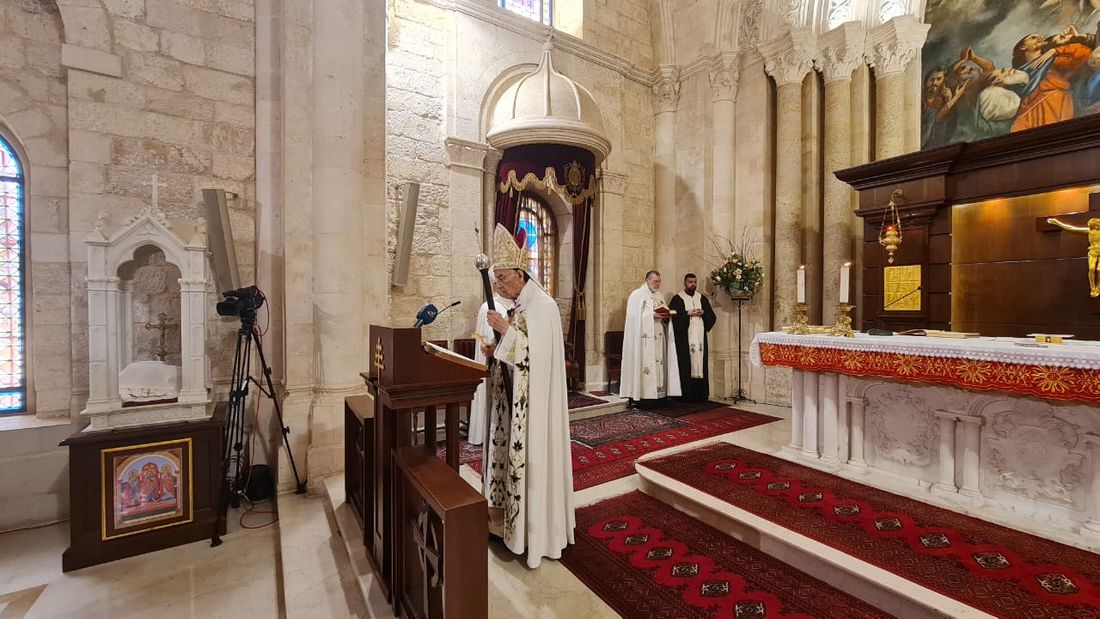
Maronite Patriarch Cardinal Mar Bechara Boutros al-Rai presided over Sunday Mass at the Church of Our Lady at the Patriarchal See in Bkerke, where he delivered a sermon in which he said:
"What we witnessed this week regarding electricity and public utilities reveals a clear aspect of the dysfunction. When power cuts affect government departments, public institutions, services, and communications because of accumulated unpaid bills, it means that citizens ultimately remain the ones who pay the price for this lack of proper organization.
"The issue of waste and the environment also remains a concern. It is no longer acceptable for waste to be moved from one landfill to another and from one area to another as though the problem has been solved. This is no longer acceptable. A serious solution must be based on sorting, treatment, recycling, and shared responsibility. The environment safeguards people's health and their right to clean land, water, and air.
"Food safety and public health also remind us that protecting citizens begins with the simplest details of their daily lives, and that oversight and accountability are essential whenever people's health is exposed to negligence or fraud.
"At the heart of restoring trust remain the judiciary and accountability. The Dahr al-Baidar case has entered a new judicial phase, which requires that the investigation proceed fully, without prejudgment, political disputes, or political exploitation.
"Peace must remain above all calculations, as a matter of national and existential necessity. Lebanon needs lasting peace, rather than remaining hostage to the possibility of another war whenever the region is engulfed in conflict.
"This requires a state that maintains control over its decisions, a single national authority responsible for security and peace, and institutions capable of safeguarding stability. This is where the importance of keeping Lebanon neutral in regional conflicts and wars becomes clear.
"Neutrality does not mean retreating from what is right or distancing Lebanon from its surroundings. Rather, it means protecting the country from becoming a permanent arena for the conflicts of others, while reaffirming its role as a space for encounter and dialogue and as a message of peace."


