
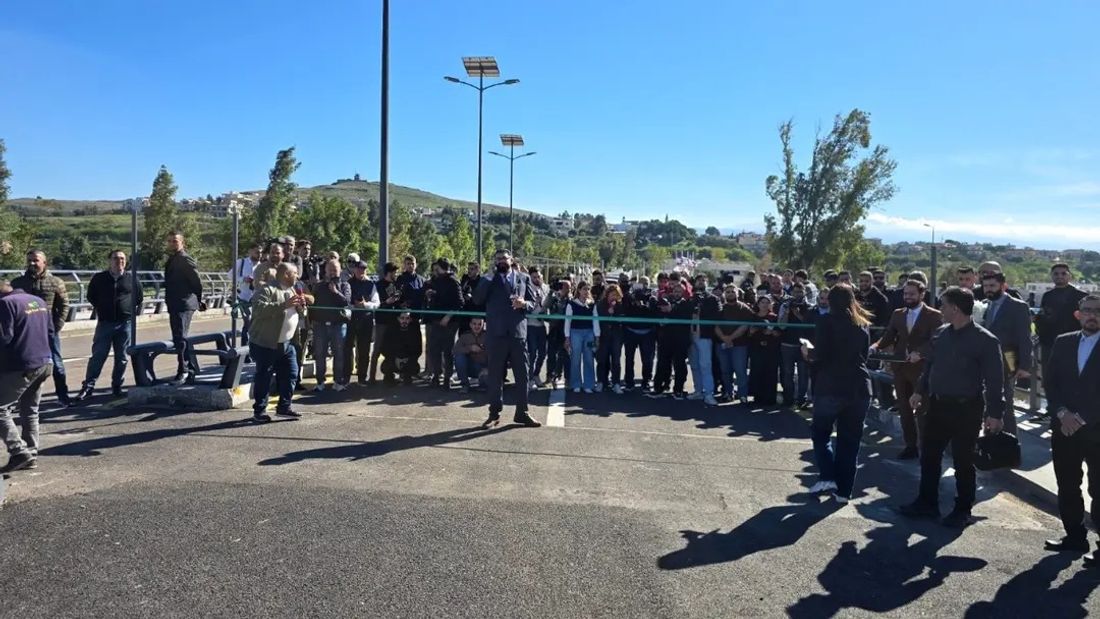
The border crossing between Lebanon and Syria at Dabousieh–Abboudieh in northern Lebanon officially opened late this morning, in the presence of Minister of Public Works and Transport Fayez Rasamny, Syrian official for international relations and communication Mazen Alloush, Homs Governor Muneef Al-Naasan, and a number of Lebanese and Syrian officials.
Also attending were Lebanese Ambassador to Syria Henry Kastoun, adviser to the Deputy Prime Minister Dr. Samer Haddara, President of the Higher Customs Council Brig. Gen. Misbah Khalil, Director General of Customs Gracia Al-Qazzi, Brig. Gen. Hadi Abu Chakra representing General Security, and Brig. Gen. Michel Boutros from the Coordination Office of the Lebanese Army.
The opening ceremony was held on the Syrian side, where the traditional ribbon was cut before the attendees toured the border offices and facilities.
Lebanese and Syrian officials toured the various offices and departments of the crossing and reviewed its advanced technologies and equipment. The crossing has been equipped with modern systems, including scanners, security and service facilities, as well as infrastructure built according to modern technical standards.
Minister Rasamny stressed the importance of the border facility and its role in strengthening economic and commercial activity and communication between the two countries.
He said that “facilities and airports in Lebanon and Syria should complement one another in serving development and facilitating movement.”
Rasamny added that President René Moawad Airport in Qlayaat is scheduled to open next week, noting that activating the Dabousieh–Abboudieh crossing is part of a broader vision to activate vital infrastructure, including border crossings, ports and airports.
He explained that daily traffic through the crossing could reach between 8,000 and 10,000 people, including arrivals and departures between Lebanon and Syria, in addition to between 150 and 200 trucks per day. This, he said, would help stimulate economic activity and ease pressure on other facilities and border crossings.
For his part, Alloush said the crossing holds economic and social importance, particularly for residents of northern Lebanon and western Syria, given the family and social ties between villages on both sides of the border.
He stressed the importance of providing a legitimate and official crossing that allows people to visit their relatives rather than resorting to illegal border routes.
Alloush also noted that the Arida border crossing is expected to open in the near future. He said that, alongside border control and coordination between the Syrian and Lebanese Ministries of Defense and other relevant authorities, the opening would help regulate cross-border movement and provide additional facilities for citizens.
He emphasized that there is ongoing communication between the two sides to address any obstacles.


