
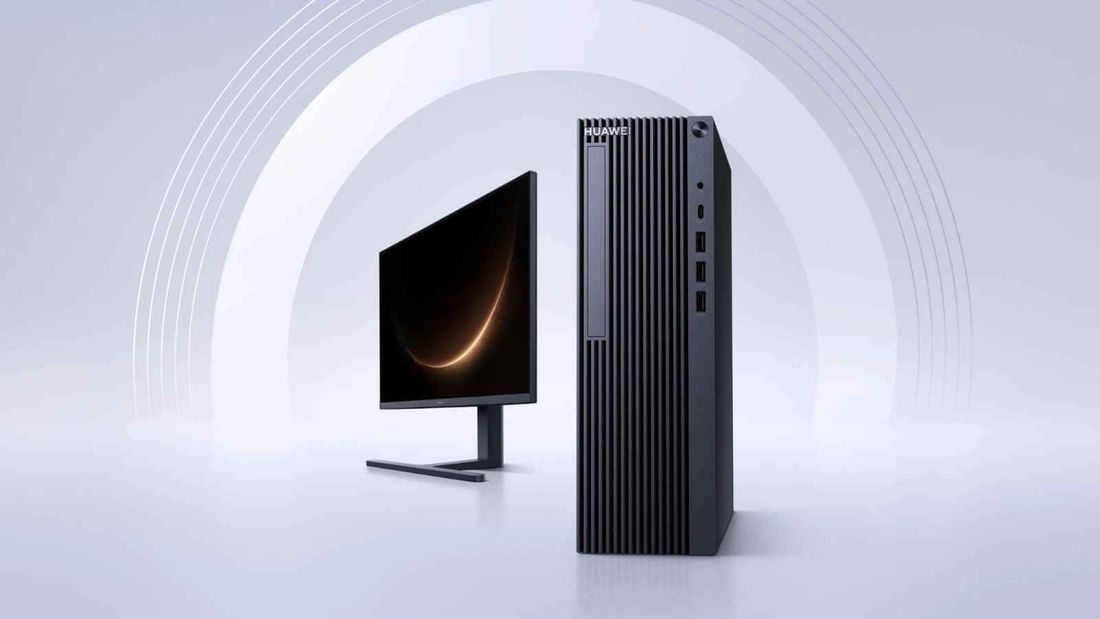
Huawei is moving to reduce its reliance on American components and software by launching a new computer that it says is made entirely of domestically manufactured components and runs on its own operating system, HarmonyOS, according to a report by British technology website The Register.
The new computer, named the Qingyun HM650, comes at a time when Huawei continues to face US restrictions and sanctions, despite having relied on Intel processors and Microsoft's Windows operating systems in some of its devices in recent years.
The use of HarmonyOS in the new computer represents another step in the company's efforts to develop an independent technology ecosystem, following its adoption of the operating system in its flagship and mid-range smartphones and laptops over the past few years.
The operating system is Huawei's response to US restrictions that deprived its devices of Google services and limited its access to the full range of Android features, many of which depend on services provided by the American company.
Chinese Components... Questions Over Their Origins
Although Huawei has announced that 100% of the computer's components are manufactured entirely in China, The Register reported that the company has not provided evidence to support this claim, apart from identifying the processor used, raising questions about whether the device relies exclusively on locally manufactured components.
The report also raised questions about the origins of the technologies used in the computer's components and core designs, given that several international, non-Chinese companies continue to operate and manufacture products in China.
The device is powered by Huawei's Kirin X90 processor, which features 10 cores and 20 processing threads, operates at a frequency of 2.3 GHz, and starts at approximately $1,078.
Another version is available with an eight-core processor, 16 GB of RAM, and 512 GB of storage, with prices starting at $1,018, according to a separate report by American website PCMag.
The report noted that the Kirin processor is based on ARM architecture, which has become increasingly common in desktop computers, including devices manufactured by companies such as Apple and Microsoft.
The device's specifications indicate that Huawei is primarily targeting businesses and institutions rather than individual consumers. This could increase its chances of adoption by Chinese government institutions, which have repeatedly called for abandoning American-made computers.
Competition Threatening Intel's Market Share
This move comes as American companies operating in the computer industry face growing competition in the Chinese market, despite continuing to hold substantial market shares.
According to a Reuters report, Intel's share of China's personal computer and processor market declined from approximately 90% in 2019 to around 60% in 2025.
Huawei's new processors are expected to put further pressure on Intel's market share, particularly with potential government support for domestically manufactured computers. This pressure could intensify if their use expands to individual consumers.
However, the main challenge is not simply providing a Chinese alternative or persuading institutions to adopt it. Rather, it lies in whether this alternative can compete with American products, which have benefited from decades of development and refinement to become benchmarks for reliability and success in business environments.
Source: (Erem News)


