Dr. Beshara Al-Asmar, Chairman of the Board of Directors of the National Social Security Fund (NSSF), announced the launch of a new service to facilitate the payment of contributions through money transfer offices for voluntary subscribers, retired beneficiaries, doctors, and mukhtars (local municipal representatives).
Al-Asmar indicated that this service is the first of several initiatives currently being developed to streamline procedures and ease difficulties for subscribers and institutions.
According to sources at the Fund, this step goes beyond simply making payments easier. It is part of efforts to modernize social administration, expand collection channels, reduce administrative and financial burdens on employers and subscribers, improve the regularity of contribution payments, and increase the Fund's revenues.
Under the mechanism previously studied by the Fund's technical committee and currently being developed, the special categories include four main groups:
Doctors: Those who pay their contributions to the Fund on a regular basis.
Mukhtars: Those covered by the Social Security system under the special categories.
Voluntary subscribers: Individuals who were previously covered by mandatory Social Security but left employment and continue to benefit from health coverage under the conditions of voluntary enrollment.
Retired beneficiaries: Those who benefit from the retirees' health coverage scheme and pay the contributions due from them.
These categories differ from employees registered through institutions because their contributions are set at fixed amounts and do not require periodic declarations of employees' wages. This makes collecting their contributions through money transfer companies easier from both technical and administrative perspectives.
The number of beneficiaries of this decision among doctors and mukhtars is approximately 30,000. However, there are no precise figures for the number of beneficiaries in the retired and voluntary subscriber categories, although their combined number is considerably higher.
For comparison, according to the same official statistics, the number of employees registered with the Fund stands at 409,078, while the number of people benefiting from health coverage reaches 1,273,097. Not all of these individuals are automatically covered by the new payment mechanism.
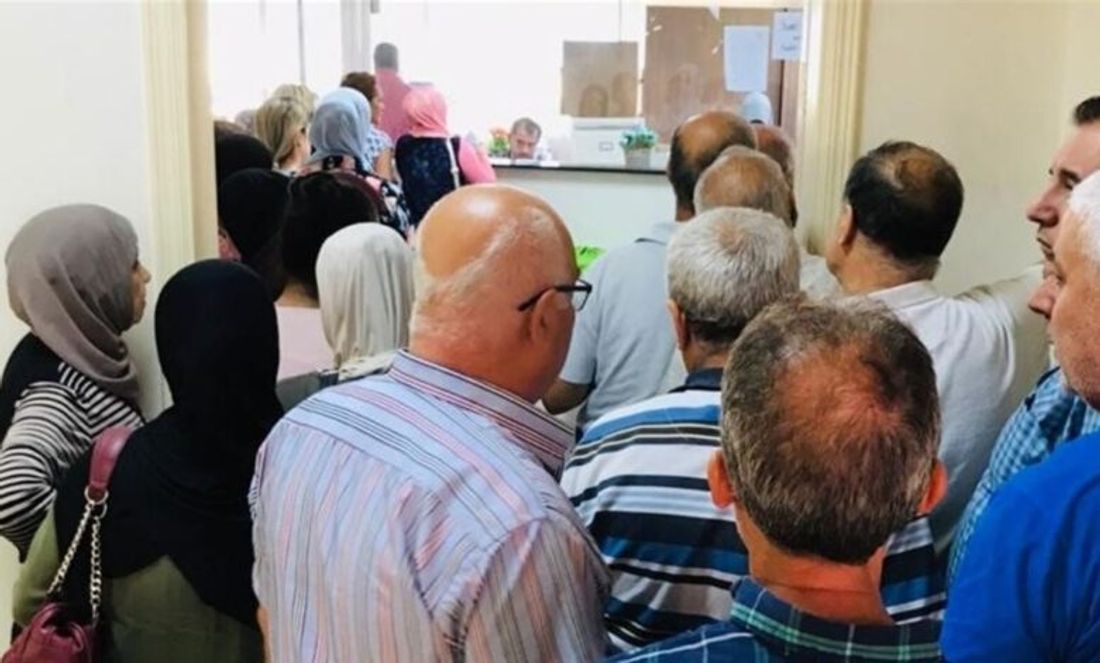
It is worth noting that this initiative is not new. It was first proposed in 2024 as part of efforts to reduce overcrowding at Social Security offices and limit the costs and difficulties associated with travel and hiring transaction agents.
The decision is expected to bring several benefits:
Making Life Easier for Subscribers: Instead of requiring doctors, mukhtars, or retirees to travel to a Social Security office, they will be able to pay their contributions through the network of money transfer companies operating across Lebanon.
Improving Contribution Collection: Expanding payment outlets could help reduce delays in payments and consequently improve the Fund's cash flow.
Reducing Bureaucracy: This mechanism is expected to reduce overcrowding, paperwork, and reliance on intermediaries and transaction agents.
Expanding Electronic Services: The project represents a step toward modernizing the Fund's financial administration and connecting it to electronic payment and money transfer systems.
Reducing the Burden on Remote Areas: This is particularly important for remote rural areas, where some subscribers have to travel long distances to reach Social Security offices.
Ultimately, this decision represents a step in the right direction toward easing the burden on subscribers.