
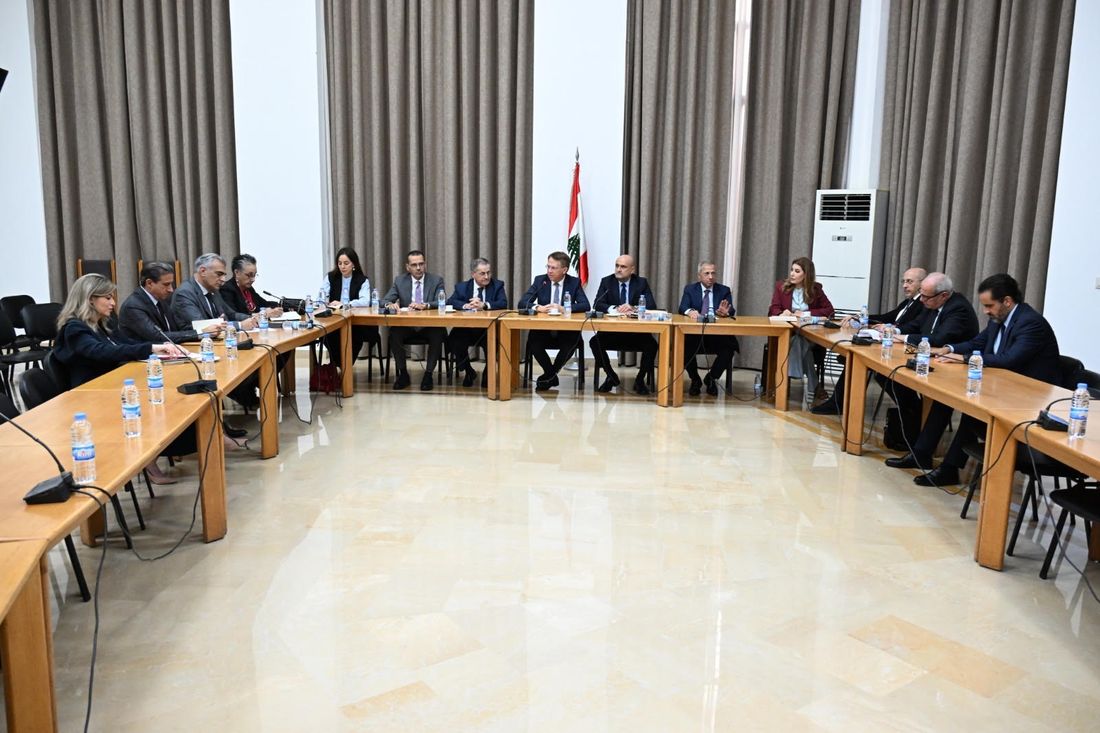
The Lebanese-French Parliamentary Friendship Committees—covering relations with both the French National Assembly and the French Senate—held a meeting with the French Ambassador to Lebanon, Patrick Durel. The meeting was attended by the embassy’s working team and the following Members of Parliament: Simon Abi Ramia, Michel Moussa, Fadi Alameh, Melhem Khalaf, Alain Aoun, Paula Yacoubian, Adnan Traboulsi, Najat Aoun, Salim Sayegh, Michel Douaihy, Taha Naji, and Firas Hamdan.
The meeting addressed a range of political, security, and economic files, alongside bilateral relations between Lebanon and France and parliamentary cooperation between the two countries.
On the security front, the French Ambassador briefed the MPs on the atmosphere of ongoing contacts and negotiations with the international community—particularly within the framework of the UN Security Council and in coordination with the United States—to explore the possibility of maintaining an international peacekeeping presence in southern Lebanon, in order to avoid any security vacuum that could threaten stability and peace in the region.
He noted that he had discussed this matter during his recent visit to Lebanon [or: during the recent visit to Lebanon] with the US Representative to the UN Security Council, Ambassador Mike Waltz, affirming that France is fulfilling its required duties in this regard, and that any future French military presence in the South will only take place under a resolution issued by the UN Security Council, rather than through bilateral agreements, stemming from France's commitment to respecting international law and restricting international missions to a UN mandate.
The MPs endorsed this approach, emphasizing the importance of a continued international presence in the South to accompany and support the Lebanese Army in carrying out its duties, thereby contributing to consolidating security and stability and preventing any vacuum on the ground.
On the financial and economic front, discussions covered the reforms required at the state and public administration levels. The French Ambassador stressed the necessity for Parliament to continue its legislative duties—most notably passing the Financial Gap and Deposit Recovery Law, as it is one of the fundamental files in the financial reform process. He also underscored the importance of reaching an agreement with the International Monetary Fund (IMF) as a key gateway to restoring the international community's confidence in the Lebanese state and opening the door to international assistance and support from donor countries.
For their part, the MPs clarified that Parliament continues to fulfill its legislative responsibilities, and that the Finance and Budget Committee—upon completing its review of the draft state budget—will begin studying the draft Financial Gap Law expected to be referred by the Cabinet, in preparation for expediting its discussion and passage, given its importance in addressing the repercussions of the financial and economic collapse Lebanon has witnessed.
The MPs' interventions also touched upon Lebanese-French relations at both the bilateral and parliamentary levels, as well as the state of Francophonie in Lebanon and its cultural and educational role. The French Ambassador briefed participants on the current state of relations between the two countries, reviewing aspects of French support for Lebanon in the educational, social, and livelihood sectors, in addition to cooperation related to the Port of Beirut and its economic and strategic importance.
At the conclusion of the meeting, Abi Ramia affirmed that the positions presented by the Ambassador reflect France's keenness to support Lebanon's independence and sovereignty, by calling for a full Israeli withdrawal from Lebanese territory, extending state authority across all its lands, and entrenching the principle of restricting arms exclusively to legitimate Lebanese state institutions.


