Imagine a robotic hand picking up a hot cup, detecting its temperature and adjusting its grip at just the right moment. Or picture a prosthetic limb capable of sensing the pressure its fingers exert on a fragile object, helping its user handle it carefully.
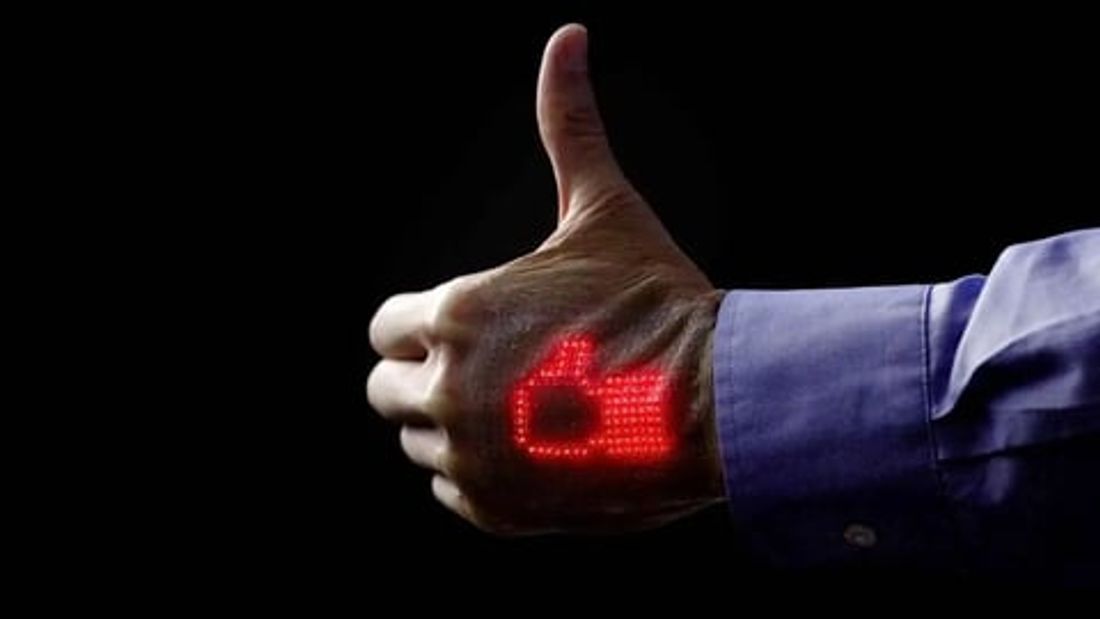
These scenarios are no longer merely futuristic concepts. They have become part of ongoing research into electronic skin, a technology that mimics some of the human skin’s abilities to sense touch, pressure, and temperature changes.
Researchers are developing flexible materials equipped with tiny sensors that convert physical stimuli into measurable and analyzable electrical signals, a step that could reshape the future of robotics, prosthetic limbs, and medical applications.
𝗛𝗼𝘄 𝗗𝗼𝗲𝘀 𝗜𝘁 𝗪𝗼𝗿𝗸?
Electronic skin, scientifically known as Electronic Skin, relies on integrating multiple sensors into thin, flexible layers that can be attached to surfaces or incorporated into smart devices.
One of its primary functions is touch sensing. Some sensors can measure the pressure generated when an object makes contact with a surface and determine its intensity and location. Other designs can detect vibrations and subtle mechanical changes.
Temperature sensing, meanwhile, relies on thermal sensors that measure temperature or changes in temperature.
The collected data is transmitted to electronic processing units, which analyze it and may use artificial intelligence algorithms to interpret the information and determine the appropriate response.
The scientific challenge lies in combining these functions within a single system that can distinguish between pressure and temperature without allowing the readings to interfere with one another. This is essential for achieving more accurate and reliable sensory perception.
𝗦𝗰𝗶𝗲𝗻𝘁𝗶𝗳𝗶𝗰 𝗔𝗱𝘃𝗮𝗻𝗰𝗲𝘀
In a study published in the journal Proceedings of the National Academy of Sciences, researchers presented a multisensor electronic skin system designed to separate pressure measurements from temperature readings. This could improve its ability to distinguish between objects that look similar but have different physical properties.
This approach reflects a shift in electronic skin research, moving from the development of individual sensors toward integrated systems capable of collecting and processing multiple types of sensory information simultaneously.
However, these technologies remain at varying stages of development. The success of a research prototype does not mean that electronic skin can already replicate all the functions of human skin.
𝗣𝗿𝗼𝘀𝘁𝗵𝗲𝘁𝗶𝗰 𝗟𝗶𝗺𝗯𝘀 𝗮𝗻𝗱 𝗥𝗼𝗯𝗼𝘁𝗶𝗰𝘀
Smart prosthetic limbs are among the fields most likely to benefit from this technology. Sensors could provide information about grip strength, physical contact, and temperature, helping improve control of a prosthetic limb when paired with an appropriate system for transmitting sensory feedback to the user.
In robotics, electronic skin could enable robots to handle fragile objects more carefully and interact more effectively with their surroundings, particularly in tasks requiring a high degree of precision.
Some electronic skin designs could also be incorporated into wearable medical devices to monitor pressure, contact, and temperature, depending on the sensors used and the intended application.
𝗠𝗶𝗺𝗶𝗰𝗸𝗶𝗻𝗴 𝗛𝘂𝗺𝗮𝗻 𝗦𝗸𝗶𝗻
Despite the progress achieved, developing electronic skin presents several challenges, including ensuring material durability, maintaining measurement accuracy when the material bends or stretches, reducing energy consumption, and accelerating data processing.
There is also a need to develop effective methods for translating electronic signals into sensations that users can understand, particularly when the technology is used in prosthetic limbs. In addition, the safety and reliability of these devices must be ensured during long-term use.
𝗧𝗵𝗲 𝗙𝘂𝘁𝘂𝗿𝗲 𝗼𝗳 𝗔𝗿𝘁𝗶𝗳𝗶𝗰𝗶𝗮𝗹 𝗦𝗲𝗻𝘀𝗮𝘁𝗶𝗼𝗻
Electronic skin opens up new possibilities for technologies that interact with humans and their environment, but it remains an evolving field of research that requires further testing and refinement.
As advances continue in materials science, electronics, and artificial intelligence, artificial systems may become increasingly capable of sensing their surroundings and responding to them, bringing them one step closer to replicating certain aspects of human sensation.
𝗦𝗼𝘂𝗿𝗰𝗲: 𝗘𝗿𝗲𝗺 𝗡𝗲𝘄𝘀