The home security sector is undergoing a remarkable technological transformation with the introduction of small drones into the field of personal protection.
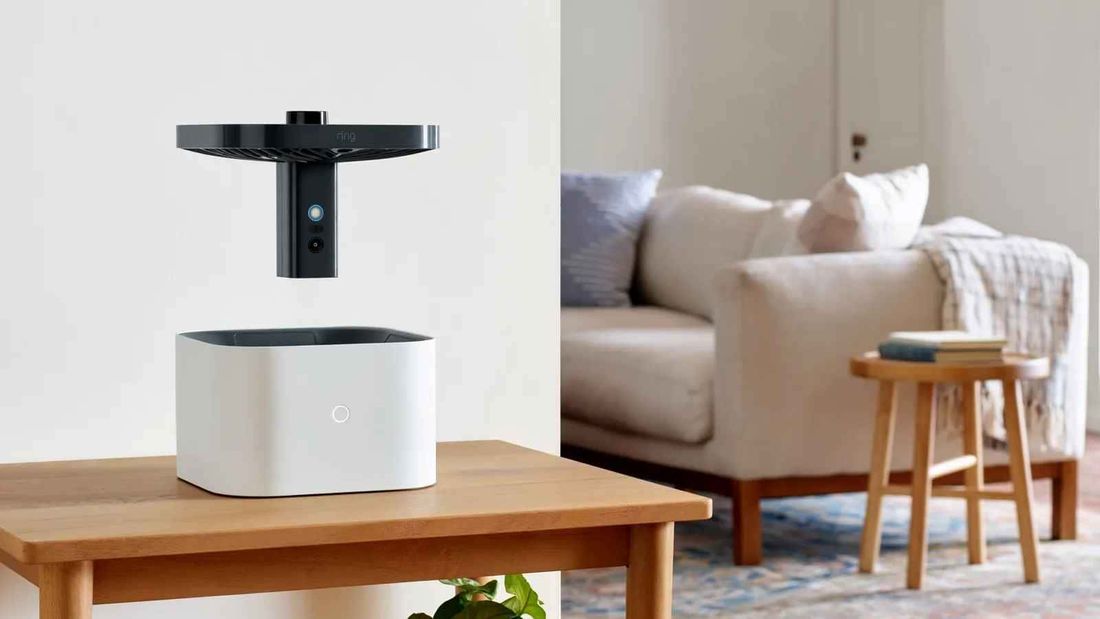
Technology companies are moving toward developing flying cameras capable of navigating inside homes, monitoring different areas, detecting unusual activities, and sending instant alerts to homeowners.
While these innovations promise new levels of security and convenience, they also raise questions about privacy and safe usage.
Home Security Guards
Home surveillance cameras are no longer limited to devices installed at entrances and corners. Miniature drones are paving the way for a new generation of security systems capable of moving around and responding to changes inside the home.
The concept behind these devices relies on small drones equipped with cameras and sensors that can move between rooms and monitor different areas, rather than depending on a single viewing angle.
This gives them greater coverage of spaces that traditional cameras may struggle to monitor. Some of these systems can also operate according to scheduled routines or respond to alerts triggered by sensors, allowing homes to be monitored even when their owners are away.
Artificial Intelligence
Artificial intelligence is one of the key technologies driving this development. It can be integrated with computer vision systems to analyze images, detect movement, and distinguish between routine activities and events that require attention.
By connecting to smartphones, these technologies can send notifications to users when unusual movement is detected or when activity requiring verification is identified.
Future applications are expected to focus on developing more autonomous systems capable of identifying areas that require additional monitoring and directing cameras toward the source of movement, while retaining the option of manual control by users.
Mobile Surveillance
One of the most notable advantages of this technology is the ability to monitor homes from anywhere through smartphone applications. Users can view live footage, track the drone's movements, and check alerts received while they are away from home.
These devices are particularly useful in large homes, where fixed cameras may not provide sufficient coverage of every room and hallway. They can also offer an additional way to monitor pets or check on home security during travel and extended absences.
However, their effectiveness remains dependent on camera quality, sensor accuracy, battery life, and their ability to navigate safely through enclosed spaces.
Privacy and Safety
Despite their promising capabilities, flying cameras present privacy challenges, particularly because a moving device equipped with a camera inside the home could record footage in areas where a high level of privacy is expected.
This highlights the need for strong data encryption technologies, clear options for controlling recording and storage, and the ability to define areas that drones are permitted to monitor.
From a technical perspective, these devices require advanced collision-avoidance systems to prevent them from hitting furniture or people, particularly in homes with children or pets.
Other considerations include noise generated by the propellers, battery safety, and the ability to land safely when the battery charge becomes low.
The Future of Home Security
The introduction of drones into personal protection marks a new step in the evolution of smart homes, where mobile cameras integrate with alarm systems, door locks, sensors, and remote-control technologies.
Interest in these solutions is expected to grow as artificial intelligence advances, battery efficiency improves, and electronic components become smaller, potentially making drones more suitable for everyday use inside homes.
Between their security promises and the challenges surrounding privacy and safety, flying surveillance cameras could pave the way for a new era of home protection, transforming cameras from stationary devices that simply monitor spaces into intelligent systems capable of moving and interacting with their surroundings.
𝗦𝗼𝘂𝗿𝗰𝗲: 𝗘𝗿𝗲𝗺 𝗡𝗲𝘄𝘀