
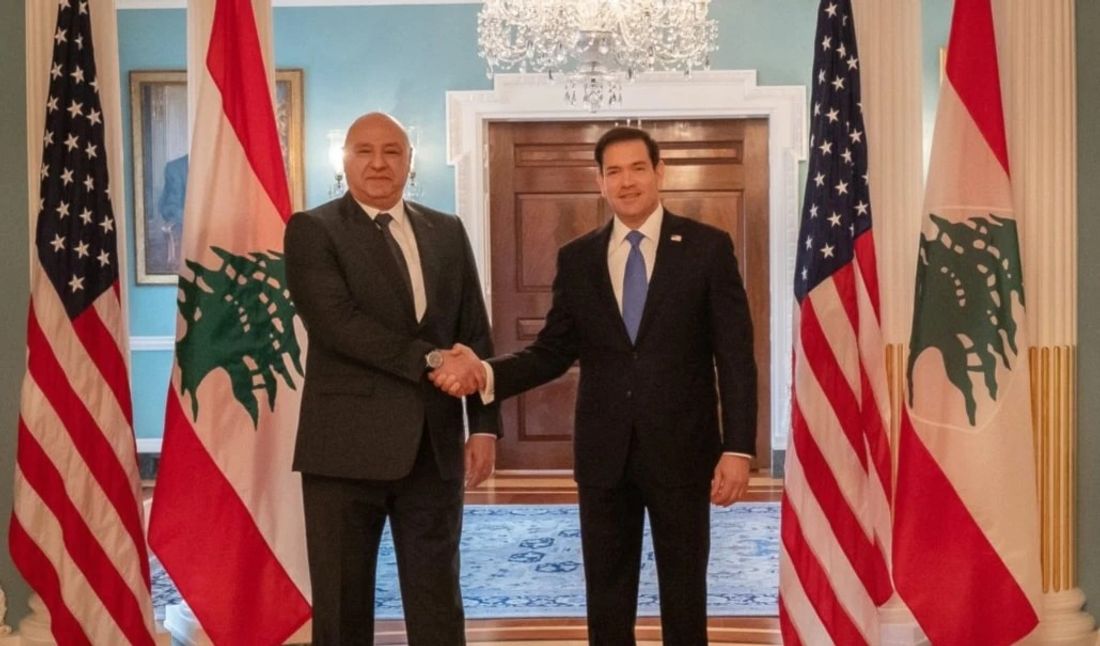
Al-Akhbar reported that reports suggesting potential resignations and dismissals among senior officials in U.S. President Donald Trump’s administration following the resounding defeat in the midterm elections have raised concerns in Beirut over the future of the exceptional U.S. political support enjoyed by Lebanon’s new leadership.
The concern is particularly significant as the review launched within the Republican Party into the reasons behind the defeat is affecting two key pillars of the Trump administration’s regional policy: relations with Israel and the war against Iran.
Concerns among the pillars of the new administration in Beirut grew after the British newspaper The Independent reported yesterday, citing U.S. sources, that Secretary of State Marco Rubio is among those expected to leave. Rubio has played a significant role in strengthening U.S. support behind President Joseph Aoun and Prime Minister Nawaf Salam, making them an effective spearhead in the political, social, and security confrontation with Hezb0llah, following the Israeli wars of 2024 and 2026. He is also considered the “spiritual father” of the framework agreement.
However, what may cause greater concern in Beirut is not Rubio’s fate alone, despite the importance of his role in managing the Lebanese file, but rather the nature of the political review taking shape within the Republican camp. This is especially true following the unprecedented positions expressed by Vice President J.D. Vance, who blamed the war on Iran as the main reason for the Republicans’ losses and called for a change in the nature of the U.S. relationship with Israel. These positions gained additional significance with the support of Donald Trump Jr.
President Aoun’s team, in particular, is closely watching developments, as it was the party pushed to the forefront of the negotiating process. Many questions remain unanswered in Baabda and its political circles.
Despite responding to a series of U.S. demands, the Lebanese authorities have been unable to persuade Washington to act as a fair mediator or compel Israel to halt its attacks and fully withdraw from Lebanese territory.
In this context, political sources following the developments question whether the Lebanese authorities—which failed to convince the U.S. administration to exert serious pressure on Israel when that administration was at the height of its domestic political influence—will now be able to obtain more effective guarantees after Trump suffered a severe electoral defeat, his team became threatened by resignations and changes, and his foreign policy choices came under scrutiny within his party and Congress.
With the results of the Israeli elections adding another element of uncertainty to Beirut’s calculations, the Lebanese authorities—which had bet on Trump’s ability to reach an understanding with Netanyahu and impose new security arrangements—now face the possibility of shifting balances of power in both countries.
While Netanyahu’s continued presence in power did not guarantee Israel’s commitment to the framework agreement, his possible departure would not automatically mean improved negotiating conditions. Any new Israeli government could reconsider the existing arrangements or seek to amend them, while Washington may be preoccupied with reorganizing its priorities and dealing with domestic political divisions.
Meanwhile, the potential change in Israel coincides with an unprecedented American debate over relations with Tel Aviv, reflected in Trump’s announcement on Election Day of his intention to end the annual U.S. military aid to Israel, estimated at approximately $3.8 billion.


