
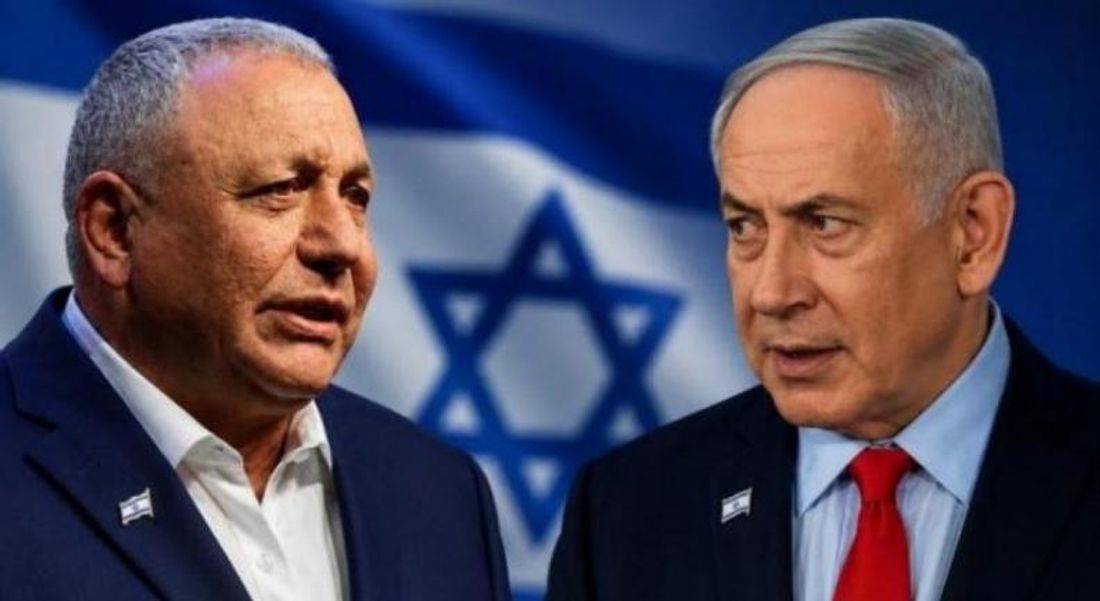
Lebanese newspapers have examined the possibility of changes in Israel’s approach to the situation in southern Lebanon following the Knesset elections, depending on which side emerges victorious.
An-Nahar newspaper wrote:
Lebanon has nearly found itself following the famous saying, “I am drowning, so what do I have to fear from getting wet?” This is what happens when the situation becomes a matter of choosing between the two main candidates competing in the Israeli elections, Benjamin Netanyahu and Gadi Eisenkot, and assessing how either man’s arrival at the head of a new government might affect the ongoing occupation in southern Lebanon and the confrontation expected to continue with Hezb0llah.
According to the known records of the two candidates competing to lead Israel following the first elections held since October 7, 2023, they differ—and perhaps differ fundamentally or tactically—on many issues. However, when it comes to the strategic direction of the wars Israel has waged before and after October 7, they are two sides of the same coin, or, to put it differently, two covers for the same strategic blueprint.
The newspaper added:
If Netanyahu returns to power, he will not be inclined to reverse what he boasts of as the crowning achievement of his wars against Iran’s regional proxies, foremost among them Hezb0llah. This includes establishing the Yellow Line zone in southern Lebanon, an area now stripped of both buildings and life. This assumes, in the most optimistic scenario, that the expansion of occupied areas northward toward the Litani River will stop.
Nor, if Eisenkot defeats his rival, will his first major achievement be the withdrawal of Israeli troops from southern Lebanon, Gaza, or southern Syria. This is particularly true given that he is a former chief of staff known for the “Dahiya Doctrine,” reflecting his well-established hardline approach toward confronting and striking his country’s enemies.
Although most officials and political forces across the spectrum have notably refrained from making premature assessments or statements about this electoral contest, concerns remain over signs of an imminent regional confrontation. Lebanon has no real guarantees that its territory will be spared renewed involvement in such a conflict. Consequently, Lebanon has reiterated its efforts to secure guarantees on the ground in the south.
An-Nahar added:
Given the Israeli elections and the course of Lebanese-Israeli negotiations under U.S. auspices, southern Lebanon faces a situation in which there is “no reason to bet” on any change, at least until a considerable period has passed and Eisenkot’s willingness to show some flexibility in negotiating the security zone, rather than entrenching a long-term occupation, becomes clearer. If he defeats Netanyahu in the elections, this would be the only potential difference between the two.
Al-Diyar newspaper wrote:
Lebanon, which is awaiting the repercussions of the Israeli elections, finds itself facing an uncertain phase that will not necessarily be clarified by the identity of the next prime minister. Even if Netanyahu is replaced, this would not automatically mean a change in Israel’s security and military approach toward the Lebanese front.
Between the possibility of continued escalation and the opening of new negotiating channels, the positions of Washington and Tehran, along with the balance of power that emerges within the next Israeli government, will be key factors in determining the direction of the next phase. Concerns persist that the period of political uncertainty could be exploited to impose new security realities on the ground.
The newspaper added:
More than one Western and Arab diplomat has repeatedly stated in private discussions that Tel Aviv no longer demonstrates serious interest in negotiating with the Lebanese government or treating it as a party capable of influencing the course of events. This stems from Israel’s belief that it can resolve the Lebanese issue according to its own vision and security and political interests, without waiting for an internal Lebanese settlement or broader regional understandings.
Meanwhile, Al-Joumhouria newspaper reported:
Political sources said that Lebanon’s wait for the results of the Israeli elections, and its hopes for a particular change in the approach toward Lebanon should the governing political configuration in Israel change, may be misplaced.
A political change in Israel—whether Netanyahu remains in power, his rivals such as Gadi Eisenkot rise to power, or a different governing arrangement emerges—may not bring about any genuine change in Israel’s outlook toward Lebanon.
The question for Lebanon is therefore not merely who wins the elections, but what policies the next government will pursue toward Lebanon, particularly regarding Israeli withdrawal, the cessation of attacks, and the conditions for negotiations.
Informed sources told Al-Joumhouria:
Between the possibility of Israel continuing its current approach, the emergence of new leadership that opens a window for negotiations, or difficulties in forming a new government that prolong political uncertainty, Lebanon faces several possible scenarios. It cannot control how these scenarios unfold, but it can prepare for their consequences.
In this context, the importance of the American role and international pressure becomes increasingly evident, alongside the Lebanese state’s ability to unify its position and strengthen its presence in the south.
Accordingly, Lebanon’s hopes should not be limited to the results of the Israeli ballot boxes, but should instead focus on whether those results translate into tangible changes on the ground.
In the view of these sources, the security doctrine of Israel’s military and political institutions remains the decisive factor. The roles may differ in form and in the tools used on the ground, but Israel’s project to redraw the maps of influence, deterrence, and security control in southern Lebanon and the wider region is based on a vision that transcends political parties.
While Netanyahu relies on escalation and exploits military doctrine to serve his political survival, Eisenkot, the architect of the “Dahiya Doctrine” during his military career, does not represent a conciliatory approach toward Lebanon or Hezbollah’s weapons. Rather, he offers a different model of deterrence and the strict implementation of security measures.


