
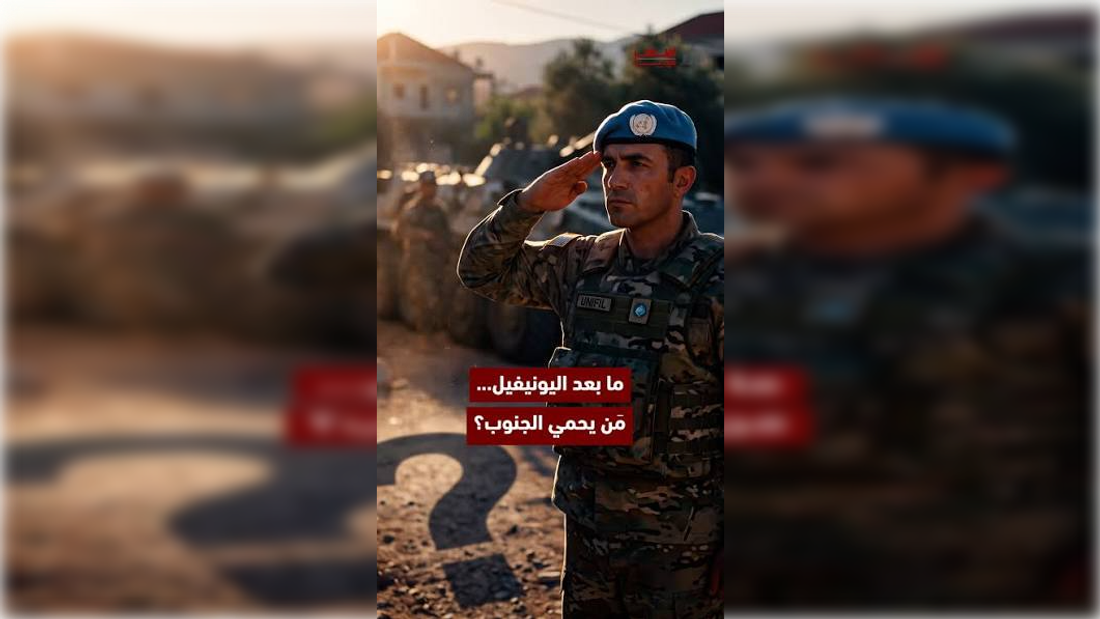
Lebanon is awaiting the visit of the U.S. Ambassador to the United Nations, Michael Waltz, next week to gauge the American stance regarding an alternative to the UNIFIL forces, whose mandate expires on December 31. This comes amid a recent U.S.-French consensus that emerged in Paris on preventing a vacuum, though without an accompanying agreement on what the alternative should be. Waltz is scheduled to meet with President General Joseph Aoun, Speaker of Parliament Nabih Berri, and Prime Minister Nawaf Salam.
Al-Joumhouria newspaper reported that among the proposals circulating to find an alternative to UNIFIL, information emerged yesterday regarding an American inclination to replicate the model of the "Multinational Force and Observers" (MFO) operating in the Sinai Peninsula. Established in 1981 outside the framework of the United Nations to bypass a Soviet veto at the time, the MFO was based on a special protocol between the concerned parties under direct American sponsorship.
Political sources told Al-Joumhouria that applying this model in southern Lebanon aims to avoid anticipated complications when bringing the idea before the Security Council, and to move away from UNIFIL’s traditional mandate linked to Resolution 1701, which Washington and Tel Aviv view as insufficient to control the situation in the south. This model also grants the United States the role of guarantor and actual witness, intersecting with the path established by the "tripartite framework."
The sources noted that U.S. Secretary of State Marco Rubio had paved the way for this idea a few days ago by hinting at the possibility of utilizing a civilian monitoring force in the south. However, this proposal collides with a complex and conflicting web of political calculations and security interests among the parties involved in the Lebanese file.
Informed political sources told Al-Liwaa that U.S. Ambassador Mike Waltz's visit to Beirut is exploratory and falls within the framework of discussing proposals related to the replacement force for UNIFIL, amid repeated official rejection of having civilian entities from non-governmental organizations serve as an alternative to these forces. The sources pointed out that Lebanon will inform the U.S. official of the importance of preventing a security vacuum in the south, noting that there is a political consensus on finding a firm proposal to establish this force under UN cover, while noting that the matter has not yet been settled, hence the anticipation for what Waltz will bring during this visit.
Al-Diyar clarified that indicators have reached Beirut regarding signs of a U.S.-French consensus on a formula that merges the framework agreement and Resolution 1701, as circulated by Paris, which will be presented as a draft resolution to the UN Security Council to give the decision UN cover and international legitimacy. According to leaks, U.S.-French meetings are ongoing, and information indicates American acceptance of raising the number of the UN force to be formed in the south as a replacement for the international forces to 1,500 personnel with specific powers, while the American side has backed down from the idea of a civilian force. The U.S. envoy will carry the merger-based proposal to Beirut on Monday, and will also visit Riyadh as well as Arab and international capitals. Reports indicate that Washington will communicate with Russia to avoid a veto in the Security Council, as well as with China. The French justified the shift in their position by the inability to cancel the framework agreement, and the proposed settlement also preserves the French role in Lebanon and the Middle East. Information revealed that Presidents Aoun and Salam have adopted the proposal, while Speaker Berri opposed it.
Al-Diyar added that Israel has no objection to this proposal, though it maintains its stance rejecting any Turkish participation in the proposed UN forces following a Turkish request to do so—a matter that was discussed between Erdogan’s son and Lebanese officials. Israel also rejects any effective French, Italian, and Spanish participation in the leadership of the force, insisting that command be restricted to the forces represented in the framework agreement—namely Lebanon, Israel, and the United States—a point that has not yet been resolved.
Al-Diyar affirmed that the Lebanese state's position is clear, according to sources close to official circles, regarding its rejection of any direct communication between the Lebanese and Israeli armies, specifically on the issue of verification. The positions of Presidents Aoun, Berri, and Salam, as well as Army Commander General Rodolphe Haykal, are identical and firm on this matter, and there is no truth to any discrepancies among the presidents on this orientation. Lebanon also categorically rejects handing over the mission in the south to private companies following the withdrawal of international forces, similar to the security companies that took over security in Iraq, and insists that the alternative force assume the tasks previously carried out by the international forces.
Informed sources indicated to the electronic newspaper
Al-Anbaa that Waltz's talks with the three presidents will discuss the proposed alternatives to UNIFIL, including preparing an alternative security formula that guarantees a ceasefire between Lebanon and Israel and prevents the emergence of a security vacuum in the south. Among the ideas put forward is the establishment of a monitoring mechanism, which could be similar to the multinational force operating in Syria since 1973, and the aerial observation force deployed in Sinai (MFO).


