
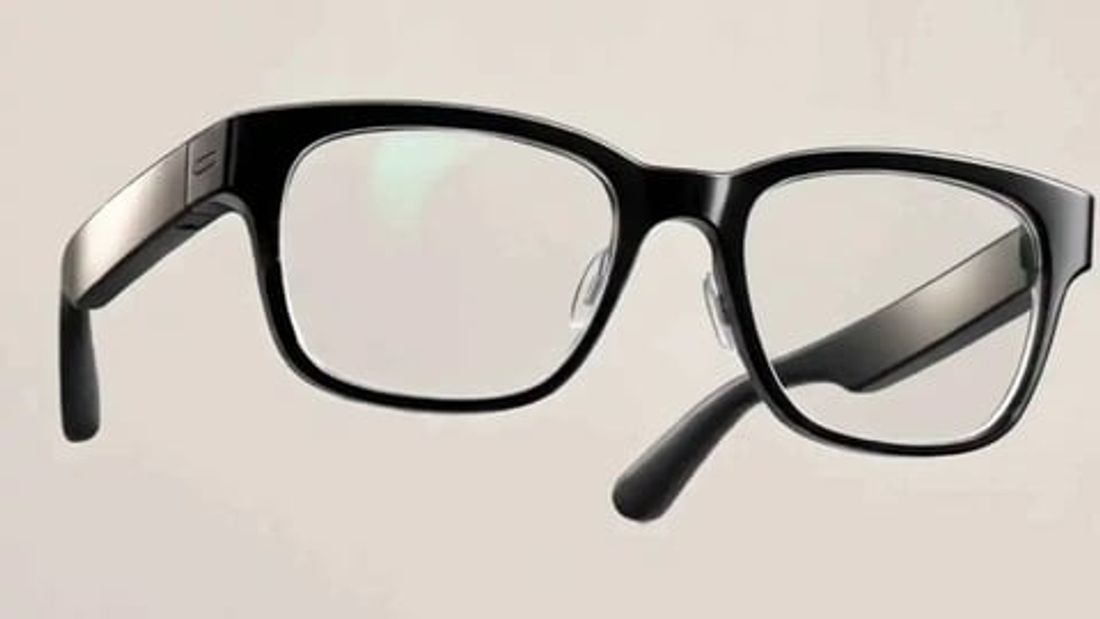
Speaking to smart devices without making a sound or touching a keyboard could soon become possible thanks to a new technology being developed by a startup. The smart glasses can detect subtle movements in the speech muscles and convert the words silently mouthed by users into text, at a speed the company claims exceeds 200 words per minute.
The Subvocal Company aims to introduce a new way of interacting with computers and AI assistants by eliminating the need for traditional typing or voice dictation, particularly in public places where users may feel uncomfortable speaking to their devices, such as offices, libraries, and cafés.
The glasses rely on radar signals that pass through the facial area. Their reflections change when the speech muscles move as users silently form words. Sensors detect these subtle changes, after which an AI model analyzes the signals and converts them into written text that can be used for messages, note-taking, or drafting emails.
According to a report published by Digital Trends, the technology does not rely on cameras to photograph or read lip movements. Instead, it uses radar to detect changes associated with speech muscle activity. However, users must physically move their lips and form words for the system to recognize them. In other words, the technology cannot read minds or convert internal speech that is not accompanied by mouth movements into text.
𝗦𝗶𝗹𝗲𝗻𝘁 𝗖𝗼𝗺𝗺𝘂𝗻𝗶𝗰𝗮𝘁𝗶𝗼𝗻 𝘄𝗶𝘁𝗵 𝗔𝗜
The company's targeted applications go beyond simply converting words into text. The glasses could also be used to interact with AI assistants without speaking aloud. The company also envisions enabling private communication between two people wearing the glasses, even in crowded places, without those around them being able to hear their conversation.
The startup has secured $1.3 million in funding from Y Combinator and Afore Capital and has already begun accepting pre-orders in the United States. The company has set an introductory price of $499 for the glasses, requiring a refundable $199 deposit to secure a reservation, with the remaining balance to be paid later.
The company plans to begin shipping the glasses in the first quarter of 2027, with prescription lenses available at an additional cost.
Despite the capabilities promised by this technology, it remains under development, and the company's claim that it can convert more than 200 words per minute has not been independently verified. Questions also remain about its accuracy in recognizing words across different accents and pronunciation styles, as well as its ability to handle unfamiliar words and long sentences.
If the company succeeds in overcoming these challenges, the glasses could pave the way for a new form of interaction with digital devices, allowing users to write messages and communicate with AI without speaking aloud or using a keyboard.
𝗦𝗼𝘂𝗿𝗰𝗲: 𝗘𝗿𝗮𝗺 𝗡𝗲𝘄𝘀


