
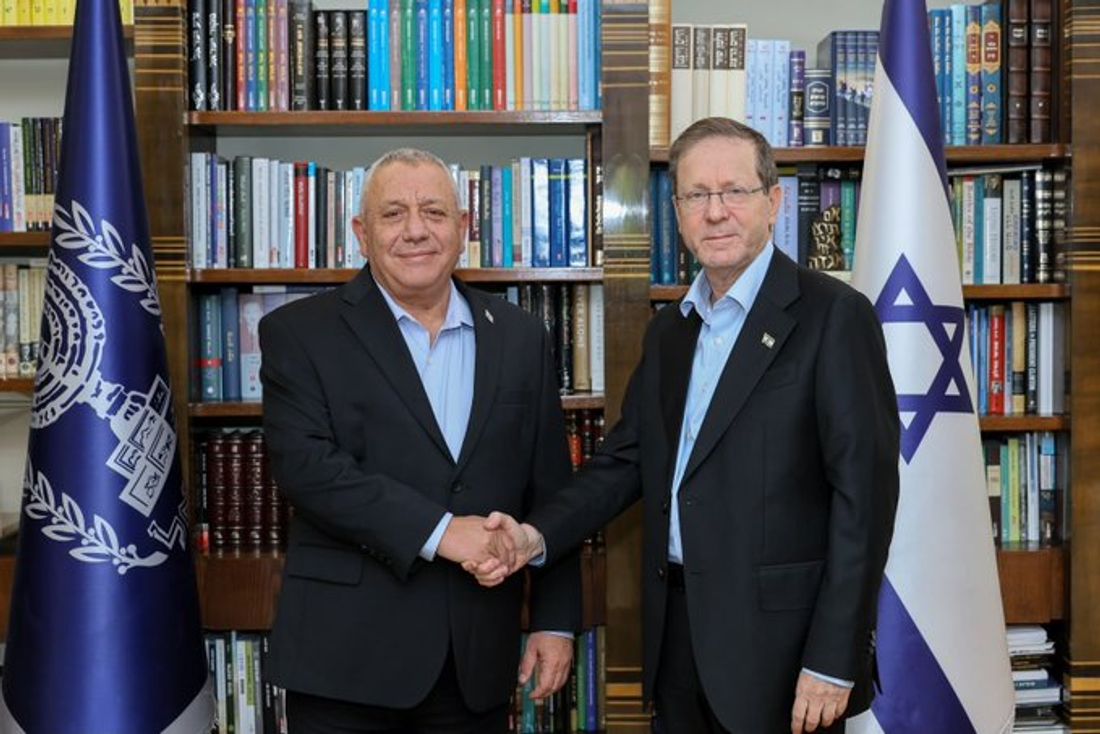
Israeli President Isaac Herzog officially tasked Gadi Eisenkot, leader of the Yashar Party, with forming the new government last night, after he received the recommendation of parliamentary blocs representing 67 members of the Knesset, compared with 46 members who recommended Benjamin Netanyahu, according to the results of consultations held by the president with representatives of the parties that won the Knesset elections.
The Israeli presidency said that Herzog met separately with Eisenkot and Netanyahu and informed them of his decision. In a post on the American platform X on Saturday evening, Eisenkot said that the time had “come to form a national emergency government,” adding: “I will do everything in my power to live up to the responsibility.”
Under Israel’s Basic Law: The Government, Eisenkot has 28 days to form a government, with the president authorized to grant him an extension of up to an additional 14 days if he needs more time.
The opposition Yashar Party, led by Eisenkot, rejected Netanyahu’s call to form a national unity government, describing it as nothing more than a cheap maneuver. In a statement on Saturday evening, the party said that “Netanyahu only talks about unity when he realizes that his days as prime minister are numbered,” accusing him of systematically working to divide Israeli society and stir divisions among its components, even during the war on the Gaza Strip.
The party added that Netanyahu had previously formed unity and emergency governments but worked to undermine them from within and failed to honor the agreements he signed with his political partners. It pointed to the appointment of Itamar Ben-Gvir in the current government despite a previous pledge not to do so.
Meanwhile, hundreds of Israelis demonstrated on Saturday evening in Tel Aviv and the Jezreel Valley area in northern Israel, calling for the formation of a new government with the participation of Arab parties and an end to Netanyahu’s rule. Haaretz reported that around 300 people took part in a demonstration in the Jezreel Valley, while The Times of Israel reported that several hundred gathered at Habima Square in central Tel Aviv. Protesters carried signs in Arabic and Hebrew reading, “67 seats... We are setting out on a new path,” and chanted slogans including, “Without partnership, there is no peace,” and, “Enough with the politics of divide and rule—freedom and equality for all.”
The Standing Together movement, which advocates Jewish-Arab partnership and political equality, took part in the demonstration. Protesters also carried signs calling for the release of journalist Abd Abu Shahadeh, who has been detained since Wednesday on suspicion of communicating with a foreign agent, following his trip to Doha to conduct an interview with former Knesset member Azmi Bishara, according to Israeli reports.
On a parallel front, Israel’s Channel 12 reported that people close to U.S. President Donald Trump had urged Eisenkot to move quickly to form a new government and exclude Prime Minister Benjamin Netanyahu, amid ongoing political efforts to form a new governing coalition in Israel.


