
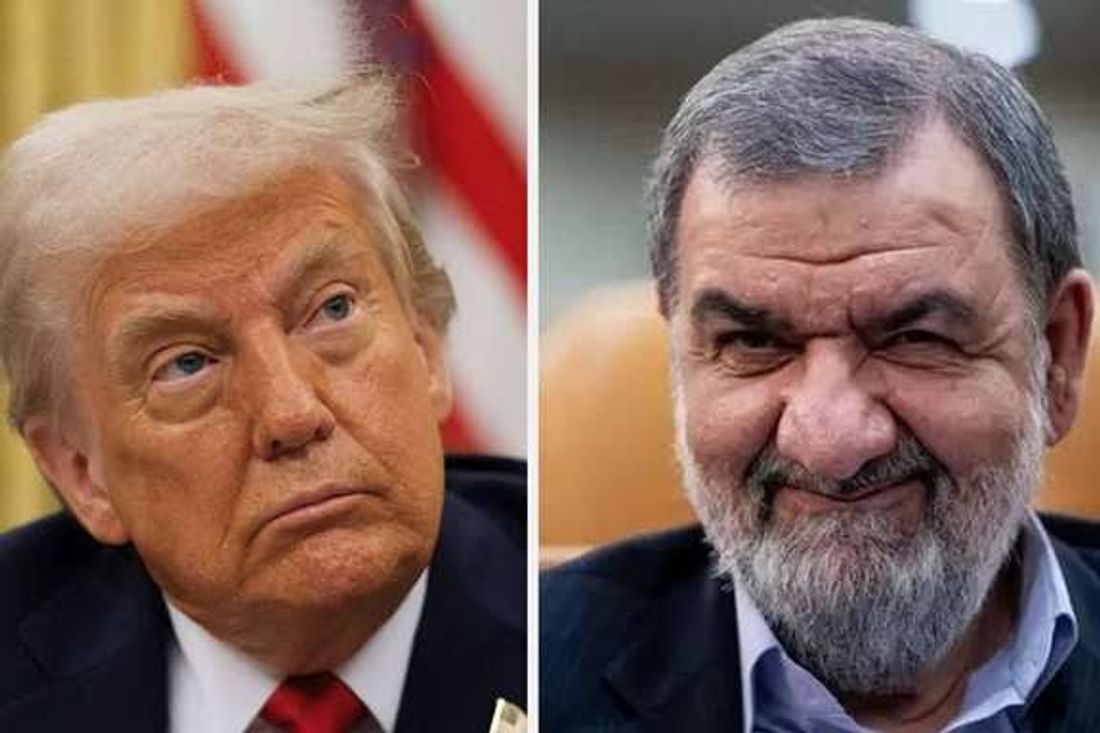
Political efforts have continued amid escalating tensions between the United States and Iran, as talks aimed at ending the war in the region remain ongoing and warnings of a renewed confrontation continue to mount.
Sources close to the mediation efforts led by Qatar and Pakistan told Al-Araby Al-Jadeed that a breakthrough had been achieved in indirect negotiations between Tehran and Washington, following a visit to Tehran on Friday by a Qatari mediation delegation headed by the senior adviser to Qatar's Prime Minister and Minister of Foreign Affairs.
According to Al-Araby Al-Jadeed, a U.S. delegation is expected to join the negotiations and hold talks with the Iranian delegation in Doha, paving the way for an announcement of the resumption of negotiations between the two sides.
This follows an agreement on preliminary measures concerning Iran's nuclear program, navigation through the Strait of Hormuz, and financial incentives for Iran, with China and Russia expected to serve as guarantors of the agreement.
Although the source close to the mediation efforts did not confirm whether direct negotiations would definitely take place, the source explained that the mediator hopes the talks will be direct, particularly in light of the breakthrough achieved on Friday.
In a related development, Reuters quoted a source as saying that Iranian negotiators held talks with Qatari mediators in Doha to discuss ways to end the war in the Gulf.
These contacts are taking place alongside Pakistani diplomatic efforts, with cautious optimism and positive indications regarding the possibility of making progress.
However, the main obstacle remains the sequencing of commitments. Washington is demanding concessions regarding Iran's nuclear program, while Tehran is conditioning any progress on the lifting of the naval blockade, the release of its frozen assets, and permission to sell its oil.
Rezaei: The American Tone Has Completely Changed
Meanwhile, Secretary of Iran's Supreme National Security Council Mohsen Rezaei confirmed on Saturday evening that he had read a message previously sent to him by U.S. Vice President JD Vance, but had not yet responded to it.
In an interview with Iranian state television, Rezaei noted that the tone of the Americans in the message had "completely changed," describing this as "a good sign confirming that the Iranian people have consolidated their victory."
Speaking about the ongoing mediation efforts, Rezaei said Tehran had sent its seven conditions to the United States, stressing that Iran would not enter into any negotiations unless those conditions were implemented.
He explained that the framework and mechanisms of the conditions differ from those discussed in Islamabad, referring to the memorandum of understanding signed by the two countries last June.
"We will not back down from the rights of the Iranian people," he added.
In a televised interview broadcast on Saturday, Rezaei reiterated: "I read the message. I have not responded to it yet. Their tone has changed completely."
Araghchi: Vance's Message Discussed at the Highest Levels in Tehran
In the same context, Iranian Foreign Minister Abbas Araghchi announced that the message sent by U.S. Vice President JD Vance had been discussed at senior levels in Tehran.
He described the attempt to open a broader channel of dialogue as a positive step. However, he stressed that there are currently no plans to hold talks with the United States.
On Wednesday, The Wall Street Journal reported that Vance had sent a message to Rezaei at the direction of President Donald Trump, in an attempt to revive negotiations and prevent further U.S. strikes.
Trump: Negotiations Are Going Well, but Iran Is Not Entirely Trustworthy
For his part, U.S. President Donald Trump said the United States had destroyed a significant portion of Iran's military capabilities but still had "one or two" targets to deal with.
Tehran, meanwhile, threatened to launch a counterattack if further strikes were carried out.
Trump also said negotiations with Iran aimed at ending the war were "going well," but added: "As you know, they're not entirely trustworthy."
Rubio: Trump Has Not Decided on Further Strikes Against Iran
U.S. Secretary of State Marco Rubio said on Saturday evening that President Donald Trump had not made a decision regarding further strikes against Iran.
Despite this, Rubio emphasized that Washington has the ability to achieve its military objectives if it decides to do so, noting that the administration is not treating any military options lightly.
His remarks came amid reports suggesting the possibility of an attack following next Tuesday's midterm congressional elections.
At the same time, the U.S. secretary of state expressed Trump's preference for reaching a diplomatic solution to end the war.
"I won't characterize the progress being made in those conversations (with Iran), nor will I provide any timeline for them, other than to say that we remain open to a diplomatic solution if one is possible," Rubio said.


