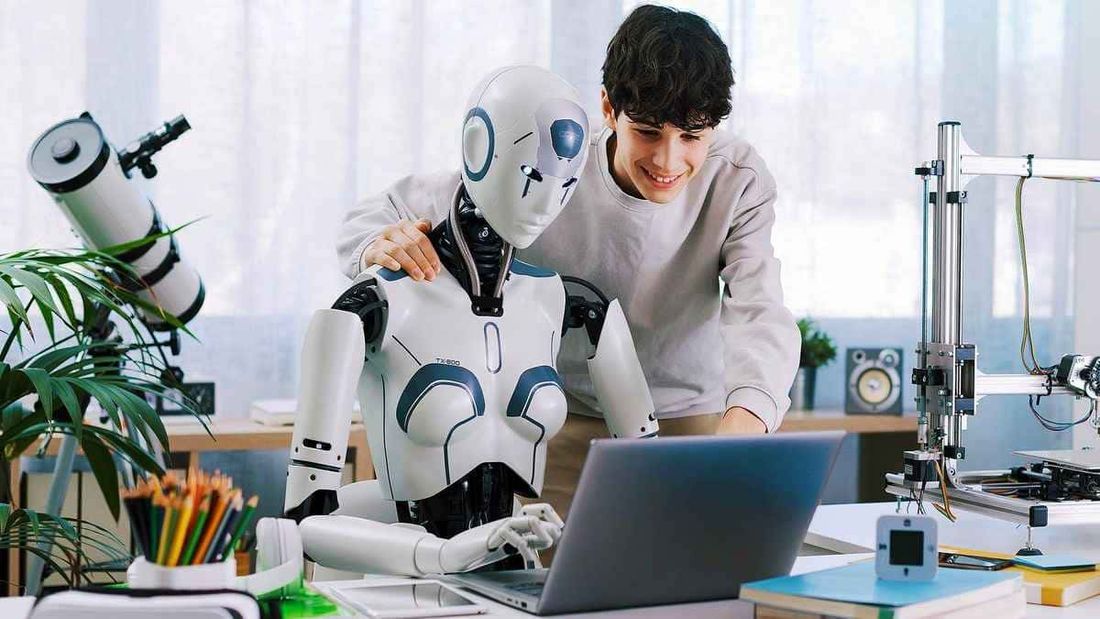
In a shift that could reshape the future of robotics, researchers and technology companies are developing artificial intelligence systems capable of learning skills by watching videos of people performing everyday tasks, rather than relying exclusively on manual programming or direct control of robots.
This technology opens the door to a new generation of machines capable of learning how to use tools, move objects, and perform household and industrial tasks by analyzing human movements and converting them into executable commands.
𝗜𝗺𝗶𝘁𝗮𝘁𝗶𝗼𝗻 𝗟𝗲𝗮𝗿𝗻𝗶𝗻𝗴
The technology relies on what is known as Imitation Learning, in which artificial intelligence software analyzes video clips to extract human movements, identify how hands interact with objects, and then convert this information into instructions suited to the robot's capabilities.
When a system watches someone pick up a cup, open a drawer, or use a tool, it attempts to identify the sequence of movements, contact points, and direction of motion before reproducing the task using robotic arms or hands.
The importance of this approach lies in reducing the need to record thousands of experiments using real robots, a process that is both costly and time-consuming.
𝗧𝗲𝗮𝗰𝗵𝗶𝗻𝗴 𝗮 𝗥𝗼𝗯𝗼𝘁 𝗶𝗻 𝟯𝟬 𝗠𝗶𝗻𝘂𝘁𝗲𝘀
One of the most notable recent examples is the HumanEgo project, developed by researchers at the University of Maryland in the United States in 2026. The system enables robots to learn object-manipulation skills through videos recorded from a first-person perspective, without requiring demonstrations using robots or platform-specific data.
According to the researchers, the system can acquire new skills using approximately 30 minutes of human video footage for each task, achieving an average success rate of 92.5% across four real-world tasks in one published research evaluation.
𝗟𝗲𝗮𝗿𝗻𝗶𝗻𝗴 𝗳𝗿𝗼𝗺 𝗜𝗻𝘁𝗲𝗿𝗻𝗲𝘁 𝗩𝗶𝗱𝗲𝗼𝘀
In June 2026, researchers at Carnegie Mellon University unveiled VideoManip, a system that converts videos showing people interacting with objects into training data for robots.
The system reconstructs hand and object movements in three dimensions, estimates how objects are grasped and manipulated, and then translates these movements into instructions suitable for robotic hands.
Potential applications include learning how to pick up cups, open drawers, and handle household tools, without requiring specialized equipment to record human movements.
𝗧𝗲𝗰𝗵𝗻𝗼𝗹𝗼𝗴𝘆 𝗖𝗼𝗺𝗽𝗮𝗻𝗶𝗲𝘀 𝗘𝗻𝘁𝗲𝗿 𝘁𝗵𝗲 𝗥𝗮𝗰𝗲
This trend is not limited to universities. Figure AI has announced progress in transferring skills from human videos to humanoid robots through its Go-Big project, which aims to train its systems using large and diverse datasets.
Google DeepMind researchers are also working on leveraging unlabeled videos to teach artificial intelligence systems to understand movements and interactive environments.
𝗥𝗲𝗱𝘂𝗰𝗶𝗻𝗴 𝗧𝗿𝗮𝗶𝗻𝗶𝗻𝗴 𝗖𝗼𝘀𝘁𝘀
Despite significant progress, challenges remain, most notably the differences between human and robotic physical structures, as well as the difficulty of estimating force, friction, and balance from images alone.
Watching someone perform a task does not necessarily mean that a robot understands all the physical details required to carry it out safely, particularly when handling fragile, hot, or heavy objects.
Nevertheless, combining video with simulation, artificial intelligence, and sensors could reduce the cost of robot training and accelerate their adoption in homes and factories.
In the future, teaching a robot may become more like teaching a human: through watching, observing, and imitation, rather than writing thousands of lines of code for every new task.
𝗦𝗼𝘂𝗿𝗰𝗲: Erem News