
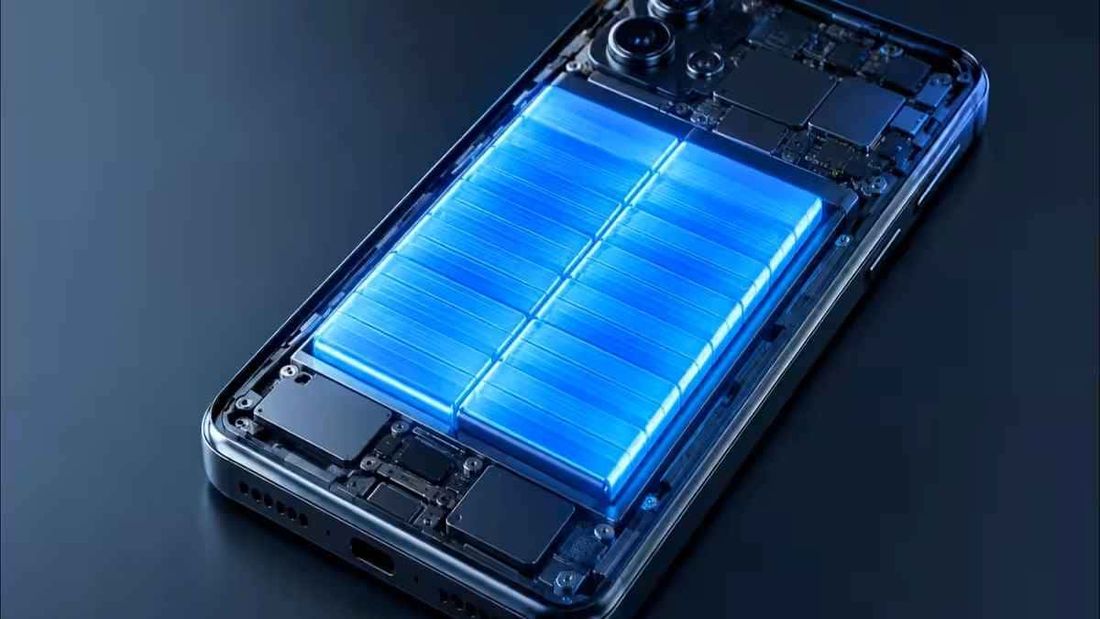
The smartphone industry is witnessing rapid advances in battery technology, as manufacturers increasingly turn to silicon to boost storage capacity and improve charging speeds without significantly increasing battery size.
Silicon-carbon batteries are emerging as one of the most promising technological trends, as companies seek to address power consumption challenges and extend smartphone battery life amid growing reliance on large displays, powerful processors, and artificial intelligence technologies.
𝗧𝗵𝗲 𝗥𝗮𝗰𝗲 𝘁𝗼 𝗗𝗲𝘃𝗲𝗹𝗼𝗽 𝗕𝗮𝘁𝘁𝗲𝗿𝗶𝗲𝘀
For many years, traditional lithium-ion batteries have relied on graphite in their anodes, the negative electrodes inside batteries. However, recent developments have encouraged researchers and manufacturers to explore the use of silicon, either on its own or combined with graphite, to increase battery energy storage capacity.
Silicon can accommodate significantly more lithium ions than graphite, making it an attractive material for developing batteries with higher energy density.
Technology companies are working on silicon-carbon combinations to take advantage of the benefits of both materials while attempting to overcome the challenges that arise during repeated charging and discharging cycles.
𝗛𝗶𝗴𝗵𝗲𝗿 𝗖𝗮𝗽𝗮𝗰𝗶𝘁𝘆
One of the main advantages of silicon-carbon batteries is their potential to increase energy density, allowing them to store more electricity within approximately the same size and weight.
This advantage is particularly important for smartphones, as manufacturers compete to produce slimmer and lighter devices equipped with batteries capable of lasting longer.
The technology could make it possible to develop smartphones with larger battery capacities without compromising their design or the internal space allocated to cameras, processors, and cooling systems.
It could also improve the performance of devices running power-intensive applications, such as gaming, high-resolution photography, and artificial intelligence-powered features.
𝗙𝗮𝘀𝘁𝗲𝗿 𝗖𝗵𝗮𝗿𝗴𝗶𝗻𝗴
Research is not limited to increasing battery capacity; it also focuses on improving batteries' ability to receive energy within shorter periods.
New material combinations could help enhance battery performance. However, charging speed does not depend on silicon alone. It is also influenced by cell design, battery management systems, temperature, and the power output of the charger being used.
Companies are working to combine advanced battery technologies with fast-charging systems to reduce the time users need to recharge their smartphones while maintaining safety and stability.
𝗧𝗲𝗰𝗵𝗻𝗶𝗰𝗮𝗹 𝗖𝗵𝗮𝗹𝗹𝗲𝗻𝗴𝗲𝘀
Despite their promising advantages, these technologies still face several engineering challenges. One of the most significant is the substantial expansion of silicon as it absorbs lithium ions during charging, followed by contraction during discharging.
These repeated changes in volume can cause cracks and gradual performance deterioration, affecting battery lifespan and the number of charging cycles it can withstand.
For this reason, research is focusing on developing composite materials and more stable structures that can harness silicon's high energy-storage capacity while minimizing the effects of expansion and contraction.
𝗧𝗵𝗲 𝗙𝘂𝘁𝘂𝗿𝗲 𝗼𝗳 𝗕𝗮𝘁𝘁𝗲𝗿𝗶𝗲𝘀
Integrating silicon into smartphone batteries represents an important step in the race to improve energy efficiency, particularly as modern devices continue to demand more power.
Manufacturers are expected to continue developing this technology while improving its reliability and reducing production costs. This could pave the way for smartphones offering longer battery life and more flexible charging experiences.
With the potential to increase capacity, reduce charging times, and extend battery lifespan, silicon appears poised to play a significant role in the next generation of batteries, although achieving optimal performance will require further development and testing.
𝗦𝗼𝘂𝗿𝗰𝗲: 𝗘𝗿𝗲𝗺 𝗡𝗲𝘄𝘀


