
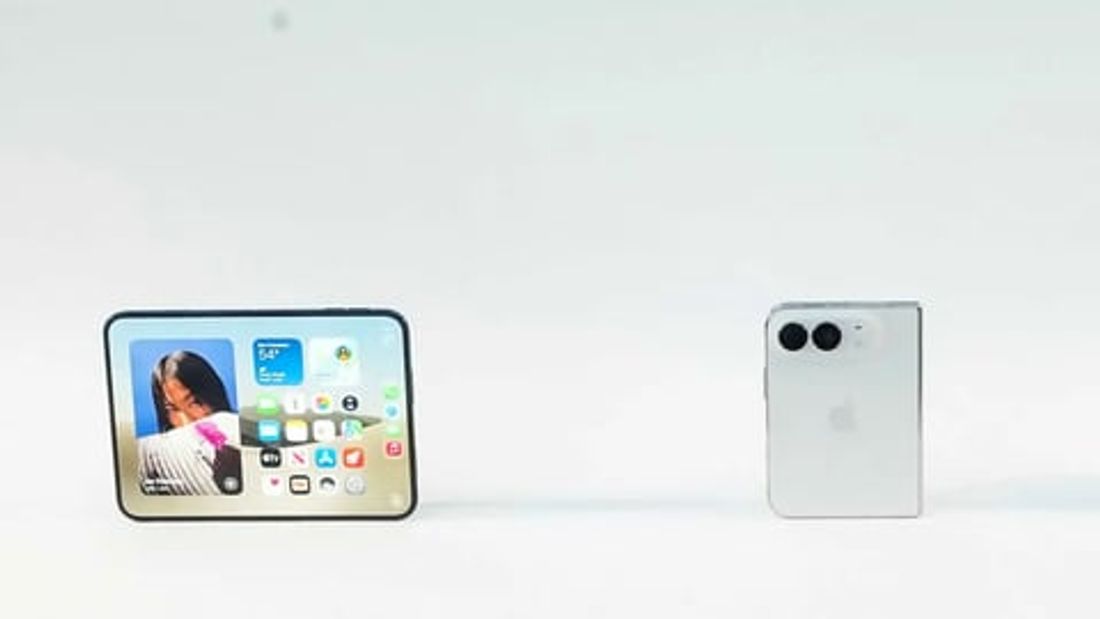
A detailed teardown report by repair platform iFixit has revealed aspects of the internal design of the iPhone Duo, Apple’s first foldable phone, that could help explain some of the screen issues reported by users, as investigations into the exact causes of these failures continue.
According to the report published on Monday, the phone received a repairability score of 5 out of 10, the highest score so far among all foldable phones tested by iFixit, although this rating remains provisional until spare parts become available.
The teardown focused on the hinge that allows the phone to fold and unfold. It revealed that Apple relies on a complex mechanism incorporating gears, springs, and metal joints to maintain the screen’s durability during repeated use. The design also features a waterdrop-style folding mechanism intended to reduce stress on the screen when the device is folded.
Dust-resistance tests showed that the hinge significantly limits dust ingress compared with other foldable phones, supporting the device’s ability to provide water and dust protection under the IP68 standard.
Pressure Points That Could Explain Screen Failures
Regarding issues with the internal display, the iFixit report identified concerning pressure points where the central cable meets the hinge support structure. Inspections and computed tomography imaging suggest that some components, including the central beam and curved rails, may not move with perfect smoothness as the phone folds and unfolds.
This movement could cause parts of the screen to become compressed, potentially resulting in bright lines appearing in specific areas. The overlapping edges and internal components in a flexible section of the device may also increase pressure on the screen’s delicate layers.
However, the report did not establish the definitive cause of the failures. Instead, it highlighted indications of a possible link to the internal hinge design, making these findings technical hypotheses that require further examination and analysis.
Innovations in the Display and Battery
The teardown also highlighted several technologies Apple uses in the display, including a nanometer-scale coating designed to reduce light reflections along the edge and a specialized pixel arrangement intended to make the crease in the middle of the screen less noticeable.
The process revealed that the frame surrounding the internal display is secured with clips rather than adhesive, making it easier to replace. The same applies to the external display.
As for the battery, the phone contains two batteries: one beneath the rear glass and another underneath the external display, with a combined capacity of 19.073 watt-hours. Apple also uses removable electrical-release adhesive to make battery removal easier during repairs, a feature that is uncommon in foldable phones.
iFixit concluded that the phone is more repairable than the competing devices it has tested so far. However, this does not eliminate questions about the durability of its display.
The potential connection between the hinge design and the reported failures remains a key focus of technical investigations until a more definitive explanation is established.
𝗦𝗼𝘂𝗿𝗰𝗲: Erem News


