
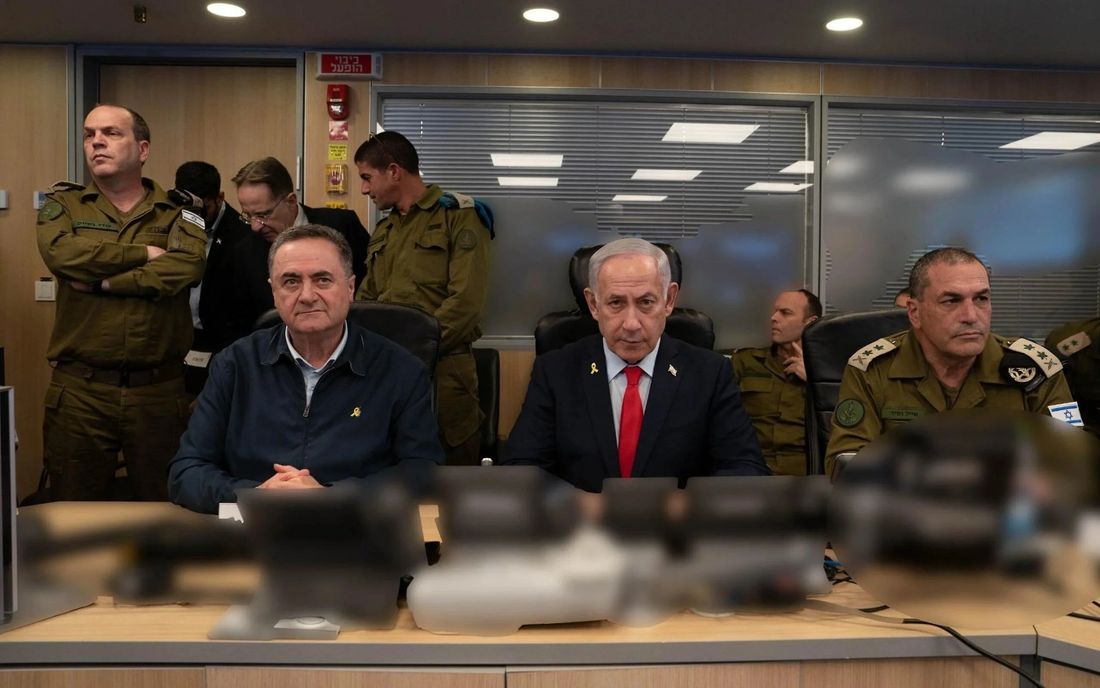
Reports of a dispute between Israeli Prime Minister Benjamin Netanyahu and Chief of Staff Eyal Zamir regarding a military move related to Iran have sparked a political uproar ahead of Tuesday's elections, amid opposition accusations of attempting to exploit the military for electoral purposes, and Netanyahu's denial of any confrontation.
Israel's Channel 12 reported that Zamir requested an in-depth discussion and a formal written mandate before carrying out a procedure directed by the political leadership, out of fear that it could lead to a sudden escalation with Tehran.
According to the report, military leaders fear that the proposed action could lead to a confrontation at a sensitive time due to a miscalculation of the situation. The nature of the action or its objectives has not been announced, and the published information does not confirm that a final decision has been made to wage a new war against Iran. Israeli media outlets quoted informed sources expressing fears that electoral calculations are influencing military decisions—accusations that could not be independently verified.
Netanyahu rejected Channel 12's report, asserting that there is no confrontation with the Chief of Staff, and pointing out that Zamir himself had spoken about Iranian attempts to influence the elections.
However, Netanyahu's opponents launched a major campaign against him. In a hardline stance, opposition Yisrael Beiteinu party leader Avigdor Lieberman demanded a criminal investigation against Netanyahu on charges of "high treason," accusing him of pressuring senior security establishment leaders during the past month to push them into a wide-scale military confrontation with Iran.
Lieberman said: "Netanyahu is trying to drag Israel into a war on the eve of the parliamentary elections and sacrifice the soldiers' security in order to avoid political defeat. These moves are aimed at disrupting the elections."
Gadi Eisenkot, leader of the "Yashar" party and former Chief of Staff, announced his support for Zamir, warning against turning the military establishment into a tool for Netanyahu's survival in power. He stressed that holding elections on schedule is a fundamental element of Israel's stability, demanding a separation between political interests and security decisions. Opposition leader Yair Lapid also accused Netanyahu of pushing toward escalation, while Yair Golan emphasized the necessity for any military operation to be based on a clear security need, a strategic goal, and a responsible plan.
However, Israeli Defense Minister Israel Katz categorically rejected these accusations, denying any tension between the political leadership and the military regarding the Iranian file, and affirming that decisions are governed strictly by security considerations.
The dispute highlights the intensity of the overlap between the Iranian file and the electoral battle, while leaving open questions regarding the nature of the military instructions, their operational justifications, and the limits of the disagreement within the Israeli leadership.


