
The *New York Times* published an article by defense policy expert Becca Wasser and Dina Esfandiary, a Middle East researcher at Bloomberg Economics, examining the opportunity for the United States to reassess its influence in the region after the end of the war with Iran.
The lengthy report stated:
The two authors observed that whenever the United States has attempted to withdraw its forces or reduce its military footprint in the region, it has been forced to return once again.
The question, therefore, is whether the war with Iran represents a break with this pattern and an opportunity to reset America’s relationship with the region.
Once the war with Iran ends through some form of settlement, the United States will not simply withdraw from the Middle East, regardless of the extent of the damage Tehran has inflicted on its military facilities there. Washington should instead seek to reshape its military presence.
This will likely involve reducing the number of troops and military equipment, while acknowledging that, over time, the Arab Gulf states may come to view the United States as just one of several available security partners.
The authors believe that this more gradual approach would mean relinquishing some power and influence. The Middle East will not develop according to American terms, but Washington would be able to focus on its core interests and avoid being dragged into unpopular regional wars.
It would also give Arab countries greater capacity to build their own security institutions. Accordingly, creating a new future for the Middle East will require courage and will frustrate regional partners and impose a heavy financial cost on them. Nevertheless, it is a price worth paying.
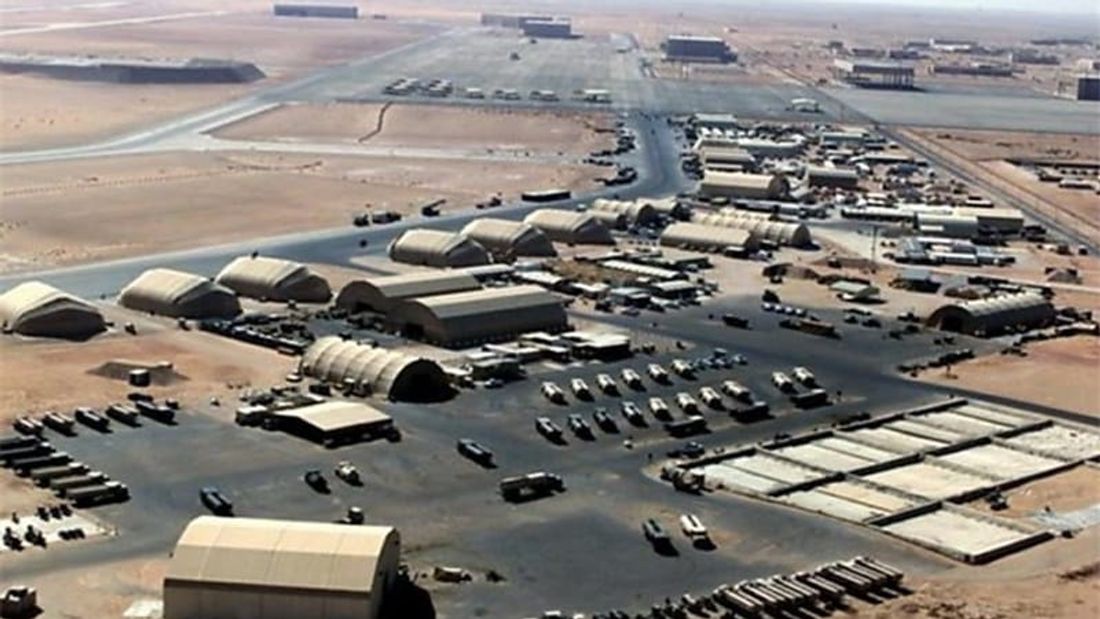
Since the US-Israeli attack in February, nearly all American military bases and facilities in the region have sustained damage, exposing the vulnerability of the tools previously used to project influence.
Rebuilding what has been damaged or destroyed would therefore be a risky step. Technology has advanced considerably since the US bases in the Middle East were established, many of which date back more than half a century. Although recent upgrades have helped improve their condition, the bases have become outdated and their air defenses are no longer sufficient to confront the new threat.
Iranian missiles and drones have damaged at least 81 American aircraft. This is in addition to the human losses: at least 21 US soldiers have been killed and around 900 others wounded. Thousands of Iranians have also been killed, including a large number of civilians, while countries across the Middle East have suffered military and civilian casualties.
Nevertheless, if the United States does not renew its traditional capabilities in the region, such as its bases and deployments of [the text ends here in the supplied excerpt]


