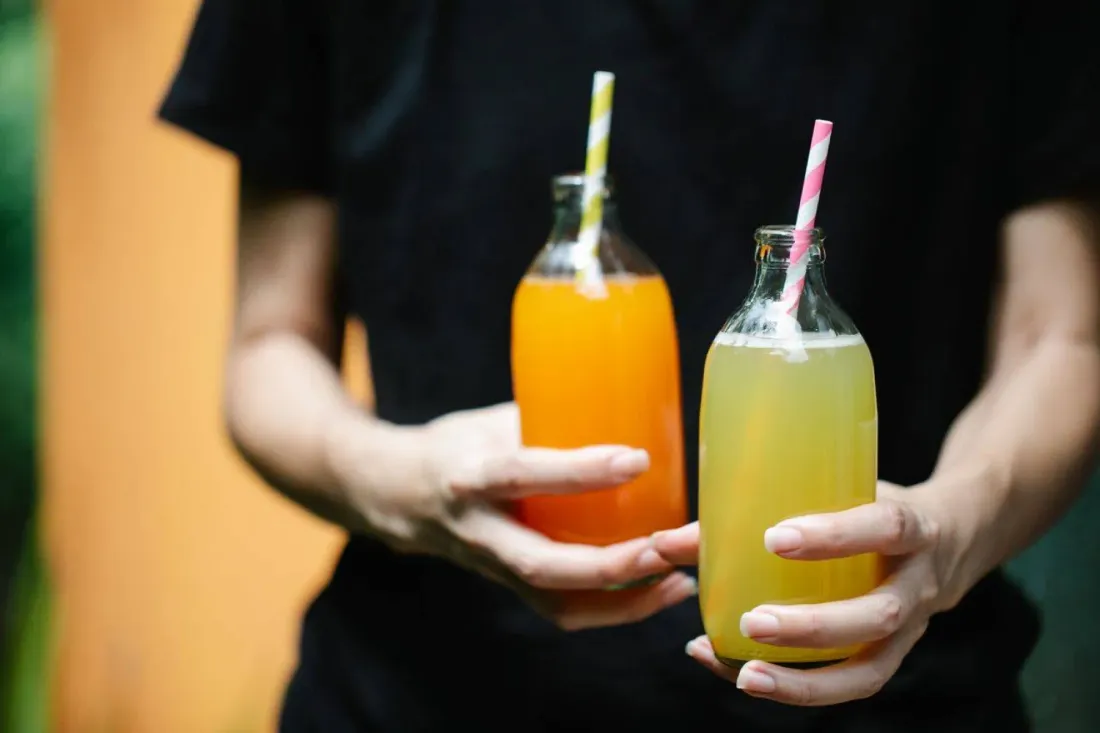
A glass of juice may seem like a healthier alternative to soft drinks or sweetened tea, but it can cause blood sugar levels to rise just as quickly. This is because juices contain sugars and carbohydrates that the body breaks down into glucose, which it uses as a source of energy.
For people with diabetes or prediabetes, as well as those monitoring their blood sugar levels, a report published by Health magazine warns against four types of juice that should be avoided or consumed in moderation.
Although 100% natural fruit juice contains no added sugar, its naturally occurring sugars can still raise blood sugar levels. The effect is generally greater than that of eating whole fruit because juice contains less protein, fat and fiber, all of which help slow the rise in blood sugar.
1\. Grape Juice
Even when it is 100% natural, grape juice contains high amounts of sugar and carbohydrates, while providing relatively small amounts of nutrients such as fiber, protein and fat. These nutrients help prevent blood sugar levels from rising too quickly.
One cup, or approximately 240 milliliters, of 100% natural grape juice contains:
* Carbohydrates: 39.04 grams.
* Sugar: 35.28 grams (approximately 9 teaspoons).
* Fiber: 0.496 grams.
* Protein: 0.448 grams.
* Fat: 0.696 grams.
2\. Apple Juice
Whole apples are considered a healthy snack, but juicing them removes most of the fiber that helps reduce their impact on blood sugar levels.
Although apple juice contains fewer carbohydrates than grape juice, its low protein and fiber content means it provides fewer nutrients that help slow sugar absorption in the body.
One cup, or approximately 240 milliliters, of 100% natural apple juice contains:
* Carbohydrates: 28.16 grams.
* Sugar: 25.12 grams (approximately 7 teaspoons).
* Fiber: 0.496 grams.
* Protein: 0.224 grams.
* Fat: 0.616 grams.
3\. Cranberry Juice
Cranberry juice offers several potential health benefits, including a possible role in preventing urinary tract infections. However, cranberry juice products generally contain high amounts of sugar and relatively little fiber and protein.
One cup, or approximately 240 milliliters, of 100% natural cranberry juice blend contains:
* Carbohydrates: 27.68 grams.
* Sugar: 22.4 grams (approximately 6 teaspoons).
* Fiber: 0.496 grams.
* Protein: 0.296 grams.
* Fat: 0.448 grams.
Cranberry cocktail drinks, which contain around 30 grams of sugar per cup, have even more sugar than natural cranberry juice, without providing fiber or protein.
4\. Orange Juice
Orange juice is a popular breakfast drink and is often considered a healthy way to get a morning dose of vitamin C.
Compared with grape, apple and cranberry juices, orange juice contains slightly higher amounts of protein and fiber. However, its sugar content remains high enough to cause a rapid increase in blood glucose levels.
One cup, or approximately 240 milliliters, of 100% natural orange juice contains:
* Carbohydrates: 25.2 grams.
* Sugar: 20.32 grams (approximately 5 teaspoons).
* Fiber: 0.744 grams.
* Protein: 1.912 grams.
* Fat: 0.84 grams.
𝗛𝗼𝘄 𝗖𝗮𝗻 𝗬𝗼𝘂 𝗗𝗿𝗶𝗻𝗸 𝗝𝘂𝗶𝗰𝗲 𝗪𝗶𝘁𝗵𝗼𝘂𝘁 𝗖𝗮𝘂𝘀𝗶𝗻𝗴 𝗮 𝗦𝗽𝗶𝗸𝗲 𝗶𝗻 𝗕𝗹𝗼𝗼𝗱 𝗦𝘂𝗴𝗮𝗿?
If you enjoy drinking juice, you do not necessarily have to give it up completely. You can still enjoy it occasionally by following a few steps to help reduce its impact on blood sugar levels:
\- Reduce the serving size: Instead of drinking a 240-milliliter glass, consider having half that amount, or 120 milliliters or less, to reduce the amount of sugar consumed at one time.
\- Drink juice with food: Having juice alongside a meal containing protein or fat may help limit a rapid rise in blood sugar levels.
\- Dilute juice with water: Mix half a cup of juice with half a cup of water to reduce the amount of sugar in each serving.
\- Choose lower-sugar options: Look for juices labeled "no added sugar."
𝗦𝗼𝘂𝗿𝗰𝗲: 𝗔𝗮𝘄𝘀𝗮𝘁