
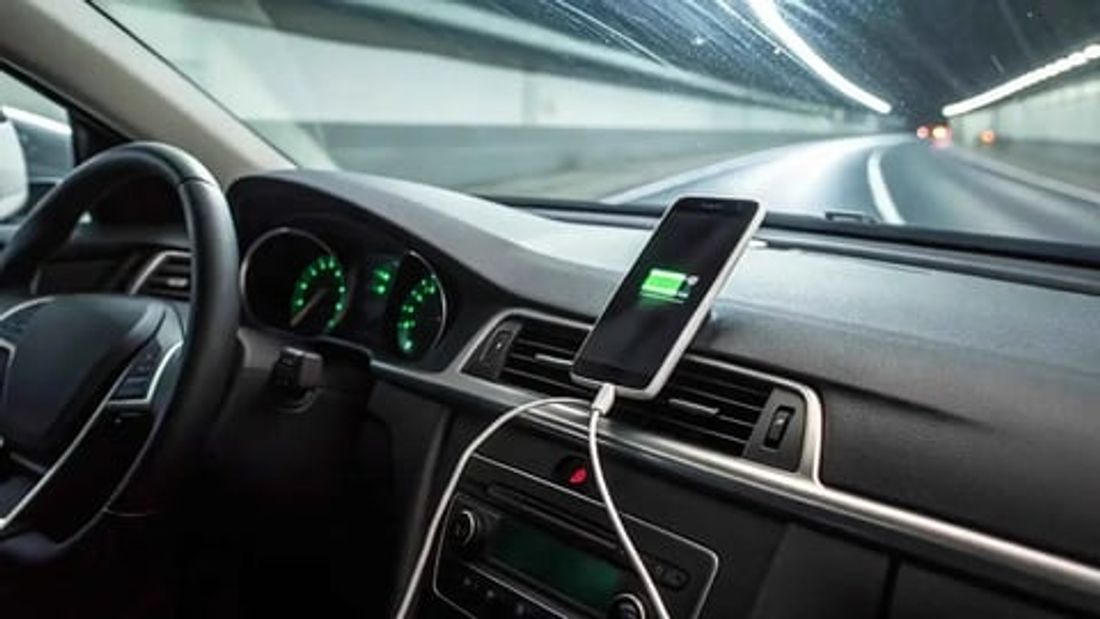
Many smartphone users notice a difference in how quickly their devices charge when plugged into a household electrical outlet compared with charging them inside a car, even when using the same cable.
This difference is linked to several technical factors, most notably the charger's power output, electrical current, fast-charging technologies, and the types of power ports available in vehicles.
𝗗𝗶𝗳𝗳𝗲𝗿𝗲𝗻𝗰𝗲𝘀 𝗶𝗻 𝗣𝗼𝘄𝗲𝗿 𝗢𝘂𝘁𝗽𝘂𝘁
Differences in charger power output are among the main reasons for variations in phone charging speeds.
A household electrical outlet supplies power to the phone charger, which converts alternating current (AC) into direct current (DC) suitable for charging the battery.
Household chargers vary in power output, ranging from 5 watts to 100 watts or more with certain fast-charging technologies, depending on the specifications of both the phone and the charger.
By contrast, cars rely on USB ports or traditional power outlets operating at approximately 12 volts. Their power output varies from one vehicle to another, which may result in slower phone charging, particularly when using an older or low-power USB port.
𝗪𝗵𝘆 𝗜𝘀 𝗖𝗮𝗿 𝗖𝗵𝗮𝗿𝗴𝗶𝗻𝗴 𝗦𝗹𝗼𝘄𝗲𝗿?
Several factors can make charging a phone inside a car slower. One of the most notable is the limited power output of USB ports, as some vehicles have ports designed primarily for connecting devices and playing music rather than supplying enough power to charge phones quickly.
Charging technologies also play an important role.
A household charger may support fast-charging technologies such as USB Power Delivery or Qualcomm Quick Charge, while the car's power port may not support these technologies.
Similarly, using an unsuitable or low-quality cable can reduce the amount of power reaching the phone, even when connected to a powerful charger.
𝗖𝗮𝗿 𝗧𝗲𝗺𝗽𝗲𝗿𝗮𝘁𝘂𝗿𝗲
Temperature plays an important role in determining phone charging speed, particularly during summer or when a device is left inside a closed car.
When the battery temperature rises, the power management system may automatically reduce charging speed to protect the battery from damage and maintain its safety.
This can happen even when using a fast charger, because the phone regulates the amount of power it receives according to the battery's temperature, condition, and current charge level.
𝗙𝗮𝘀𝘁 𝗖𝗵𝗮𝗿𝗴𝗶𝗻𝗴
It is important to understand that a phone's charging speed does not remain constant throughout the entire charging process.
A phone typically receives more power when its battery level is low. However, charging speed gradually decreases as the battery approaches full capacity.
This happens because battery management systems regulate the flow of power and reduce charging speed during the final stages to help protect the battery and extend its lifespan.
𝗛𝗼𝘄 𝘁𝗼 𝗖𝗵𝗮𝗿𝗴𝗲 𝗬𝗼𝘂𝗿 𝗣𝗵𝗼𝗻𝗲 𝗙𝗮𝘀𝘁𝗲𝗿
Charging speed while driving can be improved by using a car charger that supports fast-charging technology compatible with the phone, or by choosing a charger with a power output suitable for the device's specifications.
Using a high-quality USB-C cable that supports the required power delivery can also help increase charging speed.
It is also important to make sure that the car's port supports fast charging rather than data transfer only.
𝗜𝗻 𝗖𝗼𝗻𝗰𝗹𝘂𝘀𝗶𝗼𝗻
Differences in phone charging speeds between household electrical outlets and cars are caused by variations in power output, chargers, and charging technologies, as well as the effects of temperature and battery condition.
Therefore, using the same cable does not guarantee identical charging speeds, as the result depends on the compatibility of the phone, charger, and power source.
𝗦𝗼𝘂𝗿𝗰𝗲: 𝗘𝗿𝗲𝗺 𝗡𝗲𝘄𝘀


