
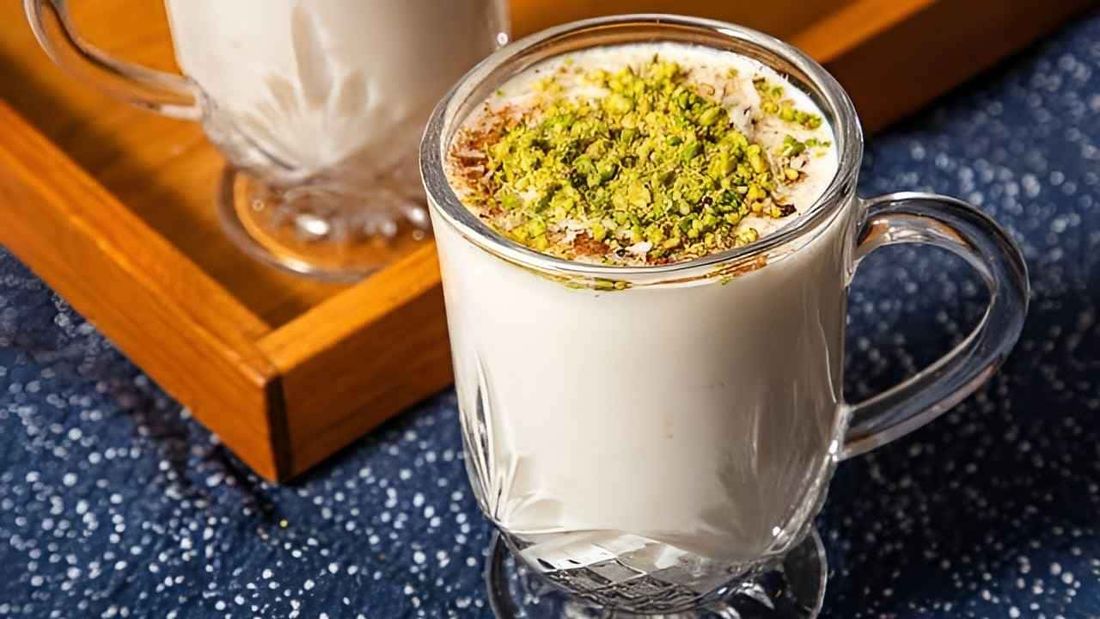
As winter arrives and temperatures drop, many people look for drinks that provide warmth and comfort. Sahlab is undoubtedly one of the most popular winter beverages for many.
Sahlab can be a suitable drink as part of a balanced diet, but its calorie content and nutritional value depend on its ingredients and serving size. Milk provides protein and calcium, while adding more sugar, nuts, and other toppings increases its calorie content.
Therefore, there is no single calorie figure that applies to every cup of sahlab, and its thickness alone is not enough to determine its nutritional value, according to the medical website Al-Tibbi.
When prepared with milk, an important part of its nutritional value comes from the milk itself, particularly its protein and calcium content.
Starch, on the other hand, adds carbohydrates and gives the drink its thick consistency, but it does not automatically make the beverage rich in fiber.
The amount of fat and sugar depends on the type of milk used, the quantity of sweetener, and the additional ingredients.
Traditional sahlab is a powder extracted from the tubers of certain orchid plants. It is used to thicken the drink when heated with milk.
However, products sold under the name “sahlab” are not all the same. Some may consist of mixtures containing starch, sugar, powdered milk, and other ingredients, and the amount of actual sahlab powder they contain may vary.
These figures do not apply to pure sahlab powder, ready-made mixtures, or café servings. Adding sugar, honey, cream, or nuts increases the calorie content depending on the quantity used.
To estimate the nutritional value of a prepared cup, check the nutritional information for the prepared serving and its size, or ask about the ingredients and quantities. The absence of this information does not justify relying on a precise calorie estimate.
The popularity of sahlab does not mean that it has proven medicinal benefits. Nutritional studies examining the powder's composition and the drink's consistency do not establish that it treats coughs, constipation, or stomach ulcers.
It can be enjoyed as a warm beverage without using it as a substitute for medical treatment or turning the properties of one of its ingredients into a health claim about the entire drink.
Drinking a single beverage does not automatically cause weight gain. Body weight is influenced by energy balance over time. However, a large serving containing substantial amounts of sweeteners and toppings may increase overall calorie intake.
If you are monitoring your weight, try a smaller serving and adjust the amount of sweetener and nuts to suit your diet, rather than considering sahlab forbidden or treating it as a weight-loss drink.
𝗦𝗼𝘂𝗿𝗰𝗲: 𝗘𝗿𝗲𝗺 𝗡𝗲𝘄𝘀


