
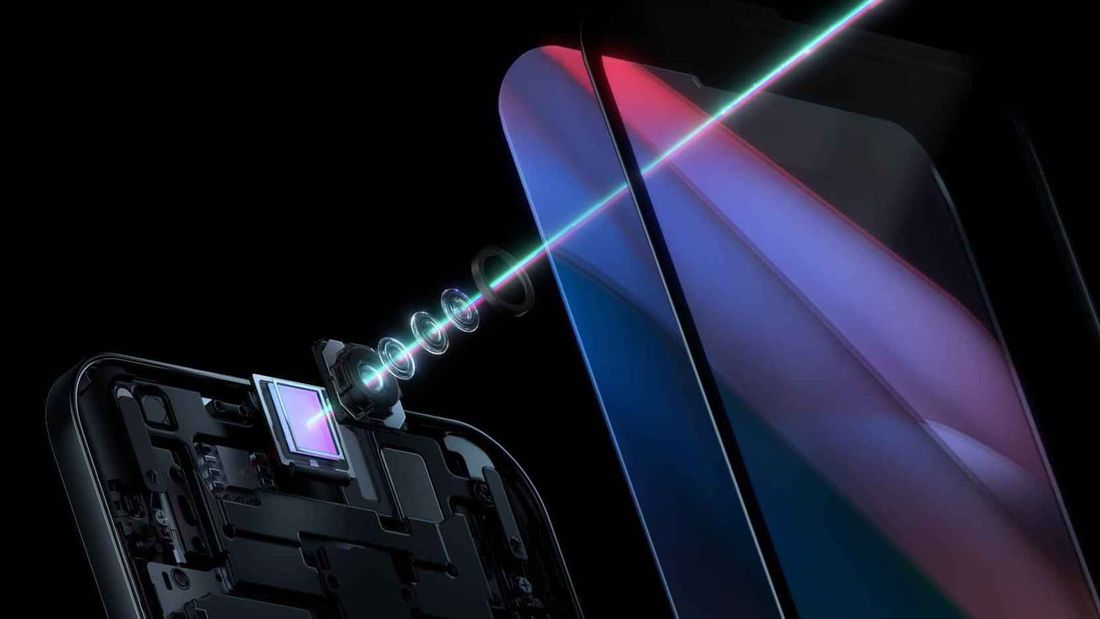
Technology and smartphone companies are moving towards developing a new generation of devices that feature front-facing cameras hidden beneath the screen. The move aims to eliminate the holes and notches that occupy part of the front display, offering a smoother viewing experience.
The importance of this technology goes beyond improving the exterior design. It represents an attempt to reinvent the look of smartphones by providing uninterrupted, full-screen displays, despite the technical challenges associated with image quality and the passage of light through the screen layers.
For years, smartphone manufacturers have relied on various designs for positioning the front camera, from top notches to small punch-hole cutouts within the display, in an effort to reduce the space occupied by the camera.
However, under-display camera technology offers a different solution, allowing the camera sensor to be placed behind the display panel. This makes the camera almost invisible when it is not in use.
The technology gives users more screen space, particularly when watching videos, playing games, and browsing content, without a hole or opening interrupting the image.
How Does It Work?
The technology relies on advanced displays, usually OLED panels, which allow light to pass through a specific area located above the camera sensor.
Companies are working to modify the pixel arrangement in this area or reduce its density to increase screen transparency and allow light to reach the lens.
When the camera is not in use, the area displays screen content normally. Once the camera is activated, however, light passes through to the sensor, allowing it to capture photos and videos. This process requires precise engineering to strike a balance between display clarity and the camera's ability to receive light.
Improving Design
One of the main reasons companies are adopting this technology is their desire to offer smartphones with simpler, more streamlined designs while making full use of the front display area.
The technology is also gaining additional importance in foldable phones, as it allows manufacturers to provide a large inner display without the need for a visible camera cutout, as seen in some models of Samsung's Galaxy Z Fold series.
Companies are also seeking to reduce their reliance on pop-up cameras and mechanical systems, which can make phone designs more complex and introduce components that are susceptible to damage.
Key Challenges
Despite its design advantages, under-display cameras still face technical challenges that affect image quality. Light passing through the screen layers loses some of its intensity before reaching the sensor, which may affect image sharpness and detail, particularly in low-light conditions.


