
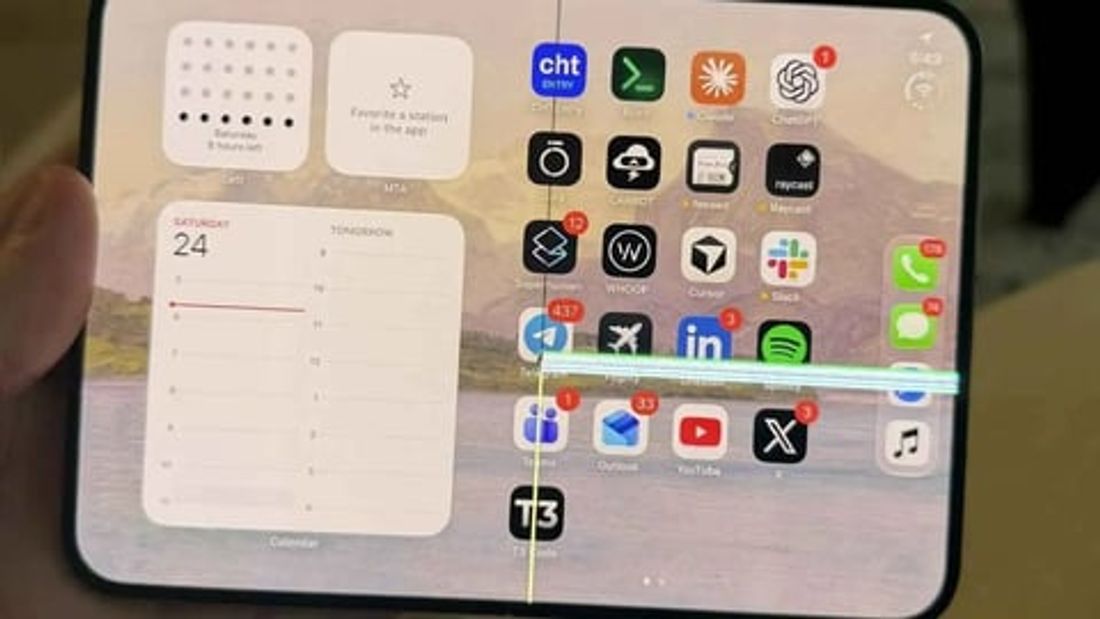
Questions are mounting over the causes of cracks in the inner display of the foldable iPhone Duo after Apple acknowledged an issue affecting a limited number of devices. Possible explanations include the hinge mechanism, display layers, and manufacturing quality, while attention is turning to potential changes in future generations.
𝗧𝗵𝗲 𝗛𝗶𝗻𝗴𝗲 𝗨𝗻𝗱𝗲𝗿 𝗦𝗰𝗿𝘂𝘁𝗶𝗻𝘆
Cracks appearing on the inner display of the iPhone Duo have reignited debate over the engineering challenges facing manufacturers of foldable phones, particularly the ability of displays to withstand repeated bending without sustaining damage.
Circulating reports describe cases of cracking near the folding area, including complaints from users who say the damage occurred shortly after they began using their devices.
However, these accounts alone are insufficient to establish the failure rate or prove that all devices are affected by the same issue. One technical hypothesis is that localized pressure may be building up on the display because of the hinge’s movement or insufficient clearance between certain components and the screen when the device is closed. This explanation, however, still requires independent examination to confirm the root cause of the cracks.
𝗣𝗼𝘁𝗲𝗻𝘁𝗶𝗮𝗹 𝗖𝗮𝘂𝘀𝗲𝘀 𝗼𝗳 𝘁𝗵𝗲 𝗖𝗿𝗮𝗰𝗸𝘀
The problem cannot necessarily be attributed to the hinge alone. Foldable displays consist of multiple layers, including flexible materials, support layers, and display components, making the distribution of mechanical stress a key factor in maintaining their integrity.
Variations in thickness, alignment, or assembly could increase pressure on a specific point, while solid particles trapped in the folding area could cause localized damage. It is also important to distinguish between manufacturing defects, design flaws, and damage resulting from use.
Reaching a reliable conclusion requires examining damaged devices, comparing the locations of the cracks, and determining whether the cases are concentrated in particular production batches.
𝗪𝗵𝗮𝘁 𝗛𝗮𝘀 𝗔𝗽𝗽𝗹𝗲 𝗦𝗮𝗶𝗱?
Apple has acknowledged an issue affecting a limited number of devices and directed affected users to contact AppleCare to arrange replacements.
However, according to the information available, the company has not disclosed the exact number of affected devices or identified the definitive technical cause of the problem. It also remains unclear whether Apple will take broader measures to modify the design or improve its manufacturing processes.
This raises questions about the extent of the defect and the reliability testing performed before devices reach consumers. Nevertheless, there is currently insufficient evidence to conclude that the company reduced its quality-testing procedures or released the device despite knowing of a widespread defect.
𝗔𝗿𝗲 𝗧𝗵𝗲𝗿𝗲 𝗔𝗹𝘁𝗲𝗿𝗻𝗮𝘁𝗶𝘃𝗲𝘀?
Consumers interested in purchasing a foldable phone have alternatives, including Samsung’s Galaxy Z Fold series and Google’s Pixel Pro Fold, although they should compare warranty coverage, screen repair costs, and the availability of spare parts in their local markets.
Users who prefer to remain within Apple’s ecosystem but do not need a foldable display can consider conventional iPhone models, which do not rely on a hinge or a flexible inner screen.
As for the next generation, various possibilities have been discussed, including changes to the hinge and display designs, alongside other adjustments to the phone’s specifications.
However, there has been no official confirmation that these changes are planned specifically to address the current cracking issue, nor has the launch date of the next generation been finalized. The most important indicators in the coming period will be the findings of independent examinations, developments in reported failures, and any further official clarification from Apple.
The scale of the problem cannot be measured by the number of circulating photos alone. It must be assessed based on the proportion of affected devices, the causes of the damage, and how frequently it occurs under normal usage conditions.
𝗦𝗼𝘂𝗿𝗰𝗲: 𝗘𝗿𝗲𝗺 𝗡𝗲𝘄𝘀


