
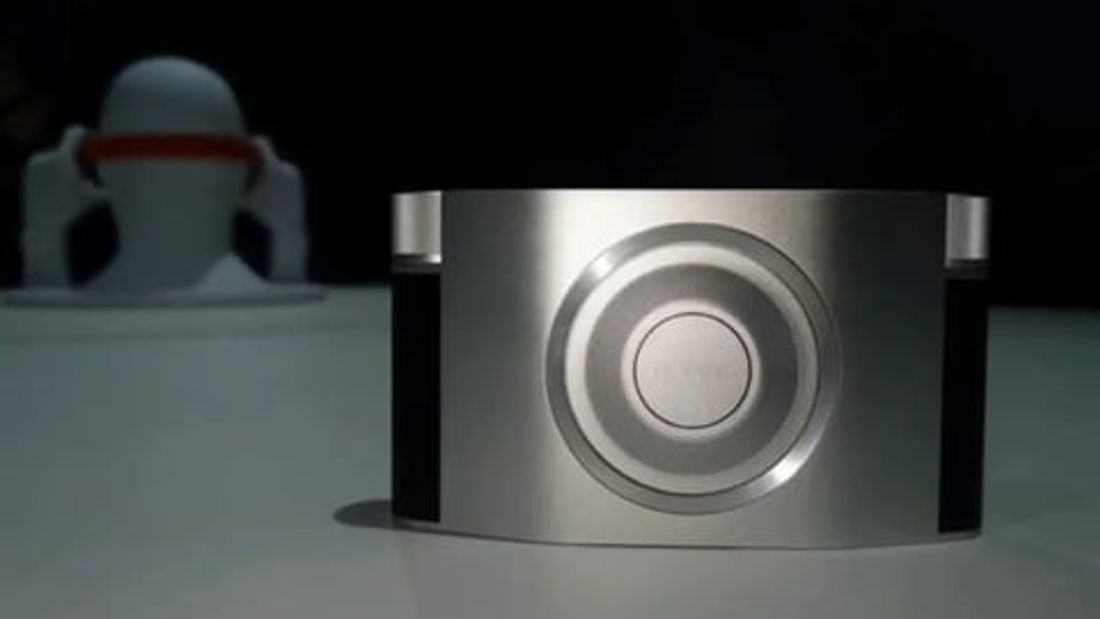
Imagine taking a clear photograph without having a lens in front of the camera. This seemingly unconventional idea has become the focus of advanced research in digital imaging, as new technologies rely on optical sensors and computational algorithms to produce images without traditional lenses.
Lensless cameras are paving the way for a new generation of imaging devices characterized by their compact size and reduced mechanical complexity. Their potential applications extend beyond smartphones to include medical devices, robotics, surveillance systems, and industrial applications.
Capturing Images Without a Lens
Traditional cameras rely on a lens to collect light from a scene and direct it toward an image sensor, where light signals are converted into digital data.
Lensless cameras, however, follow a different approach. They allow light to reach the sensor after passing through a specially designed optical mask or a microscopic structure that deliberately scatters or modifies the light.
Instead of directly recording a conventional image, the sensor captures a light pattern containing information about the scene. Computational reconstruction software then analyzes this data and transforms it into a viewable image.
Some designs rely on masks containing microscopic holes, while others use flat optical elements or complex light patterns that make it possible to extract visual information without requiring a traditional lens assembly.
The Role of Artificial Intelligence
Computational Imaging plays a fundamental role in this technology, as it processes data that the camera cannot directly convert into an understandable image.
Software uses mathematical models to decode light patterns and reconstruct scene details. Machine learning and artificial intelligence techniques may also be incorporated to improve image quality, reduce noise, and recover missing details.
However, image quality does not depend on software alone. It is also influenced by the design of the sensor and optical mask, lighting conditions, and the accuracy of the reconstruction process.
Smaller Devices and Wider Applications
One of the most significant advantages of lensless cameras is their ability to reduce device size and thickness, making them suitable for equipment that is difficult to equip with conventional lenses.
This technology could find applications in miniature medical devices, micro-robotics, industrial sensors, and surveillance systems that require optical components occupying minimal space.
Some designs also allow imaging sensors to be distributed across different surfaces, opening the door to devices capable of capturing optical information across large areas through simpler configurations.
Challenges Limiting Their Widespread Adoption
Despite their potential, lensless cameras still face several challenges related to image resolution, processing speed, and their ability to operate under varying lighting conditions.
Image reconstruction may also require considerable computing power, particularly when dealing with complex optical data or when the system needs to generate high-resolution images in real time.
Fine-detail reproduction is another concern, as not all current designs can compete with traditional lenses in professional photography, particularly when capturing distant subjects or working in challenging lighting conditions.
Will Lensless Cameras Bring the Lens Era to an End?
The emergence of lensless cameras does not mean that traditional lenses will disappear anytime soon, as each technology has its own applications and strengths.
Cameras equipped with lenses continue to deliver high image quality and advanced optical control, particularly in professional smartphones and cinematic cameras.
The significance of this innovation, however, lies in offering a different approach to capturing visual information, potentially making imaging possible in spaces and devices where installing conventional cameras was previously impractical.
As sensors and software continue to advance, lensless cameras could evolve from a specialized research experiment into an essential component of the next generation of smart devices. This could shift competition in the imaging industry toward the ability of software to interpret and reconstruct light, rather than relying solely on the quality of the lens being used.
𝗦𝗼𝘂𝗿𝗰𝗲: 𝗘𝗿𝗲𝗺 𝗡𝗲𝘄𝘀


