
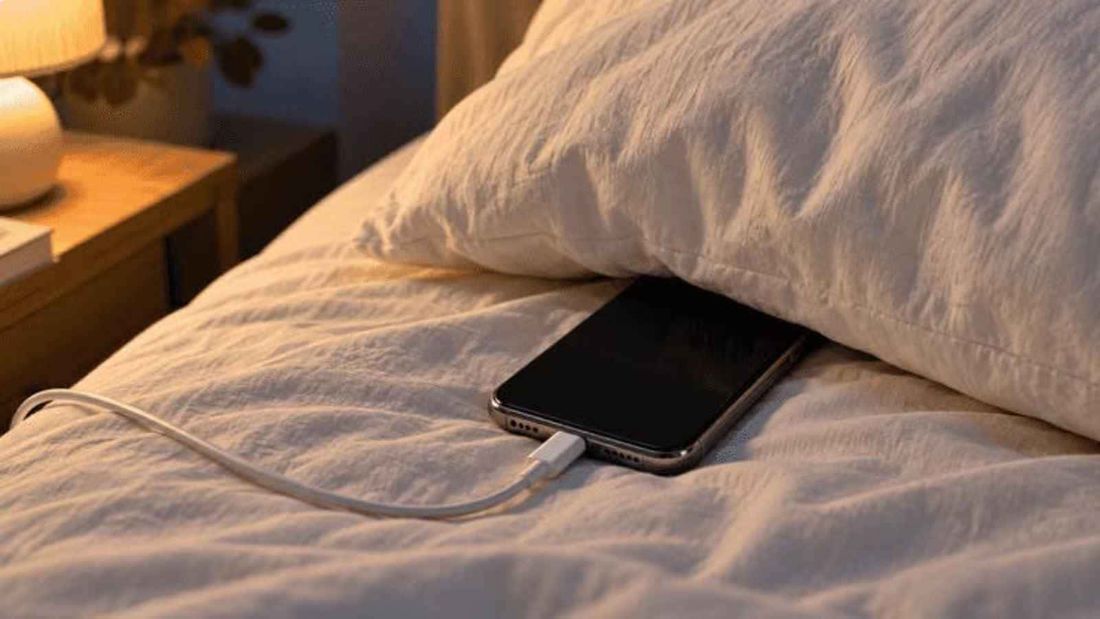
Many people place their mobile phones under their pillows or next to them on the bed while sleeping, particularly when leaving them plugged in overnight. They may believe this habit poses no real danger or do so out of concerns about phone radiation and its potential health effects. However, the greater risk may be something entirely different: excessive heat buildup, potential battery damage, or even fire.
According to a report published by technology website Engadget, the belief that placing a phone under a pillow while sleeping could cause cancer is not the primary concern. The real problem lies in charging a phone in an enclosed space that prevents the heat generated during charging from dissipating naturally.
Why Is Charging a Phone Under a Pillow Dangerous?
Smartphones generate heat while their batteries are charging. This is a normal phenomenon resulting from energy transfer and chemical reactions within the battery. Under normal conditions, a phone can release this heat through its external surface. However, placing it under a pillow or blanket obstructs the cooling process.
As charging continues, heat may accumulate around the device, particularly when it is trapped between bedding or placed on a soft mattress. This raises the phone's temperature and places additional stress on its internal components.
The problem goes beyond temporary overheating. Repeated exposure to high temperatures can accelerate the deterioration of lithium-ion batteries, reduce their ability to retain a charge, and ultimately shorten their lifespan.
Can a Phone Cause a Fire While You Sleep?
The potential danger extends beyond reduced battery performance. Under extreme circumstances, excessive heat can trigger a phenomenon known as thermal runaway, a chain reaction in which the battery's temperature rises uncontrollably.
This may cause the battery to release smoke or catch fire, particularly if it is damaged or has previously sustained physical damage.
Potential risks increase when using poor-quality or incompatible chargers and cables, or when charging a device that already has a damaged battery or is experiencing unusual overheating.
Although phone fires during charging are uncommon, placing a device under a pillow can make it much harder to detect a problem, especially while the user is asleep. The surrounding fabrics and materials may also help the fire spread if one breaks out.
Does Phone Radiation Cause Cancer?
Mobile phones have repeatedly raised concerns about the radiation they emit. However, it is important to distinguish between potential radiation-related risks and the dangers of heat generated during charging.
Phones use radio waves, which are a form of non-ionizing radiation. These differ from ionizing radiation, such as X-rays, which can directly damage the DNA inside cells.
There is no conclusive scientific evidence proving that placing a phone under a pillow while sleeping causes cancer. Therefore, warnings against charging phones in this position are primarily based on thermal safety concerns and the potential risk of fire, rather than fears about cancer.
How Can You Charge Your Phone Safely Overnight?
To reduce risks and preserve battery life, experts recommend following several simple precautions:
* Place the phone on a hard, flat surface while charging, allowing heat to dissipate around it.
* Avoid placing the phone under pillows, blankets, or on top of bedding and soft furnishings.
* Use original or certified chargers and cables that are compatible with the device.
* Do not charge a phone if its battery is swollen or the device has sustained damage.
* Keep the phone and charger away from flammable materials.
* Stop using the charger or device if unusual overheating or signs of damage appear.
Ultimately, the problem is not having a phone near your bed itself, but leaving it charging in an enclosed space where heat cannot dissipate properly. Although this habit may seem convenient while sleeping, it carries risks that can easily be avoided simply by changing where you place your phone while charging.
𝗦𝗼𝘂𝗿𝗰𝗲: 𝗘𝗿e𝗺 𝗡𝗲𝘄𝘀


