
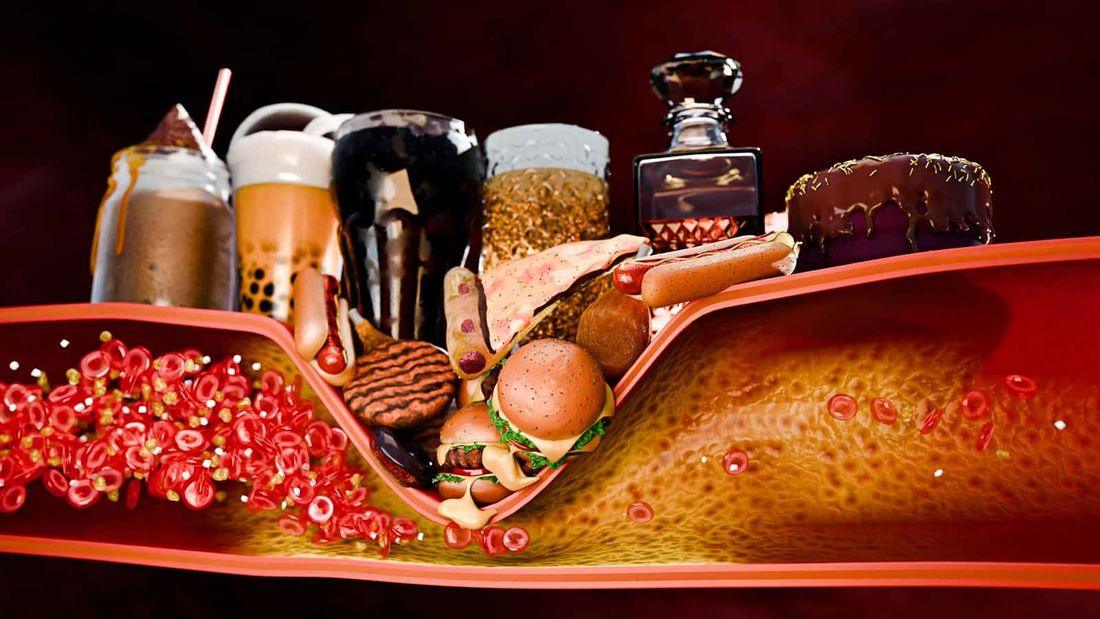
Cardiovascular diseases remain among the leading causes of death worldwide, with high levels of low-density lipoprotein (LDL), commonly known as bad cholesterol, contributing to approximately 3.6 million deaths annually.
Despite the wide range of treatment options currently available, millions of people continue to struggle to bring their cholesterol levels down to safe limits. However, a recent scientific study has uncovered a previously unknown molecular mechanism explaining how dietary cholesterol interferes with the liver's ability to filter the bloodstream.
A new study, published in the prestigious scientific journal Nature, has identified a biological pathway that leads to the destruction of low-density lipoprotein receptors (LDLR) inside liver cells. These proteins are primarily responsible for capturing and removing bad cholesterol from the bloodstream.
Researchers explained that prolonged exposure to a cholesterol-rich diet activates cellular proteins known as Ral GTPases. These proteins interact with an enzyme called cathepsin A (CTSA), causing the receptors to be broken down instead of being recycled and reused. As their numbers decline, fat accumulates in the blood vessels.
Dr. Alan Saltiel, Professor of Medicine at the University of California San Diego School of Medicine and the study's lead researcher, said the discovery solves a long-standing medical puzzle about why the liver becomes less capable of clearing cholesterol from the blood in people who consume high-fat diets.
Saltiel noted that this pathway operates entirely independently of the PCSK9 protein, which is targeted by existing medications. This discovery could create an opportunity to develop entirely new generations of treatments to address unmet needs among patients who do not respond to conventional drugs.
Laboratory experiments showed that pharmacologically inhibiting CTSA activity helped protect the receptors and improve their stability, thereby enhancing the liver's ability to eliminate excess cholesterol.
The findings pave the way for the development of promising new medications that could help support cardiovascular health in the future.
𝗦𝗼𝘂𝗿𝗰𝗲: 𝗘𝗿e𝗺 𝗡𝗲𝘄𝘀


